



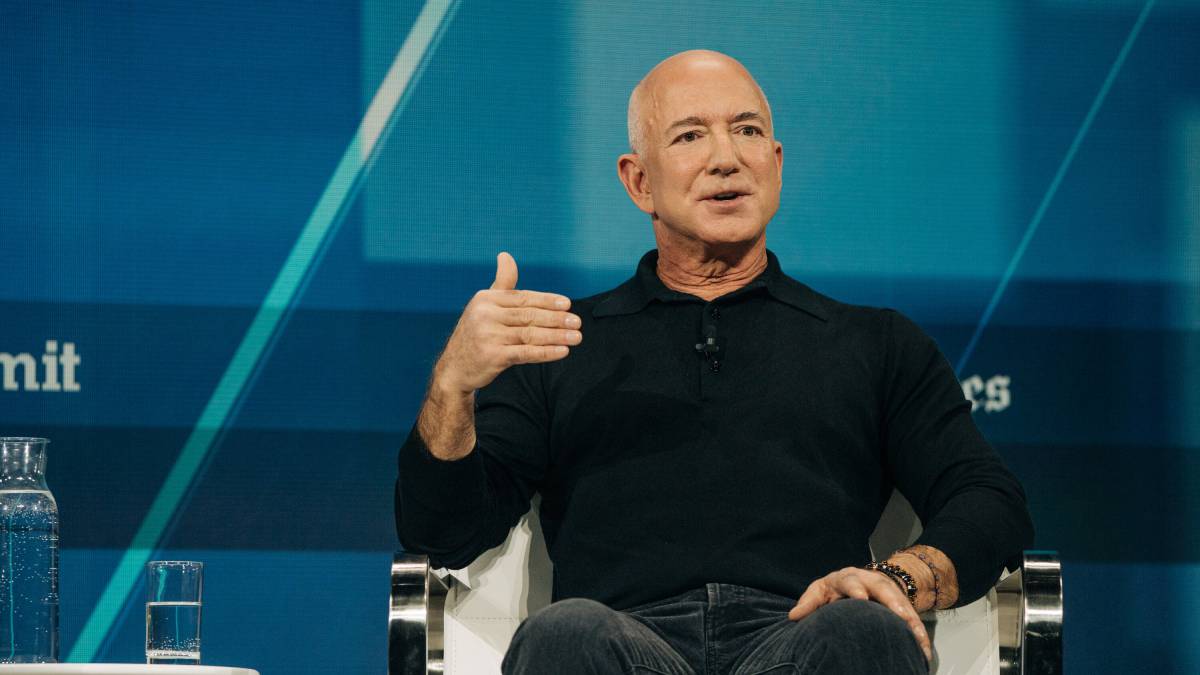
A major development unfolded as Jeff Bezos entered talks to raise a $100 billion fund aimed at transforming companies through artificial intelligence. The initiative signals a significant escalation in AI-focused capital deployment, with far-reaching implications for global markets, enterprise strategy, and technological competition.
Jeff Bezos is reportedly in discussions with investors to launch a massive AI-focused investment vehicle, potentially one of the largest technology funds ever created. The fund, linked to “Project Prometheus,” aims to back companies integrating AI across operations.
The proposed $100 billion scale highlights the growing importance of AI transformation across industries. Key stakeholders include institutional investors, private equity firms, and global corporations seeking to modernize operations.
The timeline remains fluid, with fundraising discussions ongoing. The initiative reflects intensifying competition among major investors to secure leadership in the AI-driven economic shift.
The development aligns with a broader trend across global markets where capital is rapidly shifting toward artificial intelligence as a foundational technology. Major firms and investors are increasingly treating AI not as a niche sector but as a transformative layer across all industries.
Jeff Bezos, founder of Amazon, has a track record of backing large-scale, long-term technology bets. This move follows a wave of significant AI investments by firms such as Microsoft and Google, which are integrating AI deeply into their ecosystems.
Historically, large funds have targeted sectors like infrastructure or private equity buyouts. However, the emergence of AI as a cross-industry enabler is reshaping investment strategies, positioning capital deployment as a critical driver of technological adoption and competitive advantage.
Market analysts view the proposed fund as a potential game-changer in AI financing. Experts suggest that a $100 billion vehicle would provide unprecedented scale for accelerating AI adoption across traditional industries, from manufacturing to healthcare.
Investment strategists note that Jeff Bezos’s involvement could attract significant institutional capital, given his track record in scaling transformative ventures. They emphasize that such a fund could prioritize companies capable of integrating AI into core operations rather than purely developing new technologies.
However, analysts also caution that deploying capital at this scale presents challenges, including identifying viable investment opportunities and managing execution risk. The success of the initiative will depend on disciplined investment strategies and the ability to generate measurable returns in a rapidly evolving market.
For global executives, the emergence of a $100 billion AI fund could redefine access to capital and accelerate digital transformation efforts. Companies may find new opportunities to secure funding for AI-driven initiatives, but competition for investment is likely to intensify.
Investors may view the fund as a signal of long-term confidence in AI, potentially driving further capital inflows into the sector. Markets could respond with increased valuations for AI-enabled businesses.
From a policy perspective, large-scale AI investment raises questions about market concentration, competition, and regulatory oversight. Governments may need to assess how such funds influence industry dynamics and technological leadership.
Looking ahead, the success of Jeff Bezos’s fundraising efforts will be closely watched. Decision-makers should monitor investor participation, fund structure, and early investment targets.
Uncertainty remains around execution and market conditions, but the initiative signals a clear trend: AI is becoming the central focus of global capital allocation, shaping the next phase of economic and technological transformation.
Source: The New York Times
Date: March 19, 2026


