
Game Tech Goes Agentic with AI

The €1.3 million investment will accelerate Gridly’s transition from a traditional content management platform into an AI-enabled orchestration layer for game studios.

June 30, 2026
|

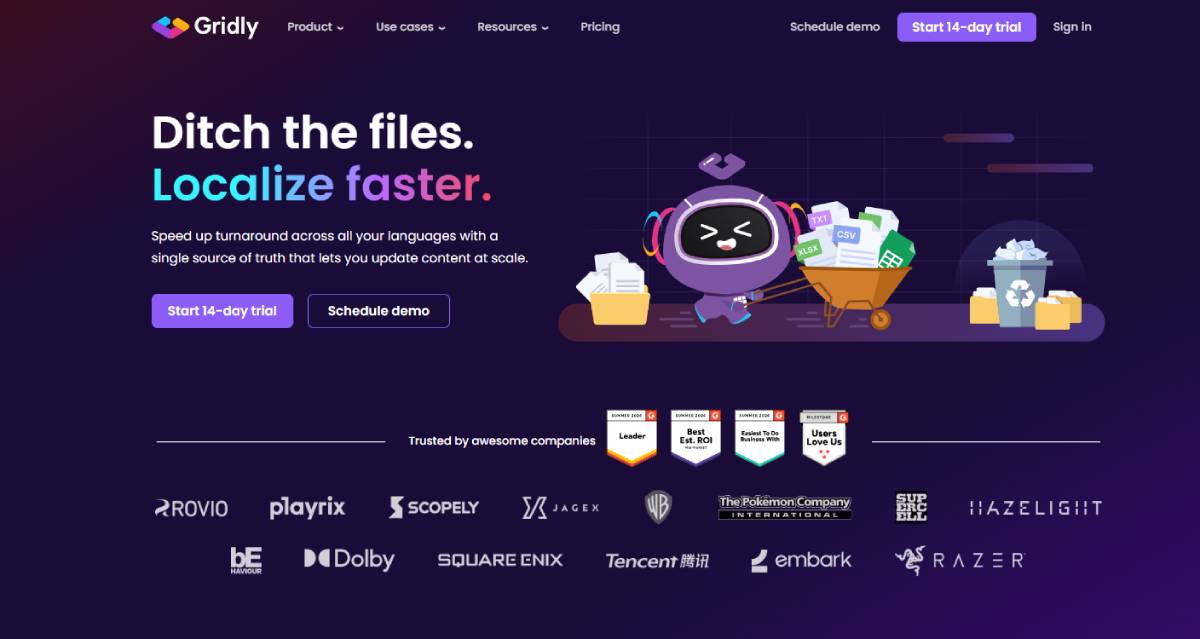
Game content infrastructure platform Gridly has raised €1.3 million in fresh funding to integrate AI agents directly into game development pipelines. The move, backed by senior industry operators including a former executive from Stillfront, signals a shift toward automated content operations in the global gaming industry.

The €1.3 million investment will accelerate Gridly’s transition from a traditional content management platform into an AI-enabled orchestration layer for game studios. The company plans to deploy agent-based systems that automate localisation, asset management, and content updates across multi-platform gaming environments.

A notable addition to the strategic backing is a founder from Stillfront, strengthening Gridly’s industry credibility and access to large-scale gaming networks. The funding will be used to expand engineering capacity, refine AI agent workflows, and support early enterprise deployments across mid-to-large game studios seeking operational efficiency in live game environments.

The gaming industry is undergoing a structural shift toward live-service models, where continuous content updates, localisation, and real-time user engagement have become core operational demands. This has placed increasing pressure on content pipelines, which are often fragmented across tools and teams.

At the same time, agentic AI systems capable of executing multi-step workflows rather than isolated tasks are emerging as a key productivity layer across creative industries. In gaming, this translates into automated content adaptation, faster localisation cycles, and reduced dependency on manual asset management.

Europe’s game development ecosystem, particularly in the Nordics, has become a hub for experimentation in production infrastructure. Companies like Gridly are positioning themselves not as game creators, but as the operational backbone powering scalable game content delivery in an increasingly globalised and fast-changing market.

Industry observers suggest that embedding AI agents into content pipelines represents a shift from assistive AI tools to fully integrated production systems. Rather than simply generating assets, these systems are expected to coordinate workflows across localisation, testing, and deployment stages.

Analysts note that gaming studios are under sustained pressure to reduce time-to-market while maintaining high-quality, multi-language releases. This creates strong demand for automation layers that can handle repetitive but critical production tasks.

While Gridly has not publicly detailed all technical specifications of its agent architecture, the involvement of experienced gaming executives is seen as a validation of product-market alignment. Experts also caution that integration complexity and quality control will remain key challenges as AI agents take on more autonomous roles within production environments.

For game studios, Gridly’s approach could significantly reduce operational friction in managing global content pipelines, particularly for live-service titles requiring constant updates. Automation of localisation and asset workflows may also lower production costs and speed up release cycles.

For investors, the deal reinforces growing interest in infrastructure-layer AI startups rather than consumer-facing applications. It also highlights gaming as a leading vertical for applied agentic AI adoption.

From a broader perspective, increased automation in creative pipelines may prompt discussions around workforce transformation, particularly in localisation, QA, and content management roles across the gaming sector.

Gridly’s next phase will likely focus on enterprise adoption within mid-tier and large-scale studios, where pipeline complexity is highest. Key metrics to watch include integration depth, reduction in production cycle time, and retention among early adopters. If successful, the company could establish itself as a foundational layer in AI-driven game operations, bridging content management and autonomous production workflows.

Source: Nordictech News
Date: June 30, 2026

  • Featured tools
Ai Fiesta
Paid

AI Fiesta is an all-in-one productivity platform that gives users access to multiple leading AI models through a single interface. It includes features like prompt enhancement, image generation, audio transcription and side-by-side model comparison.

#
Copywriting
#
Art Generator
Learn more
Kreateable AI
Free

Kreateable AI is a white-label, AI-driven design platform that enables logo generation, social media posts, ads, and more for businesses, agencies, and service providers.

#
Logo Generator
Learn more

Learn more about future of AI

Join 80,000+ Ai enthusiast getting weekly updates on exciting AI tools.
Thank you! Your submission has been received!
Oops! Something went wrong while submitting the form.

Game Tech Goes Agentic with AI

June 30, 2026

The €1.3 million investment will accelerate Gridly’s transition from a traditional content management platform into an AI-enabled orchestration layer for game studios.

Game content infrastructure platform Gridly has raised €1.3 million in fresh funding to integrate AI agents directly into game development pipelines. The move, backed by senior industry operators including a former executive from Stillfront, signals a shift toward automated content operations in the global gaming industry.

The €1.3 million investment will accelerate Gridly’s transition from a traditional content management platform into an AI-enabled orchestration layer for game studios. The company plans to deploy agent-based systems that automate localisation, asset management, and content updates across multi-platform gaming environments.

A notable addition to the strategic backing is a founder from Stillfront, strengthening Gridly’s industry credibility and access to large-scale gaming networks. The funding will be used to expand engineering capacity, refine AI agent workflows, and support early enterprise deployments across mid-to-large game studios seeking operational efficiency in live game environments.

The gaming industry is undergoing a structural shift toward live-service models, where continuous content updates, localisation, and real-time user engagement have become core operational demands. This has placed increasing pressure on content pipelines, which are often fragmented across tools and teams.

At the same time, agentic AI systems capable of executing multi-step workflows rather than isolated tasks are emerging as a key productivity layer across creative industries. In gaming, this translates into automated content adaptation, faster localisation cycles, and reduced dependency on manual asset management.

Europe’s game development ecosystem, particularly in the Nordics, has become a hub for experimentation in production infrastructure. Companies like Gridly are positioning themselves not as game creators, but as the operational backbone powering scalable game content delivery in an increasingly globalised and fast-changing market.

Industry observers suggest that embedding AI agents into content pipelines represents a shift from assistive AI tools to fully integrated production systems. Rather than simply generating assets, these systems are expected to coordinate workflows across localisation, testing, and deployment stages.

Analysts note that gaming studios are under sustained pressure to reduce time-to-market while maintaining high-quality, multi-language releases. This creates strong demand for automation layers that can handle repetitive but critical production tasks.

While Gridly has not publicly detailed all technical specifications of its agent architecture, the involvement of experienced gaming executives is seen as a validation of product-market alignment. Experts also caution that integration complexity and quality control will remain key challenges as AI agents take on more autonomous roles within production environments.

For game studios, Gridly’s approach could significantly reduce operational friction in managing global content pipelines, particularly for live-service titles requiring constant updates. Automation of localisation and asset workflows may also lower production costs and speed up release cycles.

For investors, the deal reinforces growing interest in infrastructure-layer AI startups rather than consumer-facing applications. It also highlights gaming as a leading vertical for applied agentic AI adoption.

From a broader perspective, increased automation in creative pipelines may prompt discussions around workforce transformation, particularly in localisation, QA, and content management roles across the gaming sector.

Gridly’s next phase will likely focus on enterprise adoption within mid-tier and large-scale studios, where pipeline complexity is highest. Key metrics to watch include integration depth, reduction in production cycle time, and retention among early adopters. If successful, the company could establish itself as a foundational layer in AI-driven game operations, bridging content management and autonomous production workflows.

Source: Nordictech News
Date: June 30, 2026

Promote Your Tool

Copy Embed Code

Similar Blogs

June 30, 2026
|

ICEYE Secures €300M Credit Line

ICEYE, a Finland-based satellite intelligence company, has obtained a €300 million credit facility to expand its Earth observation and SAR satellite constellation.
Read more
June 30, 2026
|

Redpine Raises €6.8M for Data Platform

Redpine has raised €6.8 million in early-stage funding to develop what it describes as a “Spotify-like” infrastructure for licensed data consumption.
Read more
June 30, 2026
|

AI Cloud Giant Hits Valuation Surge

Modal Labs, founded by former Spotify engineer Erik Bernhardsson, has raised $355 million in Series C financing, valuing the AI cloud company at $4.65 billion.
Read more
June 30, 2026
|

Nordic Tech Signals Capital Surge

The Nordic tech ecosystem has witnessed a surge of activity, led by a major funding round for AI infrastructure company Modal, alongside growing momentum around “sovereign coding” frameworks that prioritise domestic control over critical software stacks.
Read more
June 30, 2026
|

Retail Audio Goes Generative AI

Tonada is positioning itself at the intersection of generative AI and retail experience design, developing systems that dynamically generate background music based on store context, customer behaviour, and brand identity.
Read more
June 30, 2026
|

Swiss Tech Targets Ski Aerodynamics

The AI-driven simulator uses computational modelling to analyse skier posture, motion dynamics, and air resistance under varying slope conditions.
Read more