
AI Cloud Giant Hits Valuation Surge

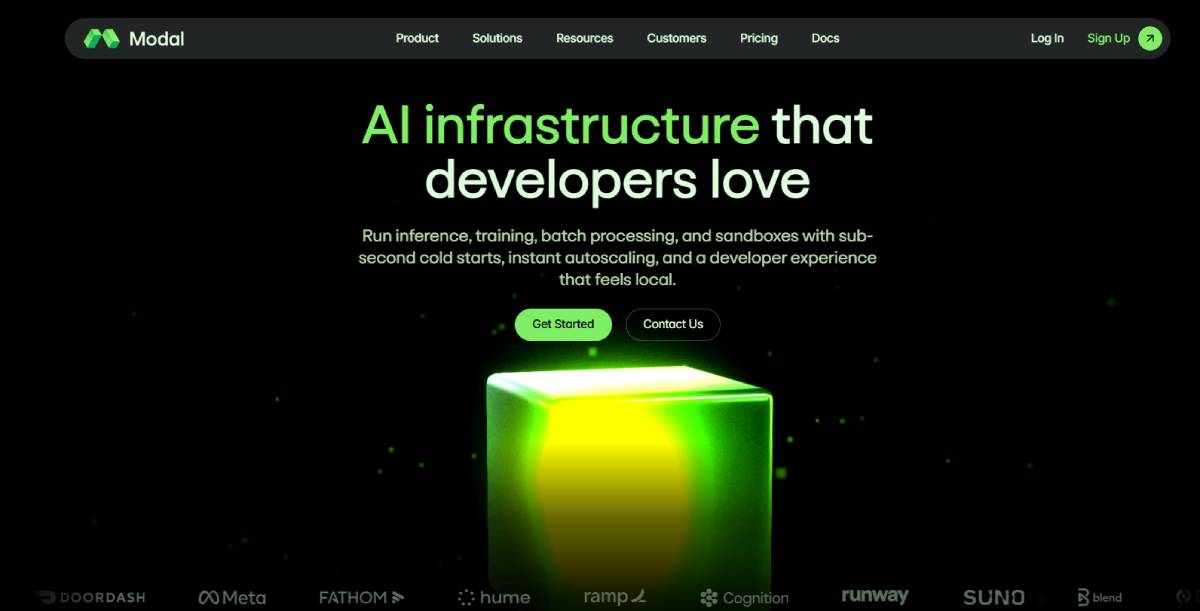
Modal Labs, founded by former Spotify engineer Erik Bernhardsson, has raised $355 million in Series C financing, valuing the AI cloud company at $4.65 billion.

June 30, 2026
|

A major development in the AI infrastructure sector unfolded as Modal Labs secured a $355 million Series C round, pushing its valuation to $4.65 billion. The funding underscores accelerating investor appetite for AI-native cloud platforms, signaling intensified competition in compute infrastructure critical to training and deploying next-generation models across global markets.

Modal Labs, founded by former Spotify engineer Erik Bernhardsson, has raised $355 million in Series C financing, valuing the AI cloud company at $4.65 billion. The round positions the firm among a growing cohort of infrastructure providers targeting AI workload orchestration and serverless compute at scale.

The funding arrives amid heightened demand for GPU-intensive cloud systems driven by generative AI adoption. Investors are betting that specialized AI-native infrastructure will outperform traditional hyperscalers in flexibility and cost efficiency. The capital injection is expected to accelerate product expansion, global data infrastructure scaling, and enterprise adoption across developer-heavy AI workloads.

The deal reflects a broader structural shift in global cloud computing, where AI workloads are reshaping infrastructure economics. Traditional hyperscale providers such as AWS, Microsoft Azure, and Google Cloud are facing competition from specialized AI-first platforms designed to optimize compute for model training and inference.

Over the past two years, the rise of generative AI has triggered unprecedented demand for GPUs, distributed compute systems, and on-demand scaling architectures. This has created space for “AI cloud challengers” like Modal Labs to emerge with vertically optimized offerings.

The funding also aligns with a venture capital trend favoring infrastructure-layer AI over application-only startups, as investors seek exposure to foundational layers of the AI stack. In parallel, geopolitical concerns around compute sovereignty are pushing firms to diversify cloud dependencies beyond a small group of dominant U.S. providers.

Industry analysts view the round as a signal that AI infrastructure is entering a consolidation and specialization phase. According to market observers, capital is increasingly flowing toward platforms that can reduce inference latency, optimize GPU utilization, and provide scalable serverless environments for AI-native applications.

Technology investors suggest Modal Labs’ traction reflects a broader belief that “compute orchestration” will become as critical as model development itself. While hyperscalers dominate raw infrastructure, nimble AI cloud providers are seen as more adaptive to rapid model iteration cycles.

Venture capital commentary highlights that the scale of the round indicates institutional confidence in long-term demand for AI compute, even amid concerns about overcapacity in parts of the cloud market. Strategic partners and enterprise customers are expected to play a key role in validating the platform’s scalability.

For enterprises, the rise of AI-native cloud platforms could reduce dependency on traditional hyperscalers and reshape procurement strategies for compute infrastructure. Businesses developing large-scale AI systems may gain cost and performance advantages through specialized providers optimized for model workloads.

For investors, the deal reinforces infrastructure as the dominant value layer in the AI economy. However, it also raises competitive pressure on incumbents to innovate faster. Regulators may increasingly scrutinize concentration risks in AI compute markets, particularly as infrastructure becomes a strategic national asset.

Companies operating in AI development pipelines may need to reassess vendor diversification, latency requirements, and long-term compute contracts. Attention now turns to how rapidly Modal Labs can scale globally and whether it can compete with hyperscalers on reliability and enterprise adoption. The next phase will test its ability to handle sustained GPU demand and multi-region deployment. Market watchers will also track whether similar AI cloud startups attract comparable mega-rounds, potentially accelerating a new infrastructure cycle in the AI economy.

Source: NordicTech News
Date: June 30, 2026

  • Featured tools
Beautiful AI
Free

Beautiful AI is an AI-powered presentation platform that automates slide design and formatting, enabling users to create polished, on-brand presentations quickly.

#
Presentation
Learn more
Tome AI
Free

Tome AI is an AI-powered storytelling and presentation tool designed to help users create compelling narratives and presentations quickly and efficiently. It leverages advanced AI technologies to generate content, images, and animations based on user input.

#
Presentation
#
Startup Tools
Learn more

Learn more about future of AI

Join 80,000+ Ai enthusiast getting weekly updates on exciting AI tools.
Thank you! Your submission has been received!
Oops! Something went wrong while submitting the form.

AI Cloud Giant Hits Valuation Surge

June 30, 2026

Modal Labs, founded by former Spotify engineer Erik Bernhardsson, has raised $355 million in Series C financing, valuing the AI cloud company at $4.65 billion.

A major development in the AI infrastructure sector unfolded as Modal Labs secured a $355 million Series C round, pushing its valuation to $4.65 billion. The funding underscores accelerating investor appetite for AI-native cloud platforms, signaling intensified competition in compute infrastructure critical to training and deploying next-generation models across global markets.

Modal Labs, founded by former Spotify engineer Erik Bernhardsson, has raised $355 million in Series C financing, valuing the AI cloud company at $4.65 billion. The round positions the firm among a growing cohort of infrastructure providers targeting AI workload orchestration and serverless compute at scale.

The funding arrives amid heightened demand for GPU-intensive cloud systems driven by generative AI adoption. Investors are betting that specialized AI-native infrastructure will outperform traditional hyperscalers in flexibility and cost efficiency. The capital injection is expected to accelerate product expansion, global data infrastructure scaling, and enterprise adoption across developer-heavy AI workloads.

The deal reflects a broader structural shift in global cloud computing, where AI workloads are reshaping infrastructure economics. Traditional hyperscale providers such as AWS, Microsoft Azure, and Google Cloud are facing competition from specialized AI-first platforms designed to optimize compute for model training and inference.

Over the past two years, the rise of generative AI has triggered unprecedented demand for GPUs, distributed compute systems, and on-demand scaling architectures. This has created space for “AI cloud challengers” like Modal Labs to emerge with vertically optimized offerings.

The funding also aligns with a venture capital trend favoring infrastructure-layer AI over application-only startups, as investors seek exposure to foundational layers of the AI stack. In parallel, geopolitical concerns around compute sovereignty are pushing firms to diversify cloud dependencies beyond a small group of dominant U.S. providers.

Industry analysts view the round as a signal that AI infrastructure is entering a consolidation and specialization phase. According to market observers, capital is increasingly flowing toward platforms that can reduce inference latency, optimize GPU utilization, and provide scalable serverless environments for AI-native applications.

Technology investors suggest Modal Labs’ traction reflects a broader belief that “compute orchestration” will become as critical as model development itself. While hyperscalers dominate raw infrastructure, nimble AI cloud providers are seen as more adaptive to rapid model iteration cycles.

Venture capital commentary highlights that the scale of the round indicates institutional confidence in long-term demand for AI compute, even amid concerns about overcapacity in parts of the cloud market. Strategic partners and enterprise customers are expected to play a key role in validating the platform’s scalability.

For enterprises, the rise of AI-native cloud platforms could reduce dependency on traditional hyperscalers and reshape procurement strategies for compute infrastructure. Businesses developing large-scale AI systems may gain cost and performance advantages through specialized providers optimized for model workloads.

For investors, the deal reinforces infrastructure as the dominant value layer in the AI economy. However, it also raises competitive pressure on incumbents to innovate faster. Regulators may increasingly scrutinize concentration risks in AI compute markets, particularly as infrastructure becomes a strategic national asset.

Companies operating in AI development pipelines may need to reassess vendor diversification, latency requirements, and long-term compute contracts. Attention now turns to how rapidly Modal Labs can scale globally and whether it can compete with hyperscalers on reliability and enterprise adoption. The next phase will test its ability to handle sustained GPU demand and multi-region deployment. Market watchers will also track whether similar AI cloud startups attract comparable mega-rounds, potentially accelerating a new infrastructure cycle in the AI economy.

Source: NordicTech News
Date: June 30, 2026

Promote Your Tool

Copy Embed Code

Similar Blogs

June 30, 2026
|

Redpine Raises €6.8M for Data Platform

Redpine has raised €6.8 million in early-stage funding to develop what it describes as a “Spotify-like” infrastructure for licensed data consumption.
Read more
June 30, 2026
|

AI Cloud Giant Hits Valuation Surge

Modal Labs, founded by former Spotify engineer Erik Bernhardsson, has raised $355 million in Series C financing, valuing the AI cloud company at $4.65 billion.
Read more
June 30, 2026
|

Nordic Tech Signals Capital Surge

The Nordic tech ecosystem has witnessed a surge of activity, led by a major funding round for AI infrastructure company Modal, alongside growing momentum around “sovereign coding” frameworks that prioritise domestic control over critical software stacks.
Read more
June 30, 2026
|

Retail Audio Goes Generative AI

Tonada is positioning itself at the intersection of generative AI and retail experience design, developing systems that dynamically generate background music based on store context, customer behaviour, and brand identity.
Read more
June 30, 2026
|

Swiss Tech Targets Ski Aerodynamics

The AI-driven simulator uses computational modelling to analyse skier posture, motion dynamics, and air resistance under varying slope conditions.
Read more
June 30, 2026
|

Game Tech Goes Agentic with AI

The €1.3 million investment will accelerate Gridly’s transition from a traditional content management platform into an AI-enabled orchestration layer for game studios.
Read more