
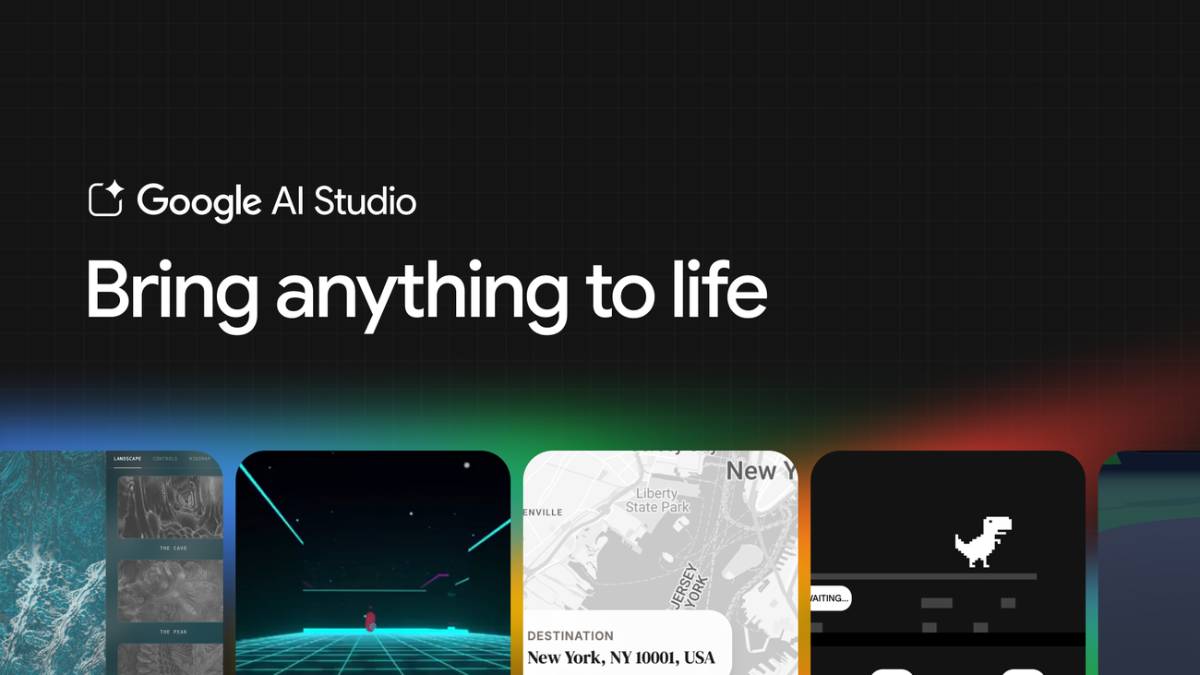
Google Expands AI Studio With Full Stack Vibe Coding

Google’s latest update to AI Studio introduces a full-stack development environment powered by generative AI, enabling developers to build, test, and deploy applications using natural language prompts.

March 30, 2026
|

A major development unfolded as Google introduced a new full-stack “vibe coding” experience within its AI Studio platform, signaling a shift toward faster, AI-native software development. The move aims to simplify end-to-end app creation, impacting developers, enterprises, and the broader competitive landscape in generative AI tools.

Google’s latest update to Google AI Studio introduces a full-stack development environment powered by generative AI, enabling developers to build, test, and deploy applications using natural language prompts. The “vibe coding” approach allows users to describe desired functionality while AI generates code, interfaces, and workflows.

The platform integrates backend logic, APIs, and frontend components into a unified environment, reducing the need for multiple tools. It also supports rapid prototyping, iterative development, and real-time testing.

This launch is part of Google’s broader push to strengthen its developer ecosystem and compete with rival AI coding platforms, positioning AI Studio as a comprehensive solution for building AI-driven applications.

The development aligns with a broader trend across global markets where AI-assisted coding is transforming software development workflows. Companies like Microsoft, through its Copilot offerings, and OpenAI have already demonstrated the potential of generative AI to automate coding tasks and enhance developer productivity.

Historically, software development required specialized expertise across multiple layers, including frontend design, backend architecture, and infrastructure management. The emergence of AI-powered tools is collapsing these layers, enabling faster and more accessible development processes.

This shift is also driven by enterprise demand for rapid digital transformation, where speed-to-market and cost efficiency are critical. As organizations increasingly adopt AI, developer tools are becoming a key battleground for platform dominance.

Industry analysts view Google’s “vibe coding” initiative as a significant step toward democratizing software development. Experts suggest that lowering technical barriers could expand the developer base, allowing non-traditional users to build functional applications.

However, some caution that AI-generated code may introduce risks related to quality, security, and maintainability. Analysts emphasize the importance of human oversight and robust testing frameworks to ensure reliability.

From a strategic standpoint, experts note that integrating full-stack capabilities into a single platform could strengthen user retention and ecosystem lock-in. By offering an end-to-end solution, Google aims to position itself as a central hub for AI development workflows. The move is also seen as part of a broader race to define the future of programming in an AI-first world.

For global executives, the rise of AI-driven development platforms could significantly reduce software development costs and timelines, enabling faster innovation cycles. Businesses may increasingly rely on such tools to build custom applications and automate processes.

Investors may view this as a growth driver for companies leading in developer tools and AI infrastructure. However, it also raises questions about workforce transformation, as traditional coding roles evolve or become augmented by AI.

From a policy perspective, regulators may need to address issues related to intellectual property, code ownership, and accountability in AI-generated software, particularly as adoption scales across industries.

Looking ahead, Google is expected to expand AI Studio’s capabilities, integrating more advanced models and enterprise-grade features. The competition in AI-powered development tools will likely intensify, with innovation focused on usability, scalability, and reliability. Decision-makers should monitor how quickly enterprises adopt these tools and how effectively they balance speed with governance in AI-driven software development.

Source: Google Blog
Date: March 2026

  • Featured tools
Wonder AI
Free

Wonder AI is a versatile AI-powered creative platform that generates text, images, and audio with minimal input, designed for fast storytelling, visual creation, and audio content generation

#
Art Generator
Learn more
Murf Ai
Free

Murf AI Review – Advanced AI Voice Generator for Realistic Voiceovers

#
Text to Speech
Learn more

Learn more about future of AI

Join 80,000+ Ai enthusiast getting weekly updates on exciting AI tools.
Thank you! Your submission has been received!
Oops! Something went wrong while submitting the form.

Google Expands AI Studio With Full Stack Vibe Coding

March 30, 2026

Google’s latest update to AI Studio introduces a full-stack development environment powered by generative AI, enabling developers to build, test, and deploy applications using natural language prompts.

A major development unfolded as Google introduced a new full-stack “vibe coding” experience within its AI Studio platform, signaling a shift toward faster, AI-native software development. The move aims to simplify end-to-end app creation, impacting developers, enterprises, and the broader competitive landscape in generative AI tools.

Google’s latest update to Google AI Studio introduces a full-stack development environment powered by generative AI, enabling developers to build, test, and deploy applications using natural language prompts. The “vibe coding” approach allows users to describe desired functionality while AI generates code, interfaces, and workflows.

The platform integrates backend logic, APIs, and frontend components into a unified environment, reducing the need for multiple tools. It also supports rapid prototyping, iterative development, and real-time testing.

This launch is part of Google’s broader push to strengthen its developer ecosystem and compete with rival AI coding platforms, positioning AI Studio as a comprehensive solution for building AI-driven applications.

The development aligns with a broader trend across global markets where AI-assisted coding is transforming software development workflows. Companies like Microsoft, through its Copilot offerings, and OpenAI have already demonstrated the potential of generative AI to automate coding tasks and enhance developer productivity.

Historically, software development required specialized expertise across multiple layers, including frontend design, backend architecture, and infrastructure management. The emergence of AI-powered tools is collapsing these layers, enabling faster and more accessible development processes.

This shift is also driven by enterprise demand for rapid digital transformation, where speed-to-market and cost efficiency are critical. As organizations increasingly adopt AI, developer tools are becoming a key battleground for platform dominance.

Industry analysts view Google’s “vibe coding” initiative as a significant step toward democratizing software development. Experts suggest that lowering technical barriers could expand the developer base, allowing non-traditional users to build functional applications.

However, some caution that AI-generated code may introduce risks related to quality, security, and maintainability. Analysts emphasize the importance of human oversight and robust testing frameworks to ensure reliability.

From a strategic standpoint, experts note that integrating full-stack capabilities into a single platform could strengthen user retention and ecosystem lock-in. By offering an end-to-end solution, Google aims to position itself as a central hub for AI development workflows. The move is also seen as part of a broader race to define the future of programming in an AI-first world.

For global executives, the rise of AI-driven development platforms could significantly reduce software development costs and timelines, enabling faster innovation cycles. Businesses may increasingly rely on such tools to build custom applications and automate processes.

Investors may view this as a growth driver for companies leading in developer tools and AI infrastructure. However, it also raises questions about workforce transformation, as traditional coding roles evolve or become augmented by AI.

From a policy perspective, regulators may need to address issues related to intellectual property, code ownership, and accountability in AI-generated software, particularly as adoption scales across industries.

Looking ahead, Google is expected to expand AI Studio’s capabilities, integrating more advanced models and enterprise-grade features. The competition in AI-powered development tools will likely intensify, with innovation focused on usability, scalability, and reliability. Decision-makers should monitor how quickly enterprises adopt these tools and how effectively they balance speed with governance in AI-driven software development.

Source: Google Blog
Date: March 2026

Promote Your Tool

Copy Embed Code

Similar Blogs

June 26, 2026
|

AlpineAI Raises Seed Round

AlpineAI has successfully closed a double-digit million seed funding round aimed at accelerating the development of sovereign AI technologies.
Read more
June 26, 2026
|

BLP Digital Raises $50M Funding Round

BLP Digital has secured $50 million in strategic funding from Goldman Sachs to accelerate the expansion of its AI-driven enterprise solutions.
Read more
June 26, 2026
|

Giotto AI RUAG Secure AI

Giotto.ai and RUAG have entered into a cooperation agreement focused on the distribution and deployment of state-of-the-art AI solutions across defense and industrial domains.
Read more
June 26, 2026
|

Fruitful AI Secures Funding Round

Fruitful AI has successfully completed a strategic investment round, strengthening its financial position to scale operations and enhance its AI-driven product suite.
Read more
June 26, 2026
|

Visium Raises AI Funding Round

Visium has successfully raised fresh funding aimed at scaling its operations across key European markets and expanding deeper into the US enterprise AI ecosystem.
Read more
June 26, 2026
|

Nuclidium Raises CHF 105M Series B

Nuclidium has successfully expanded its Series B funding round to CHF 105 million through a latest extension, attracting continued backing from existing and new investors.
Read more