



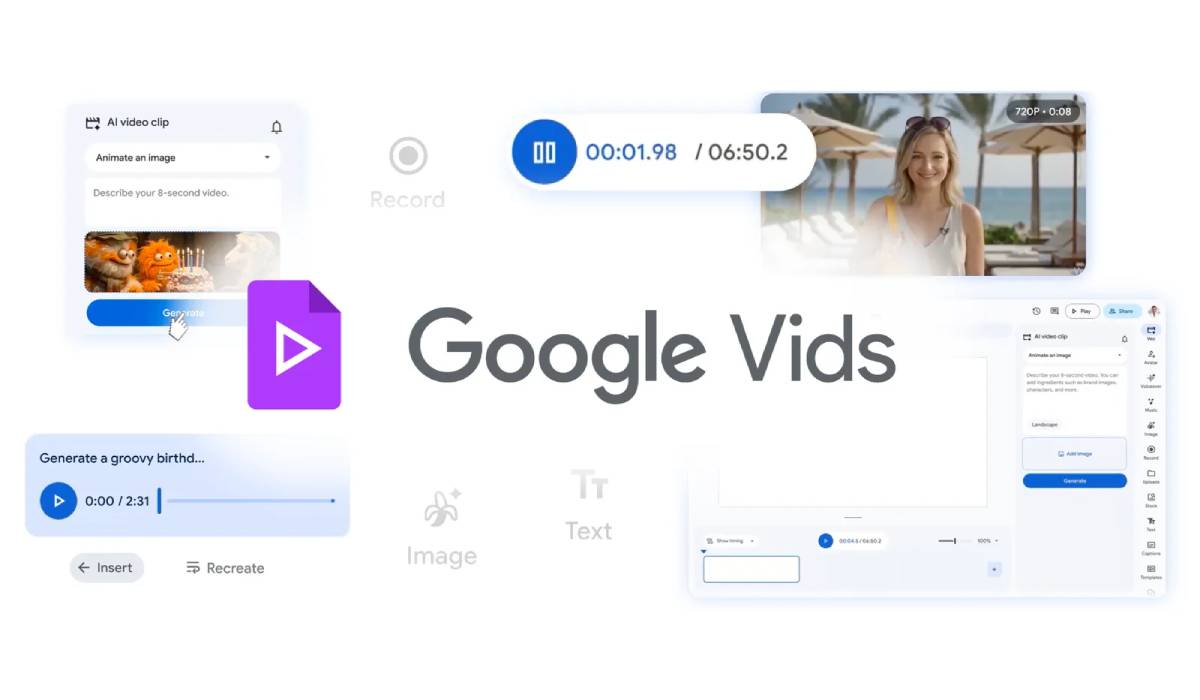
A major development unfolded as Google enhanced its Google Vids platform, enabling users to create, edit, and share videos at no cost using AI-powered tools. The update signals a strategic push into AI-driven content creation, with implications for enterprises, creators, and the evolving digital media ecosystem.
Google Vids now integrates advanced AI capabilities, including automated video generation, editing assistance, and collaborative features within the Google Workspace ecosystem. The platform leverages models such as Lyria and Veo to streamline content creation workflows.
The service is positioned as a free tool for businesses, educators, and individual creators, aiming to lower barriers to professional-quality video production.
Key stakeholders include content creators, marketing teams, enterprises, and competing platforms in the video editing and AI media space. The move reflects Google’s strategy to integrate AI across productivity tools, enhancing user engagement and expanding its ecosystem.
The development aligns with a broader trend across global markets where AI is transforming content creation, enabling users to produce high-quality media with minimal technical expertise. Video content, in particular, has become a dominant medium for communication, marketing, and education, driving demand for accessible and scalable creation tools.
Technology companies are increasingly integrating generative AI into productivity platforms to enhance functionality and user experience. Competitors such as Microsoft and Adobe have also introduced AI-driven tools for content creation, intensifying competition in the space.
Historically, video production required specialized skills and resources. AI-powered tools are democratizing the process, enabling individuals and organizations to create content quickly and cost-effectively, reshaping industries such as marketing, media, and education.
Industry analysts view Google’s expansion of Vids as a strategic move to capture a growing market for AI-driven media tools. “Lowering the cost and complexity of video production opens new opportunities for businesses and creators,” noted a digital media analyst.
Google representatives emphasized that the platform is designed to simplify storytelling and collaboration. “Our goal is to empower users to create impactful videos with the help of AI, regardless of technical expertise,” a company spokesperson stated.
Experts also highlight challenges, including content authenticity, copyright concerns, and the need for responsible AI use. Analysts suggest that as AI-generated media becomes more prevalent, companies will need to implement safeguards to ensure transparency, accuracy, and ethical usage.
For global executives, the development signals a shift toward AI-enabled content strategies, enabling faster and more cost-effective production of marketing, training, and communication materials. Businesses may increasingly rely on such tools to enhance digital engagement and brand visibility.
Investors could see growth opportunities in AI media platforms, while competitors may accelerate innovation to maintain market share. Policymakers may also focus on regulating AI-generated content, addressing issues such as misinformation, intellectual property, and data usage. The launch underscores the growing role of AI in reshaping creative industries and enterprise communication, requiring strategic adaptation and governance.
Looking ahead, stakeholders should monitor user adoption, feature enhancements, and integration with other productivity tools. Competitive developments in AI-driven media platforms will shape the market landscape.
Uncertainties remain around regulatory frameworks, content authenticity, and long-term monetization strategies. Organizations that effectively leverage AI-powered content tools while maintaining ethical standards will be better positioned to thrive in the evolving digital media ecosystem.
Source: Google Blog
Date: April 2026


