
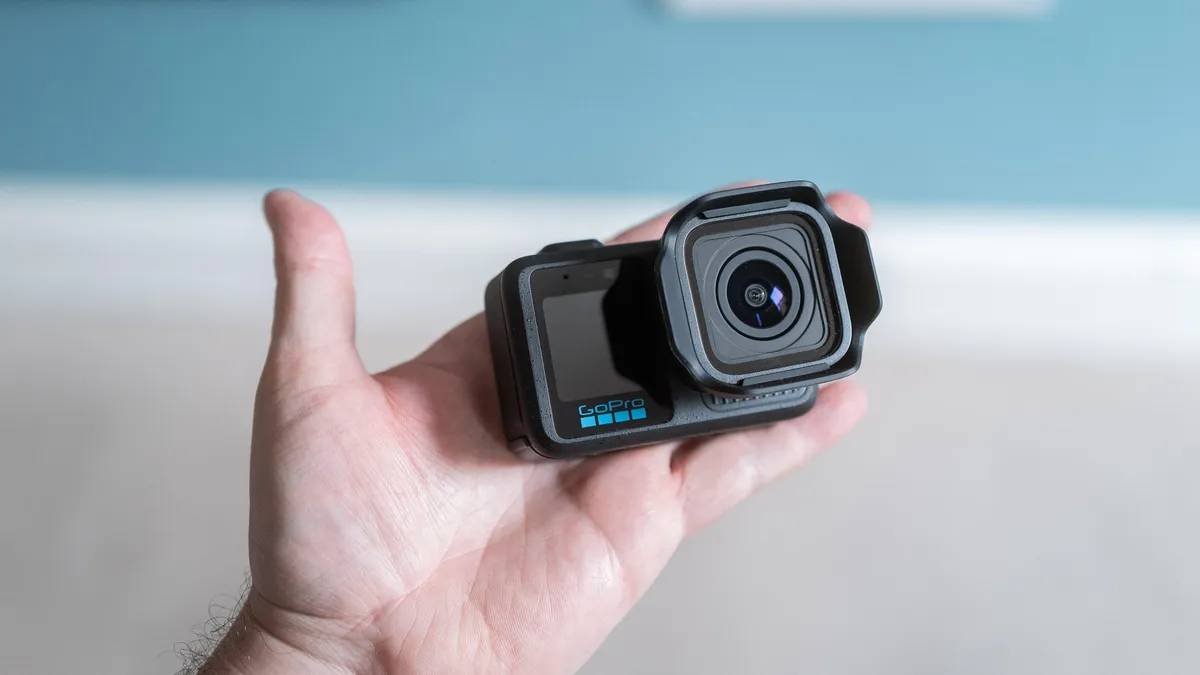
GoPro Enterprise Imaging Push Expands Rapidly

The Mission 1 Pro, developed by GoPro, introduces upgraded imaging capabilities aimed at bridging consumer and professional content production needs.

May 27, 2026
|

GoPro’s latest Mission 1 Pro action camera signals a renewed push toward professional-grade imaging workflows, targeting creators and enterprise users. The device reflects growing demand for high-performance, durable capture systems in sports, media production, and field operations, where reliability and portability are increasingly critical.

The Mission 1 Pro, developed by GoPro, introduces upgraded imaging capabilities aimed at bridging consumer and professional content production needs. The review highlights improvements in stabilization, low-light performance, and workflow integration designed for faster content turnaround.

The device is positioned as part of GoPro’s broader strategy to expand beyond traditional action sports into professional media, enterprise documentation, and creator economy ecosystems. Enhanced durability and streamlined connectivity features are intended to support high-intensity environments such as travel filmmaking, sports broadcasting, and industrial field capture.

Market positioning suggests increasing competition in the compact professional camera segment, where mobile-first production tools are gaining traction. The evolution of the Mission 1 Pro reflects a broader transformation in the imaging industry, where demand is shifting from traditional camera systems to compact, AI-enhanced, workflow-integrated devices. Companies like GoPro are increasingly competing not only with traditional camera manufacturers but also with smartphone ecosystems and computational photography platforms.

Over the past decade, the creator economy has driven strong demand for portable, high-quality video capture tools that can deliver broadcast-level output without complex production setups. This shift has been accelerated by streaming platforms, social media monetization, and remote content production workflows.

At the same time, enterprise users are adopting rugged imaging systems for training, inspection, safety documentation, and field reporting. This convergence of consumer creativity and enterprise utility is reshaping product design priorities across the imaging industry.

The Mission 1 Pro sits at this intersection of professionalization and portability. Industry analysts suggest the latest direction from GoPro reflects a strategic effort to defend market share in a rapidly commoditizing camera landscape.

Experts note that differentiation in the action camera segment is increasingly driven by software capabilities, AI-assisted stabilization, and ecosystem integration rather than hardware specifications alone. As smartphone cameras continue to improve, standalone camera manufacturers are under pressure to justify premium pricing through workflow advantages.

Media production specialists highlight that professionals increasingly prioritize end-to-end production efficiency capturing, editing, and distributing content seamlessly across platforms. Devices that reduce post-production time are gaining significant competitive advantage.

Some analysts also point out that GoPro’s success will depend on how effectively it integrates cloud services, subscription models, and AI-assisted editing tools into its hardware ecosystem.

For businesses in the content creation and media technology sectors, the Mission 1 Pro underscores the growing importance of integrated hardware-software ecosystems. Companies like GoPro are increasingly positioning themselves as end-to-end content solution providers rather than standalone device manufacturers.

For investors, the shift toward subscription-based services and AI-enhanced workflows could redefine revenue models in the imaging industry, moving away from one-time hardware sales toward recurring digital services.

From a broader industry perspective, competition between smartphone manufacturers and dedicated camera companies is likely to intensify, particularly as computational imaging continues to blur the line between mobile and professional content production tools.

Looking ahead, the success of the Mission 1 Pro will depend on GoPro’s ability to expand its ecosystem beyond hardware into software-driven content workflows. Decision-makers should monitor adoption trends among professional creators and enterprise users, as well as the company’s progress in integrating AI-assisted editing and cloud-based production tools. The broader imaging market is expected to continue converging toward unified, mobile-first production ecosystems.

Source: CNET
Date:
May 27, 2026

  • Featured tools
Twistly AI
Paid

Twistly AI is a PowerPoint add-in that allows users to generate full slide decks, improve existing presentations, and convert various content types into polished slides directly within Microsoft PowerPoint.It streamlines presentation creation using AI-powered text analysis, image generation and content conversion.

#
Presentation
Learn more
Hostinger Website Builder
Paid

Hostinger Website Builder is a drag-and-drop website creator bundled with hosting and AI-powered tools, designed for businesses, blogs and small shops with minimal technical effort.It makes launching a site fast and affordable, with templates, responsive design and built-in hosting all in one.

#
Productivity
#
Startup Tools
#
Ecommerce
Learn more

Learn more about future of AI

Join 80,000+ Ai enthusiast getting weekly updates on exciting AI tools.
Thank you! Your submission has been received!
Oops! Something went wrong while submitting the form.

GoPro Enterprise Imaging Push Expands Rapidly

May 27, 2026

The Mission 1 Pro, developed by GoPro, introduces upgraded imaging capabilities aimed at bridging consumer and professional content production needs.

GoPro’s latest Mission 1 Pro action camera signals a renewed push toward professional-grade imaging workflows, targeting creators and enterprise users. The device reflects growing demand for high-performance, durable capture systems in sports, media production, and field operations, where reliability and portability are increasingly critical.

The Mission 1 Pro, developed by GoPro, introduces upgraded imaging capabilities aimed at bridging consumer and professional content production needs. The review highlights improvements in stabilization, low-light performance, and workflow integration designed for faster content turnaround.

The device is positioned as part of GoPro’s broader strategy to expand beyond traditional action sports into professional media, enterprise documentation, and creator economy ecosystems. Enhanced durability and streamlined connectivity features are intended to support high-intensity environments such as travel filmmaking, sports broadcasting, and industrial field capture.

Market positioning suggests increasing competition in the compact professional camera segment, where mobile-first production tools are gaining traction. The evolution of the Mission 1 Pro reflects a broader transformation in the imaging industry, where demand is shifting from traditional camera systems to compact, AI-enhanced, workflow-integrated devices. Companies like GoPro are increasingly competing not only with traditional camera manufacturers but also with smartphone ecosystems and computational photography platforms.

Over the past decade, the creator economy has driven strong demand for portable, high-quality video capture tools that can deliver broadcast-level output without complex production setups. This shift has been accelerated by streaming platforms, social media monetization, and remote content production workflows.

At the same time, enterprise users are adopting rugged imaging systems for training, inspection, safety documentation, and field reporting. This convergence of consumer creativity and enterprise utility is reshaping product design priorities across the imaging industry.

The Mission 1 Pro sits at this intersection of professionalization and portability. Industry analysts suggest the latest direction from GoPro reflects a strategic effort to defend market share in a rapidly commoditizing camera landscape.

Experts note that differentiation in the action camera segment is increasingly driven by software capabilities, AI-assisted stabilization, and ecosystem integration rather than hardware specifications alone. As smartphone cameras continue to improve, standalone camera manufacturers are under pressure to justify premium pricing through workflow advantages.

Media production specialists highlight that professionals increasingly prioritize end-to-end production efficiency capturing, editing, and distributing content seamlessly across platforms. Devices that reduce post-production time are gaining significant competitive advantage.

Some analysts also point out that GoPro’s success will depend on how effectively it integrates cloud services, subscription models, and AI-assisted editing tools into its hardware ecosystem.

For businesses in the content creation and media technology sectors, the Mission 1 Pro underscores the growing importance of integrated hardware-software ecosystems. Companies like GoPro are increasingly positioning themselves as end-to-end content solution providers rather than standalone device manufacturers.

For investors, the shift toward subscription-based services and AI-enhanced workflows could redefine revenue models in the imaging industry, moving away from one-time hardware sales toward recurring digital services.

From a broader industry perspective, competition between smartphone manufacturers and dedicated camera companies is likely to intensify, particularly as computational imaging continues to blur the line between mobile and professional content production tools.

Looking ahead, the success of the Mission 1 Pro will depend on GoPro’s ability to expand its ecosystem beyond hardware into software-driven content workflows. Decision-makers should monitor adoption trends among professional creators and enterprise users, as well as the company’s progress in integrating AI-assisted editing and cloud-based production tools. The broader imaging market is expected to continue converging toward unified, mobile-first production ecosystems.

Source: CNET
Date:
May 27, 2026

Promote Your Tool

Copy Embed Code

Similar Blogs

May 27, 2026
|

US Warns Anti-Tech Extremism Risks Escalate

US law enforcement agencies are monitoring escalating anti-technology rhetoric and extremist narratives targeting AI companies, executives, and digital infrastructure providers.
Read more
May 27, 2026
|

Emochi AI Character Platforms Expand Entertainment Economy

Emochi is positioning itself within the fast-growing AI entertainment and conversational platform market by offering users access to large-scale AI character interactions.
Read more
May 27, 2026
|

SushiLab AI Platforms Expand Digital Identity

SushiLab is positioning itself within the rapidly evolving AI personalization market by offering technology aimed at enabling users to maintain a consistent AI-powered personality across digital environments.
Read more
May 27, 2026
|

Grubby AI Humanization Debate Challenges Digital Trust

Grubby AI has entered the rapidly growing market for AI text humanization platforms, offering tools intended to modify AI-generated writing so it resembles human-authored content.
Read more
May 27, 2026
|

Hermes Agentic AI Leads Autonomous Race

Hermes Agentic AI has emerged as a leading force within the fast-growing market for autonomous AI agents, surpassing OpenClaw in visibility and enterprise momentum.
Read more
May 27, 2026
|

Microsoft Copilot Expands Enterprise AI Automation

Microsoft Copilot has emerged as a central pillar in Microsoft’s broader artificial intelligence strategy, embedding generative AI capabilities across business applications, cloud infrastructure, and consumer productivity platforms.
Read more