
Grundium Expands Pathology with Visiopharm

The acquisition brings together Grundium’s portable digital microscopy and Visiopharm’s AI-powered pathology software into a vertically integrated diagnostic stack.

June 29, 2026
|
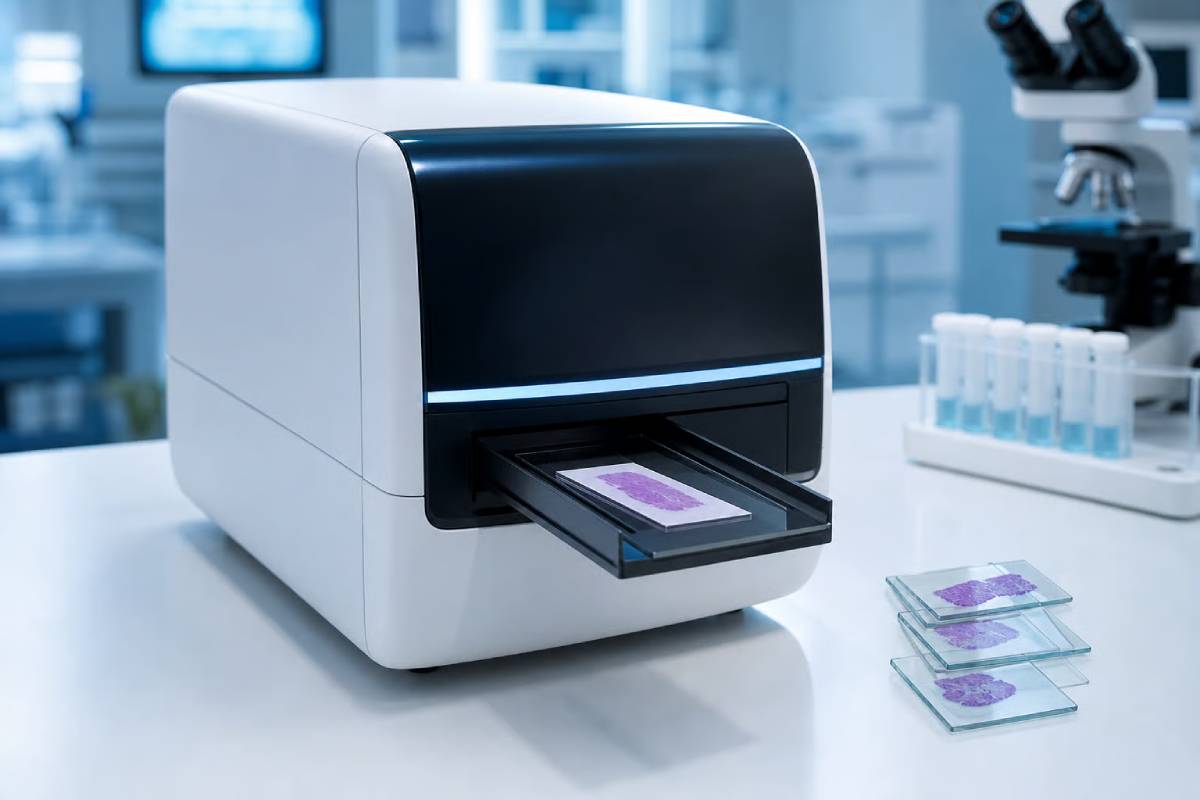
Image Source: Nordictech News

A strategic consolidation in Europe’s medtech AI space unfolded as Grundium acquired Denmark-based Visiopharm. The move aims to integrate microscopic scanning hardware with advanced diagnostic AI, signaling a push toward end-to-end digital pathology platforms with implications for healthcare systems, investors, and clinical diagnostics markets across Europe and beyond.

The acquisition brings together Grundium’s portable digital microscopy and Visiopharm’s AI-powered pathology software into a vertically integrated diagnostic stack. The combined platform targets hospitals, research labs, and diagnostic providers seeking faster and more accurate tissue analysis.

The deal reflects a broader consolidation trend in healthtech, where hardware and AI layers are increasingly merging. While financial terms were not fully disclosed, the strategic intent focuses on scaling AI-assisted diagnostics globally. The integration is expected to accelerate deployment in oncology, drug discovery, and clinical research workflows, where pathology bottlenecks remain a critical constraint on throughput and accuracy.

Digital pathology is undergoing rapid transformation as healthcare systems shift from manual slide analysis to AI-assisted interpretation. Historically, pathology workflows have been fragmented: sample preparation, imaging, and diagnostic interpretation often occur across separate systems and vendors.

The integration of scanner hardware and AI software into a single ecosystem represents a structural shift in the medtech industry. It aligns with a broader European push toward healthcare digitization, where efficiency, standardization, and cross-border data compatibility are becoming policy priorities.

This deal also reflects growing investor appetite for “full-stack” healthcare AI platforms. Instead of standalone algorithms, companies are increasingly seeking control over the entire diagnostic pipeline from image capture to clinical decision support improving both data quality and monetization potential.

Industry analysts view the merger as part of a broader convergence between imaging hardware and AI-driven diagnostics. The integration is expected to reduce latency between data acquisition and clinical interpretation, a key bottleneck in oncology and rare disease diagnostics.

Healthcare technology observers suggest that unified platforms like this could improve regulatory approval pathways, as end-to-end systems offer clearer validation environments for clinical performance.

While no formal public quotes were released at the time of reporting, sector experts note that such acquisitions are increasingly driven by the need to secure proprietary data pipelines. Control over both imaging and AI training data is becoming a competitive differentiator in medical diagnostics, especially as regulatory scrutiny around medical AI intensifies across the EU and US markets.

For healthcare providers, the combined stack could reduce diagnostic turnaround times and improve consistency in pathology reporting. Hospitals may benefit from streamlined procurement, shifting from multi-vendor ecosystems to integrated platforms.

For investors, the deal reinforces a clear trend: AI healthcare value is moving toward vertically integrated systems rather than standalone software tools. This may accelerate consolidation in the sector.

From a policy perspective, regulators may face new challenges in evaluating bundled AI-medical device systems, particularly around accountability and algorithmic transparency. Governments in Europe could also view such integrations as strategically important for healthcare resilience and digital sovereignty.

The next phase will likely focus on clinical validation, regulatory approvals, and scaling deployment across European healthcare systems. Integration success will depend on how seamlessly AI models can be embedded into real-world pathology workflows. Investors and industry players will watch whether the combined platform can expand beyond niche deployments into mainstream hospital networks, potentially setting a precedent for future AI-medtech consolidation.

Source: Nordictech News
Date: June 29, 2026

  • Featured tools
Figstack AI
Free

Figstack AI is an intelligent assistant for developers that explains code, generates docstrings, converts code between languages, and analyzes time complexity helping you work smarter, not harder.

#
Coding
Learn more
Murf Ai
Free

Murf AI Review – Advanced AI Voice Generator for Realistic Voiceovers

#
Text to Speech
Learn more

Learn more about future of AI

Join 80,000+ Ai enthusiast getting weekly updates on exciting AI tools.
Thank you! Your submission has been received!
Oops! Something went wrong while submitting the form.

Grundium Expands Pathology with Visiopharm

June 29, 2026

The acquisition brings together Grundium’s portable digital microscopy and Visiopharm’s AI-powered pathology software into a vertically integrated diagnostic stack.

Image Source: Nordictech News

A strategic consolidation in Europe’s medtech AI space unfolded as Grundium acquired Denmark-based Visiopharm. The move aims to integrate microscopic scanning hardware with advanced diagnostic AI, signaling a push toward end-to-end digital pathology platforms with implications for healthcare systems, investors, and clinical diagnostics markets across Europe and beyond.

The acquisition brings together Grundium’s portable digital microscopy and Visiopharm’s AI-powered pathology software into a vertically integrated diagnostic stack. The combined platform targets hospitals, research labs, and diagnostic providers seeking faster and more accurate tissue analysis.

The deal reflects a broader consolidation trend in healthtech, where hardware and AI layers are increasingly merging. While financial terms were not fully disclosed, the strategic intent focuses on scaling AI-assisted diagnostics globally. The integration is expected to accelerate deployment in oncology, drug discovery, and clinical research workflows, where pathology bottlenecks remain a critical constraint on throughput and accuracy.

Digital pathology is undergoing rapid transformation as healthcare systems shift from manual slide analysis to AI-assisted interpretation. Historically, pathology workflows have been fragmented: sample preparation, imaging, and diagnostic interpretation often occur across separate systems and vendors.

The integration of scanner hardware and AI software into a single ecosystem represents a structural shift in the medtech industry. It aligns with a broader European push toward healthcare digitization, where efficiency, standardization, and cross-border data compatibility are becoming policy priorities.

This deal also reflects growing investor appetite for “full-stack” healthcare AI platforms. Instead of standalone algorithms, companies are increasingly seeking control over the entire diagnostic pipeline from image capture to clinical decision support improving both data quality and monetization potential.

Industry analysts view the merger as part of a broader convergence between imaging hardware and AI-driven diagnostics. The integration is expected to reduce latency between data acquisition and clinical interpretation, a key bottleneck in oncology and rare disease diagnostics.

Healthcare technology observers suggest that unified platforms like this could improve regulatory approval pathways, as end-to-end systems offer clearer validation environments for clinical performance.

While no formal public quotes were released at the time of reporting, sector experts note that such acquisitions are increasingly driven by the need to secure proprietary data pipelines. Control over both imaging and AI training data is becoming a competitive differentiator in medical diagnostics, especially as regulatory scrutiny around medical AI intensifies across the EU and US markets.

For healthcare providers, the combined stack could reduce diagnostic turnaround times and improve consistency in pathology reporting. Hospitals may benefit from streamlined procurement, shifting from multi-vendor ecosystems to integrated platforms.

For investors, the deal reinforces a clear trend: AI healthcare value is moving toward vertically integrated systems rather than standalone software tools. This may accelerate consolidation in the sector.

From a policy perspective, regulators may face new challenges in evaluating bundled AI-medical device systems, particularly around accountability and algorithmic transparency. Governments in Europe could also view such integrations as strategically important for healthcare resilience and digital sovereignty.

The next phase will likely focus on clinical validation, regulatory approvals, and scaling deployment across European healthcare systems. Integration success will depend on how seamlessly AI models can be embedded into real-world pathology workflows. Investors and industry players will watch whether the combined platform can expand beyond niche deployments into mainstream hospital networks, potentially setting a precedent for future AI-medtech consolidation.

Source: Nordictech News
Date: June 29, 2026

Promote Your Tool

Copy Embed Code

Similar Blogs

June 29, 2026
|

Cryptomathic Expands Nordic Cryptography

The acquisition of TrustSkills by Cryptomathic adds specialized cryptographic expertise to its existing security software portfolio.
Read more
June 29, 2026
|

Sweden Angels Build Self-IPO Model

The initiative known as Snöboll is being built by members of the Nordic angel ecosystem, including networks such as Nordic Angels.
Read more
June 29, 2026
|

Grundium Expands Pathology with Visiopharm

The acquisition brings together Grundium’s portable digital microscopy and Visiopharm’s AI-powered pathology software into a vertically integrated diagnostic stack.
Read more
June 29, 2026
|

Climate Petition Targets Rhône Glacier Cave

The petition argues that the constructed ice cave accelerates environmental stress on the already retreating Rhône Glacier, one of Switzerland’s most closely monitored climate indicators.
Read more
June 29, 2026
|

Shape Shifting Robot Built in Switzerland

The newly developed robot can dynamically change its structure to navigate complex environments, transition between locomotion modes, and perform multiple task functions.
Read more
June 29, 2026
|

Switzerland Unveils Open AI Model

The newly launched AI model emphasizes transparency, explainability, and open access, allowing researchers, developers, and institutions to understand its underlying architecture and decision-making processes.
Read more