
Handheld Gaming Enters Slowdown Era

Recent price adjustments in major handheld gaming devices, including upward revisions in Steam Deck pricing in select markets, have intensified concerns about affordability-driven demand erosion.

May 29, 2026
|
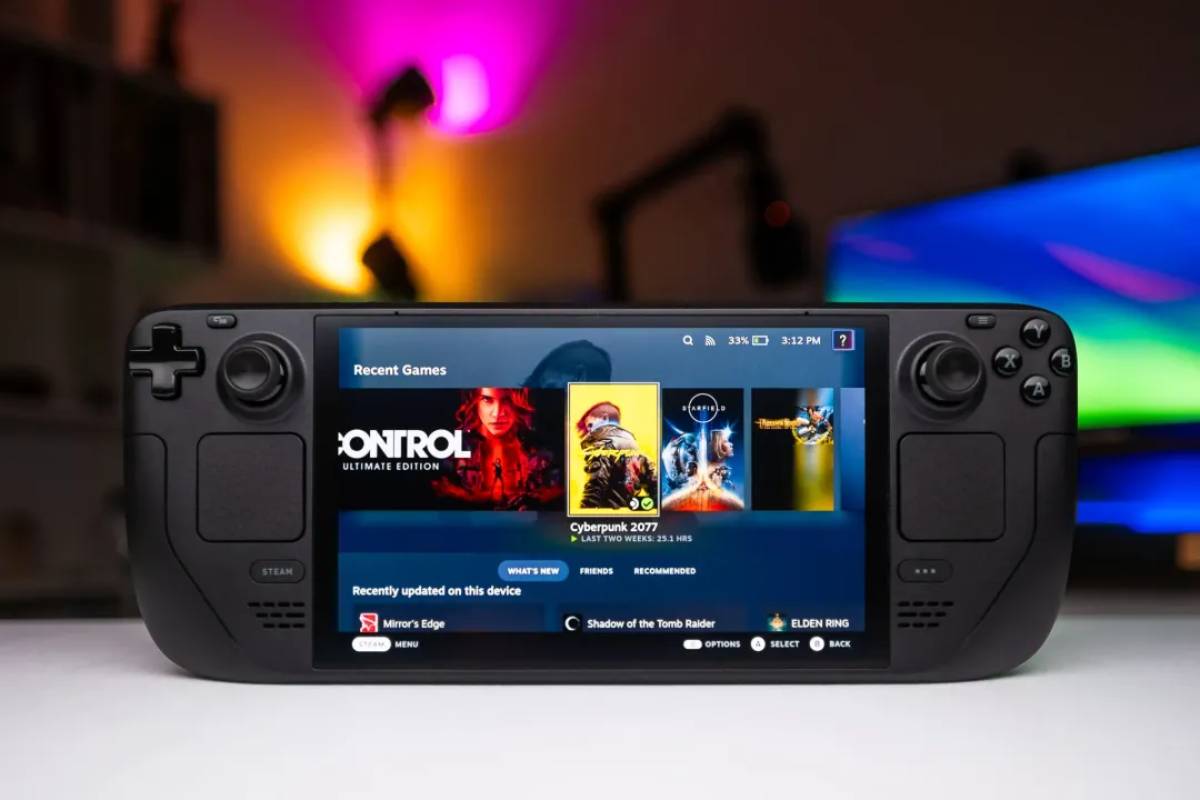
Image Source: The Verge

The handheld gaming market is showing signs of structural slowdown as rising device costs, pricing adjustments, and maturing demand reshape growth expectations. Once viewed as a fast-expanding segment led by devices like the Steam Deck and Nintendo Switch ecosystem, the category is now facing questions about its long-term expansion trajectory and consumer elasticity.

Recent price adjustments in major handheld gaming devices, including upward revisions in Steam Deck pricing in select markets, have intensified concerns about affordability-driven demand erosion. Market observers point to weakening momentum in new hardware adoption cycles, particularly as global inflation pressures affect discretionary spending.

Key stakeholders include Valve, Nintendo, and competing portable gaming OEMs targeting hybrid console-PC experiences. Retail data suggests slower-than-expected uptake of premium handheld models compared to initial projections. Analysts also highlight supply chain normalization post-pandemic as reducing the scarcity-driven appeal that previously fueled rapid growth in this segment.

The handheld gaming category experienced a resurgence during the early 2020s, driven by hybrid work culture, portable AAA gaming demand, and advances in chip efficiency. Devices such as the Steam Deck and Nintendo Switch helped redefine mobile gaming beyond smartphones, positioning handheld consoles as serious performance platforms rather than casual entertainment tools.

However, the market is now transitioning from early growth to maturity. Historically, similar hardware cycles such as portable media players and dedicated gaming handhelds in the 2000s have shown sharp adoption curves followed by stagnation once core demand is saturated.

The current environment is also shaped by cloud gaming expansion and cross-platform ecosystems, reducing reliance on dedicated handheld hardware. This structural shift suggests the category may be entering a consolidation phase rather than continued exponential growth.

Industry analysts argue that the handheld gaming segment is undergoing a natural normalization phase after its pandemic-era acceleration. According to market strategists, the initial wave of demand was driven by novelty and limited competition, conditions that are now fading as multiple platforms converge.

Gaming economists note that rising hardware costs particularly for advanced GPUs and portable chipsets are compressing margins and forcing price adjustments that may deter entry-level consumers. While companies like Valve have not formally signaled a slowdown strategy, their pricing behavior reflects broader component cost realities.

Industry commentators also suggest that consumer attention is shifting toward subscription-based gaming ecosystems, reducing dependence on standalone hardware ownership and accelerating the move toward platform-centric engagement models.

For hardware manufacturers, the slowdown signals a need to reassess pricing structures and product differentiation strategies in a more mature market. Companies heavily invested in handheld ecosystems may need to diversify into software services, cloud gaming integration, or hybrid device ecosystems to sustain revenue growth.

For investors, the segment’s deceleration could indicate a transition from high-growth valuation multiples to stable, margin-focused business models. Consumers may benefit from periodic price corrections, but innovation cycles could slow as competition intensifies.

From a broader policy perspective, the trend reflects how global semiconductor costs and supply chain dynamics continue to influence consumer electronics affordability. The handheld gaming market is expected to stabilize over the next product cycles, with incremental innovation replacing rapid expansion. Analysts will closely monitor whether cloud gaming adoption further reduces hardware dependency or whether premium handheld devices carve out a sustainable niche. The key uncertainty lies in whether this segment can reignite growth through next-generation performance breakthroughs or remain confined to a mature, replacement-driven market.

Source: The Verge
Date: May 29, 2026

  • Featured tools
Copy Ai
Free

Copy AI is one of the most popular AI writing tools designed to help professionals create high-quality content quickly. Whether you are a product manager drafting feature descriptions or a marketer creating ad copy, Copy AI can save hours of work while maintaining creativity and tone.

#
Copywriting
Learn more
Writesonic AI
Free

Writesonic AI is a versatile AI writing platform designed for marketers, entrepreneurs, and content creators. It helps users create blog posts, ad copies, product descriptions, social media posts, and more with ease. With advanced AI models and user-friendly tools, Writesonic streamlines content production and saves time for busy professionals.

#
Copywriting
Learn more

Learn more about future of AI

Join 80,000+ Ai enthusiast getting weekly updates on exciting AI tools.
Thank you! Your submission has been received!
Oops! Something went wrong while submitting the form.

Handheld Gaming Enters Slowdown Era

May 29, 2026

Recent price adjustments in major handheld gaming devices, including upward revisions in Steam Deck pricing in select markets, have intensified concerns about affordability-driven demand erosion.

Image Source: The Verge

The handheld gaming market is showing signs of structural slowdown as rising device costs, pricing adjustments, and maturing demand reshape growth expectations. Once viewed as a fast-expanding segment led by devices like the Steam Deck and Nintendo Switch ecosystem, the category is now facing questions about its long-term expansion trajectory and consumer elasticity.

Recent price adjustments in major handheld gaming devices, including upward revisions in Steam Deck pricing in select markets, have intensified concerns about affordability-driven demand erosion. Market observers point to weakening momentum in new hardware adoption cycles, particularly as global inflation pressures affect discretionary spending.

Key stakeholders include Valve, Nintendo, and competing portable gaming OEMs targeting hybrid console-PC experiences. Retail data suggests slower-than-expected uptake of premium handheld models compared to initial projections. Analysts also highlight supply chain normalization post-pandemic as reducing the scarcity-driven appeal that previously fueled rapid growth in this segment.

The handheld gaming category experienced a resurgence during the early 2020s, driven by hybrid work culture, portable AAA gaming demand, and advances in chip efficiency. Devices such as the Steam Deck and Nintendo Switch helped redefine mobile gaming beyond smartphones, positioning handheld consoles as serious performance platforms rather than casual entertainment tools.

However, the market is now transitioning from early growth to maturity. Historically, similar hardware cycles such as portable media players and dedicated gaming handhelds in the 2000s have shown sharp adoption curves followed by stagnation once core demand is saturated.

The current environment is also shaped by cloud gaming expansion and cross-platform ecosystems, reducing reliance on dedicated handheld hardware. This structural shift suggests the category may be entering a consolidation phase rather than continued exponential growth.

Industry analysts argue that the handheld gaming segment is undergoing a natural normalization phase after its pandemic-era acceleration. According to market strategists, the initial wave of demand was driven by novelty and limited competition, conditions that are now fading as multiple platforms converge.

Gaming economists note that rising hardware costs particularly for advanced GPUs and portable chipsets are compressing margins and forcing price adjustments that may deter entry-level consumers. While companies like Valve have not formally signaled a slowdown strategy, their pricing behavior reflects broader component cost realities.

Industry commentators also suggest that consumer attention is shifting toward subscription-based gaming ecosystems, reducing dependence on standalone hardware ownership and accelerating the move toward platform-centric engagement models.

For hardware manufacturers, the slowdown signals a need to reassess pricing structures and product differentiation strategies in a more mature market. Companies heavily invested in handheld ecosystems may need to diversify into software services, cloud gaming integration, or hybrid device ecosystems to sustain revenue growth.

For investors, the segment’s deceleration could indicate a transition from high-growth valuation multiples to stable, margin-focused business models. Consumers may benefit from periodic price corrections, but innovation cycles could slow as competition intensifies.

From a broader policy perspective, the trend reflects how global semiconductor costs and supply chain dynamics continue to influence consumer electronics affordability. The handheld gaming market is expected to stabilize over the next product cycles, with incremental innovation replacing rapid expansion. Analysts will closely monitor whether cloud gaming adoption further reduces hardware dependency or whether premium handheld devices carve out a sustainable niche. The key uncertainty lies in whether this segment can reignite growth through next-generation performance breakthroughs or remain confined to a mature, replacement-driven market.

Source: The Verge
Date: May 29, 2026

Promote Your Tool

Copy Embed Code

Similar Blogs

May 29, 2026
|

YouTube AI Personalization Redefines Scrolling

The new AI system introduces customized content feeds that respond to user prompts and behavior, dynamically adjusting recommendations beyond traditional algorithmic ranking.
Read more
May 29, 2026
|

Google Chrome AI Download Raises Questions

Reports indicate that certain Chrome installations may have quietly fetched a substantial AI model in the background as part of new browser capabilities tied to on-device intelligence.
Read more
May 29, 2026
|

Apple iOS 27 Transforms Siri AI Assistant

Apple’s iOS 27 is reportedly set to introduce a deeply upgraded version of Siri, integrating more advanced AI capabilities, improved contextual understanding, and tighter system-level functionality.
Read more
May 29, 2026
|

Affordable AI PCs Emerge Globally

The Snapdragon C processors are aimed at budget-friendly laptops optimized for basic productivity and AI-assisted tasks such as content summarization and lightweight generative applications.
Read more
May 29, 2026
|

Water Ready Drones Signal New Robotics Frontier

The HoverAir Aqua introduces waterproofing capabilities that allow stable flight and operation in wet conditions, including takeoff and landing near water surfaces. Early hands-on demonstrations suggest improvements in stability, automated tracking.
Read more
May 29, 2026
|

AI Filmmaking Enters Mainstream at Tribeca

The film, reportedly produced with a budget of just $2,000, leverages generative AI tools for scripting, visuals, and post-production workflows.
Read more