



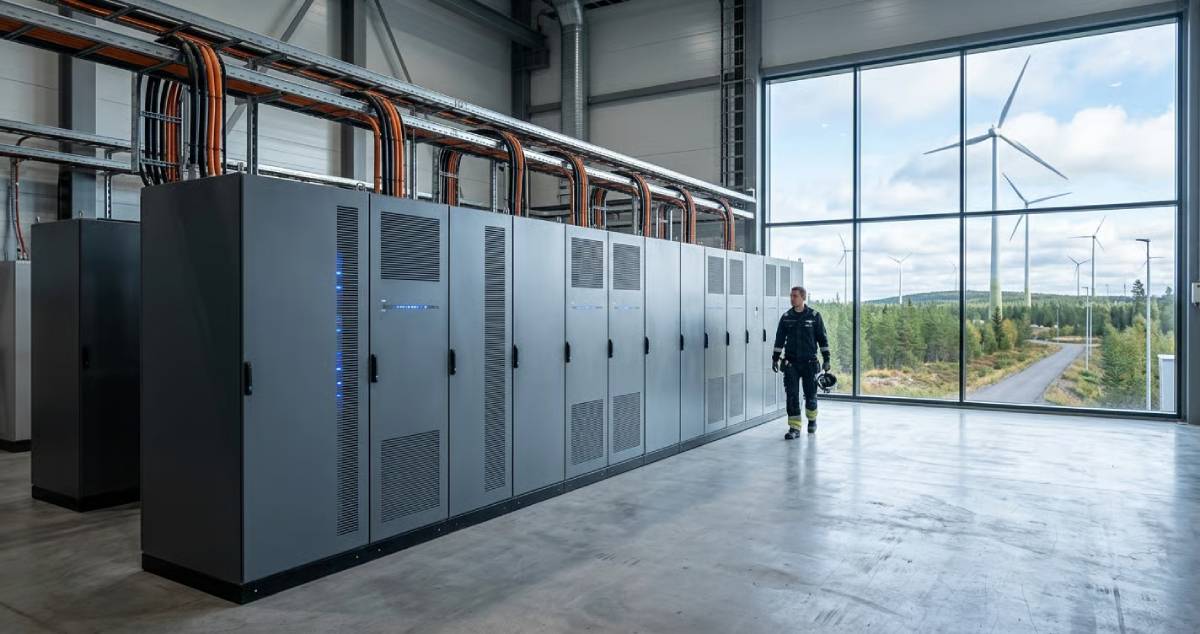
A consortium led by Hyundai and USV has invested €12.5 million in a Finnish battery storage company, signaling growing global confidence in next-generation energy storage technologies. The move highlights intensifying competition in the clean energy sector, where scalable battery systems are becoming critical to grid stability, electrification, and industrial decarbonization strategies.
The €12.5 million investment round brings together strategic industrial players and venture investors focused on accelerating the commercialization of advanced battery storage systems. Hyundai’s participation underscores its broader push into electrification and energy infrastructure, while USV adds venture capital backing to the Finnish startup’s expansion roadmap.
The funding will support scaling production capacity, enhancing energy density technologies, and expanding deployment across commercial and grid-level applications. As global energy systems transition toward renewables, battery storage is becoming essential for balancing intermittent supply from wind and solar, making this segment increasingly attractive for both industrial and financial stakeholders.
The investment reflects a broader global shift toward energy transition infrastructure, where battery storage is emerging as a foundational technology for decarbonized power systems. As countries accelerate renewable energy adoption, the need for efficient, large-scale energy storage has become critical to ensuring grid reliability and managing peak demand.
Europe is at the forefront of this transition, driven by ambitious climate targets, energy security concerns, and reduced reliance on fossil fuel imports. Finland, in particular, has positioned itself as an innovation hub for clean energy technologies, benefiting from strong engineering expertise and supportive industrial policy frameworks.
Automotive and industrial conglomerates like Hyundai are increasingly diversifying into energy ecosystems beyond electric vehicles, recognizing that long-term competitiveness depends on integrated energy solutions spanning generation, storage, and mobility.
Energy analysts describe battery storage as the “missing link” in renewable energy scalability. While solar and wind generation have expanded rapidly, grid instability remains a key challenge without efficient storage systems capable of absorbing and redistributing energy at scale.
Industry experts note that advancements in battery chemistry, modular storage systems, and smart grid integration are driving a new wave of commercialization opportunities. Strategic investors are increasingly targeting startups that can deliver both cost efficiency and scalability across utility and industrial applications.
Market observers also highlight that corporate participation from automotive leaders like Hyundai signals convergence between mobility and energy infrastructure sectors. This integration is expected to accelerate innovation cycles while increasing competition across global battery manufacturing and energy storage markets.
For businesses, the investment underscores the rising importance of energy storage in industrial strategy, supply chain resilience, and long-term decarbonization planning. Companies operating in manufacturing, logistics, and energy-intensive sectors may increasingly rely on advanced storage systems to optimize costs and reduce emissions.
For investors, the sector represents a high-growth opportunity tied directly to global electrification and renewable expansion. Governments are also likely to strengthen incentives and regulatory frameworks to accelerate storage deployment as part of national energy security strategies.
Executives will need to closely monitor technological advancements, cost curves, and policy shifts shaping the competitive landscape of global battery markets. Battery storage is expected to become a central pillar of global energy infrastructure over the next decade. As deployment scales, competition will intensify across technology providers, automotive players, and energy utilities. Future growth will depend on breakthroughs in efficiency, cost reduction, and grid integration. Stakeholders will closely watch how rapidly the Finnish startup can scale its technology into commercial and utility-grade deployments.
Source: Nordic Tech News
Date: July 3, 2026


