
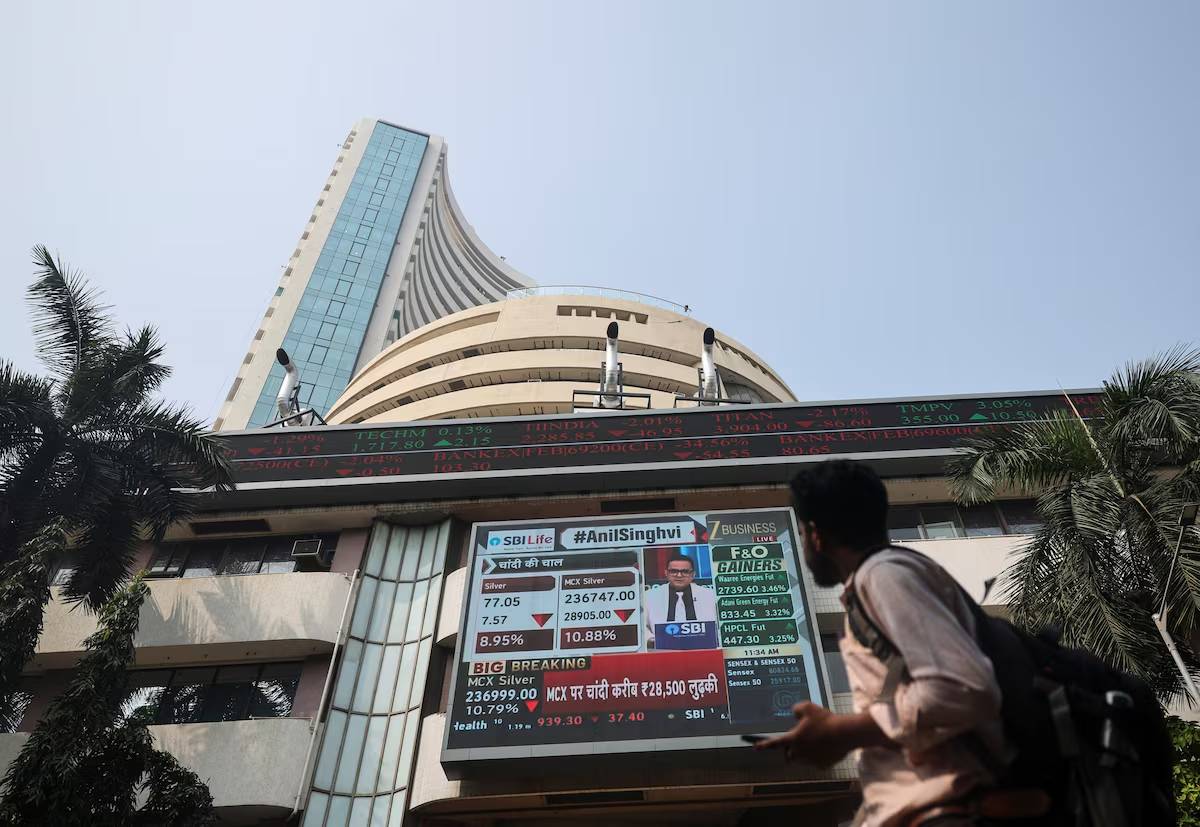
Indian IT Stocks Tumble on AI Fears

The Nifty IT index dropped over 4%, marking its sharpest fall in months, as investors reassessed growth prospects for major technology exporters. Leading firms with significant exposure to the US market saw notable declines.

February 12, 2026
|

Indian IT stocks slid more than 4%, hitting a four-month low as concerns over AI-driven disruption and uncertainty around US interest rate cuts weighed on investor sentiment. The decline signals mounting pressure on one of India’s most globally integrated sectors, with implications for export revenues, hiring, and market stability.

Market participants cited two primary triggers: rising concerns that generative AI could compress margins in traditional outsourcing models, and fading expectations of imminent US Federal Reserve rate cuts.

The US remains the largest revenue contributor for Indian IT services companies. Any slowdown in American enterprise spending or delay in monetary easing could directly affect contract pipelines and earnings forecasts.

The selloff reflects broader nervousness across global technology markets as macroeconomic and structural shifts converge.

The development aligns with a broader trend across global markets where AI transformation is reshaping the economics of IT services. Indian technology firms have historically thrived on cost arbitrage and large-scale outsourcing contracts from Western clients.

However, generative AI tools are beginning to automate coding, testing, and support functions areas that traditionally generated significant billing hours. This has sparked debate over whether AI will enhance productivity or erode revenue models.

Simultaneously, the trajectory of US interest rates remains critical. Higher-for-longer rate scenarios typically reduce corporate technology spending, particularly on large transformation projects.

Indian IT companies are also navigating post-pandemic demand normalization after a surge in digital spending between 2020 and 2022. The combination of AI uncertainty and macroeconomic headwinds is amplifying investor caution.

Market analysts suggest that the recent correction may reflect short-term sentiment rather than structural decline. Some argue that Indian IT majors are actively integrating AI into service offerings, positioning themselves as AI implementation partners rather than victims of automation.

Industry observers note that AI could improve margins by reducing delivery costs while enabling higher-value consulting services. However, they caution that pricing models may need adjustment as clients demand efficiency gains.

Economists emphasize that US monetary policy remains a dominant variable. A delayed rate-cut cycle could suppress discretionary IT budgets, affecting deal closures and renewal rates.

Corporate leaders within the sector have repeatedly highlighted investments in AI training and platform partnerships, signaling an effort to stay ahead of technological disruption.

For global executives, the volatility underscores the urgency of rethinking service delivery models in the AI era. Firms reliant on labor-intensive billing structures may need to pivot toward outcome-based pricing and AI-enabled consulting.

Investors could adopt a more selective approach, favoring companies with diversified client bases and demonstrated AI capabilities. Market swings may persist as clarity on US rates emerges.

From a policy perspective, India’s government may accelerate digital skilling initiatives to safeguard competitiveness. The IT sector is a major contributor to exports and employment, making its resilience a macroeconomic priority.

Clients worldwide may benefit from lower costs but will demand greater innovation and efficiency.

Attention will now turn to quarterly earnings guidance, deal pipeline commentary, and signals from the US Federal Reserve. Investors will closely monitor how effectively Indian IT firms monetize AI integration.

The sector’s long-term trajectory may depend less on fear of automation and more on its ability to lead the next wave of AI-enabled enterprise transformation.

Source: Reuters
Date: February 12, 2026

  • Featured tools
Outplay AI
Free

Outplay AI is a dynamic sales engagement platform combining AI-powered outreach, multi-channel automation, and performance tracking to help teams optimize conversion and pipeline generation.

#
Sales
Learn more
WellSaid Ai
Free

WellSaid AI is an advanced text-to-speech platform that transforms written text into lifelike, human-quality voiceovers.

#
Text to Speech
Learn more

Learn more about future of AI

Join 80,000+ Ai enthusiast getting weekly updates on exciting AI tools.
Thank you! Your submission has been received!
Oops! Something went wrong while submitting the form.

Indian IT Stocks Tumble on AI Fears

February 12, 2026

The Nifty IT index dropped over 4%, marking its sharpest fall in months, as investors reassessed growth prospects for major technology exporters. Leading firms with significant exposure to the US market saw notable declines.

Indian IT stocks slid more than 4%, hitting a four-month low as concerns over AI-driven disruption and uncertainty around US interest rate cuts weighed on investor sentiment. The decline signals mounting pressure on one of India’s most globally integrated sectors, with implications for export revenues, hiring, and market stability.

Market participants cited two primary triggers: rising concerns that generative AI could compress margins in traditional outsourcing models, and fading expectations of imminent US Federal Reserve rate cuts.

The US remains the largest revenue contributor for Indian IT services companies. Any slowdown in American enterprise spending or delay in monetary easing could directly affect contract pipelines and earnings forecasts.

The selloff reflects broader nervousness across global technology markets as macroeconomic and structural shifts converge.

The development aligns with a broader trend across global markets where AI transformation is reshaping the economics of IT services. Indian technology firms have historically thrived on cost arbitrage and large-scale outsourcing contracts from Western clients.

However, generative AI tools are beginning to automate coding, testing, and support functions areas that traditionally generated significant billing hours. This has sparked debate over whether AI will enhance productivity or erode revenue models.

Simultaneously, the trajectory of US interest rates remains critical. Higher-for-longer rate scenarios typically reduce corporate technology spending, particularly on large transformation projects.

Indian IT companies are also navigating post-pandemic demand normalization after a surge in digital spending between 2020 and 2022. The combination of AI uncertainty and macroeconomic headwinds is amplifying investor caution.

Market analysts suggest that the recent correction may reflect short-term sentiment rather than structural decline. Some argue that Indian IT majors are actively integrating AI into service offerings, positioning themselves as AI implementation partners rather than victims of automation.

Industry observers note that AI could improve margins by reducing delivery costs while enabling higher-value consulting services. However, they caution that pricing models may need adjustment as clients demand efficiency gains.

Economists emphasize that US monetary policy remains a dominant variable. A delayed rate-cut cycle could suppress discretionary IT budgets, affecting deal closures and renewal rates.

Corporate leaders within the sector have repeatedly highlighted investments in AI training and platform partnerships, signaling an effort to stay ahead of technological disruption.

For global executives, the volatility underscores the urgency of rethinking service delivery models in the AI era. Firms reliant on labor-intensive billing structures may need to pivot toward outcome-based pricing and AI-enabled consulting.

Investors could adopt a more selective approach, favoring companies with diversified client bases and demonstrated AI capabilities. Market swings may persist as clarity on US rates emerges.

From a policy perspective, India’s government may accelerate digital skilling initiatives to safeguard competitiveness. The IT sector is a major contributor to exports and employment, making its resilience a macroeconomic priority.

Clients worldwide may benefit from lower costs but will demand greater innovation and efficiency.

Attention will now turn to quarterly earnings guidance, deal pipeline commentary, and signals from the US Federal Reserve. Investors will closely monitor how effectively Indian IT firms monetize AI integration.

The sector’s long-term trajectory may depend less on fear of automation and more on its ability to lead the next wave of AI-enabled enterprise transformation.

Source: Reuters
Date: February 12, 2026

Promote Your Tool

Copy Embed Code

Similar Blogs

February 12, 2026
|

US Advances AI Investment Drive as China Rivalry Deepens

Washington framed the initiative as a push for transparent, rules-based economic growth, while implicitly countering China’s expanding technological footprint in the region. AI funding proposals emphasized infrastructure.
Read more
February 12, 2026
|

Indian IT Stocks Tumble on AI Fears

The Nifty IT index dropped over 4%, marking its sharpest fall in months, as investors reassessed growth prospects for major technology exporters. Leading firms with significant exposure to the US market saw notable declines.
Read more
February 12, 2026
|

Alarmism Clouds AI Debate as Industry Grapples With Credibility Risks

Commentary surrounding AI has increasingly oscillated between utopian promise and catastrophic risk. Industry leaders, technologists, and public figures have issued warnings ranging from job displacement to existential threats.
Read more
February 12, 2026
|

AI Stock Rally Faces 2026 Volatility Test

After posting significant gains over the past two years, AI-linked equities particularly chipmakers, cloud providers, and enterprise software firms—have reached elevated valuations.
Read more
February 12, 2026
|

Fears of AI Driven Software Collapse Overstated as Sector Stabilises

Investors had rotated capital toward AI infrastructure players, triggering selloffs in traditional software stocks. Yet analysts now argue that AI is augmenting software capabilities rather than eliminating demand.
Read more
February 12, 2026
|

Google Pushes AI First Culture, Offers Staff Exits

Google has introduced voluntary exit packages for employees who are not aligned with the company’s accelerated artificial intelligence strategy.
Read more