



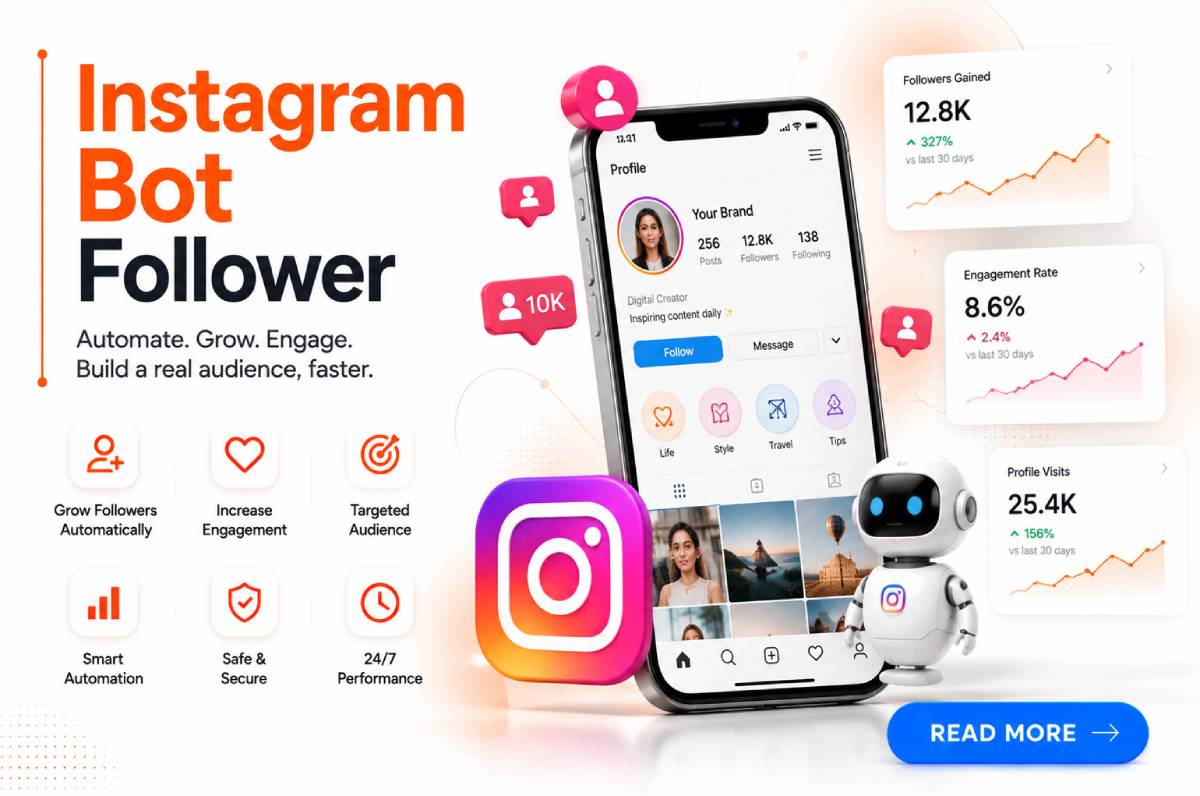
Instagram Bot Follower represents the expanding market for social media automation tools designed to support audience growth and engagement strategies. As businesses, creators, and marketers compete for visibility across digital platforms, automation technologies are attracting attention while raising important discussions around authenticity, platform policies, and responsible digital marketing practices.
Social media automation platforms such as Instagram Bot Follower are designed to assist users with activities related to audience management, engagement, and account growth. These solutions reflect increasing demand among brands and creators seeking faster ways to manage online presence and improve visibility.
However, automated engagement tools operate within a changing regulatory and platform environment, where major social networks continue strengthening measures against artificial growth practices. Businesses using automation technologies must balance efficiency with compliance, ensuring that digital strategies focus on genuine engagement, brand reputation, and sustainable audience relationships.
The growth of influencer marketing, social commerce, and digital branding has created intense competition for attention on platforms such as Instagram. Companies and creators increasingly rely on analytics, automation, and engagement tools to improve their online performance. At the same time, social media platforms have introduced stricter policies to reduce fake followers, artificial interactions, and misleading engagement metrics. This shift reflects a broader industry movement toward authentic digital communities and data-driven marketing strategies. Automation technology continues to evolve, with many organizations adopting tools that improve workflow efficiency while maintaining compliance with platform standards. The future of social media growth is expected to focus less on artificial numbers and more on meaningful audience connections, content quality, and measurable business outcomes.
Digital marketing analysts emphasize that automation can provide valuable support when used responsibly, helping teams manage repetitive tasks, analyze performance data, and optimize campaigns. However, experts warn that relying heavily on artificial engagement methods can damage brand credibility and reduce audience trust. Marketing professionals increasingly recommend combining automation with authentic content strategies, community interaction, and transparent communication.
Social media platforms continue investing in technologies that identify suspicious activities and protect the integrity of online interactions. Industry observers believe the next generation of social media tools will prioritize AI-powered insights, audience analytics, and ethical automation rather than simple follower-growth mechanisms. For businesses, maintaining authenticity while improving efficiency will remain a key challenge in the evolving digital marketing landscape.
For businesses and creators, tools associated with social media automation highlight both opportunities and risks. Automation can improve productivity, simplify account management, and provide insights into audience behavior. However, companies must carefully evaluate whether these solutions align with platform policies and long-term brand objectives.
Investors and marketing leaders are increasingly focused on technologies that deliver measurable engagement rather than inflated metrics. From a policy perspective, continued action against fake accounts and artificial interactions is likely as platforms prioritize user trust. Organizations adopting automation solutions will need to emphasize ethical practices, data transparency, and genuine customer relationships.
The future of social media growth will increasingly depend on intelligent automation, analytics, and authentic engagement strategies. While automation tools may continue supporting marketers and creators, sustainable success will require balancing technology with human interaction. Decision-makers should monitor platform policy changes, AI developments, and evolving consumer expectations as digital marketing becomes more competitive and data-driven.
Source: Crozdesk
Date: August 2026


