
Luxembourg Marks Cybersecurity Leadership Milestone

CLUSIL’s 30-year journey showcases Luxembourg’s transformation into a mature cybersecurity ecosystem built on collaboration between businesses, public institutions, and technology experts.

July 9, 2026
|

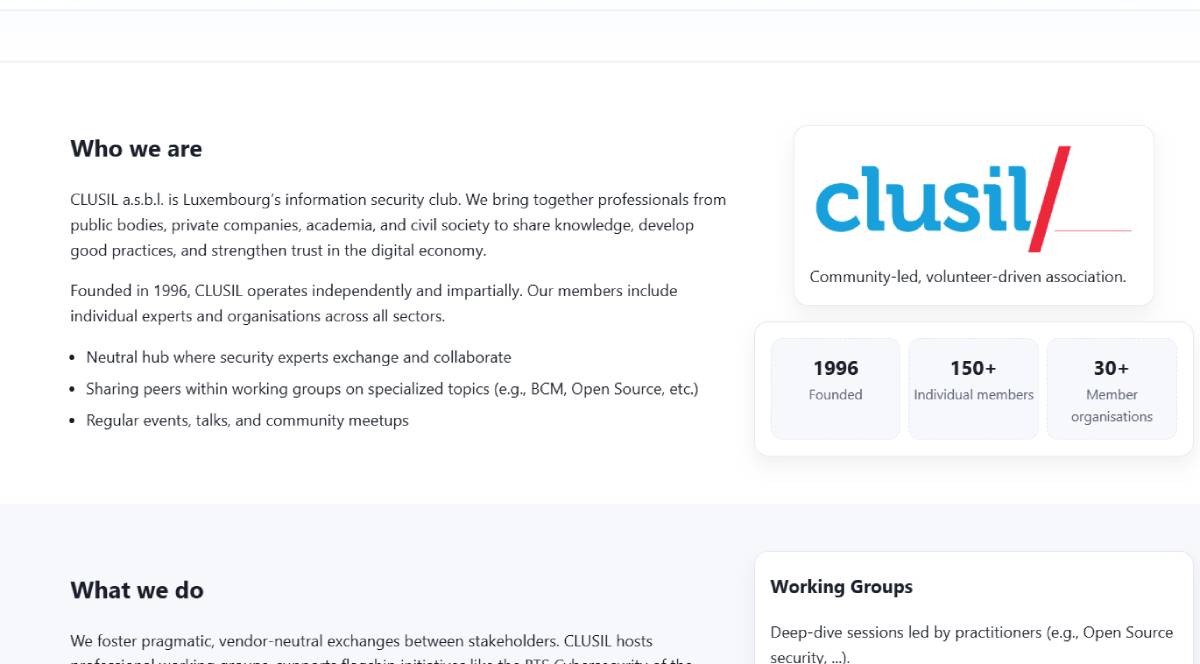
Luxembourg’s cybersecurity community is reflecting on three decades of progress as CLUSIL, one of the country’s longest-standing information security organizations, marks its 30th anniversary. The milestone highlights how cybersecurity has evolved from a niche IT discipline into a strategic business and national security priority, carrying significant implications for enterprises, governments, and digital economies worldwide.

CLUSIL’s 30-year journey showcases Luxembourg’s transformation into a mature cybersecurity ecosystem built on collaboration between businesses, public institutions, and technology experts. Over the past three decades, cyber threats have evolved dramatically from isolated malware incidents to sophisticated ransomware attacks, supply-chain compromises, and state-sponsored cyber operations.

The organization has contributed to knowledge sharing, professional development, and security awareness across Luxembourg's financial, governmental, and technology sectors. Its anniversary serves as both a celebration of industry progress and a reminder that cybersecurity must continuously evolve alongside digital transformation, artificial intelligence, cloud computing, and increasingly interconnected critical infrastructure.

The cybersecurity landscape has undergone profound transformation since the mid-1990s. What was once considered primarily an IT operational concern has become a boardroom issue influencing corporate governance, financial stability, national resilience, and geopolitical security.

Luxembourg, home to one of Europe's largest financial centers and an expanding digital economy, has consistently invested in strengthening cyber resilience. The country's emphasis on secure financial services, satellite communications, fintech innovation, cloud infrastructure, and digital public services has increased the importance of robust cybersecurity capabilities.

The anniversary also comes as Europe implements stricter cybersecurity regulations, including enhanced requirements for critical infrastructure protection, incident reporting, and supply-chain resilience. Organizations across industries are now expected to adopt proactive cyber risk management rather than relying solely on reactive security measures. CLUSIL's history mirrors this broader evolution from technical defense toward enterprise-wide cyber governance.

Cybersecurity experts increasingly emphasize that technological defenses alone cannot eliminate cyber risk. Human awareness, executive leadership, organizational culture, and continuous collaboration are now considered equally important components of effective cyber resilience.

Industry leaders often point to Luxembourg as an example of how public-private partnerships can strengthen national cybersecurity capabilities through shared intelligence, education, and coordinated incident response. Organizations such as CLUSIL have played an important role by connecting security professionals, regulators, financial institutions, and technology providers to exchange best practices.

Analysts also note that emerging technologies including artificial intelligence, quantum computing, and increasingly sophisticated cybercrime operations—are fundamentally reshaping the threat landscape. Consequently, cybersecurity professionals must continually update skills while organizations embed security into every stage of digital transformation rather than treating it as a standalone compliance exercise.

For business leaders, the lessons from CLUSIL's three decades reinforce that cybersecurity has become a strategic investment rather than simply an operational expense. Boards must prioritize cyber governance, workforce training, third-party risk management, and resilience planning as cyber threats continue growing in complexity.

Investors increasingly evaluate cybersecurity maturity when assessing operational risk, particularly in financial services, healthcare, manufacturing, and critical infrastructure sectors. Policymakers, meanwhile, are expected to continue strengthening cybersecurity regulations while encouraging closer cooperation between governments and private industry. Organizations that proactively invest in cyber resilience are likely to gain stronger stakeholder trust and greater long-term operational stability.

Looking ahead, cybersecurity will become even more central to economic competitiveness as artificial intelligence, cloud computing, connected infrastructure, and digital services continue expanding. Business leaders should monitor evolving European regulations, emerging AI-driven cyber threats, and new approaches to cyber resilience. Luxembourg’s experience demonstrates that long-term collaboration, continuous education, and adaptive security strategies remain essential foundations for protecting digital economies in an increasingly interconnected world.

Source: Silicon Luxembourg
Date: July 9, 2026

  • Featured tools
Alli AI
Free

Alli AI is an all-in-one, AI-powered SEO automation platform that streamlines on-page optimization, site auditing, speed improvements, schema generation, internal linking, and ranking insights.

#
SEO
Learn more
WellSaid Ai
Free

WellSaid AI is an advanced text-to-speech platform that transforms written text into lifelike, human-quality voiceovers.

#
Text to Speech
Learn more

Learn more about future of AI

Join 80,000+ Ai enthusiast getting weekly updates on exciting AI tools.
Thank you! Your submission has been received!
Oops! Something went wrong while submitting the form.

Luxembourg Marks Cybersecurity Leadership Milestone

July 9, 2026

CLUSIL’s 30-year journey showcases Luxembourg’s transformation into a mature cybersecurity ecosystem built on collaboration between businesses, public institutions, and technology experts.

Luxembourg’s cybersecurity community is reflecting on three decades of progress as CLUSIL, one of the country’s longest-standing information security organizations, marks its 30th anniversary. The milestone highlights how cybersecurity has evolved from a niche IT discipline into a strategic business and national security priority, carrying significant implications for enterprises, governments, and digital economies worldwide.

CLUSIL’s 30-year journey showcases Luxembourg’s transformation into a mature cybersecurity ecosystem built on collaboration between businesses, public institutions, and technology experts. Over the past three decades, cyber threats have evolved dramatically from isolated malware incidents to sophisticated ransomware attacks, supply-chain compromises, and state-sponsored cyber operations.

The organization has contributed to knowledge sharing, professional development, and security awareness across Luxembourg's financial, governmental, and technology sectors. Its anniversary serves as both a celebration of industry progress and a reminder that cybersecurity must continuously evolve alongside digital transformation, artificial intelligence, cloud computing, and increasingly interconnected critical infrastructure.

The cybersecurity landscape has undergone profound transformation since the mid-1990s. What was once considered primarily an IT operational concern has become a boardroom issue influencing corporate governance, financial stability, national resilience, and geopolitical security.

Luxembourg, home to one of Europe's largest financial centers and an expanding digital economy, has consistently invested in strengthening cyber resilience. The country's emphasis on secure financial services, satellite communications, fintech innovation, cloud infrastructure, and digital public services has increased the importance of robust cybersecurity capabilities.

The anniversary also comes as Europe implements stricter cybersecurity regulations, including enhanced requirements for critical infrastructure protection, incident reporting, and supply-chain resilience. Organizations across industries are now expected to adopt proactive cyber risk management rather than relying solely on reactive security measures. CLUSIL's history mirrors this broader evolution from technical defense toward enterprise-wide cyber governance.

Cybersecurity experts increasingly emphasize that technological defenses alone cannot eliminate cyber risk. Human awareness, executive leadership, organizational culture, and continuous collaboration are now considered equally important components of effective cyber resilience.

Industry leaders often point to Luxembourg as an example of how public-private partnerships can strengthen national cybersecurity capabilities through shared intelligence, education, and coordinated incident response. Organizations such as CLUSIL have played an important role by connecting security professionals, regulators, financial institutions, and technology providers to exchange best practices.

Analysts also note that emerging technologies including artificial intelligence, quantum computing, and increasingly sophisticated cybercrime operations—are fundamentally reshaping the threat landscape. Consequently, cybersecurity professionals must continually update skills while organizations embed security into every stage of digital transformation rather than treating it as a standalone compliance exercise.

For business leaders, the lessons from CLUSIL's three decades reinforce that cybersecurity has become a strategic investment rather than simply an operational expense. Boards must prioritize cyber governance, workforce training, third-party risk management, and resilience planning as cyber threats continue growing in complexity.

Investors increasingly evaluate cybersecurity maturity when assessing operational risk, particularly in financial services, healthcare, manufacturing, and critical infrastructure sectors. Policymakers, meanwhile, are expected to continue strengthening cybersecurity regulations while encouraging closer cooperation between governments and private industry. Organizations that proactively invest in cyber resilience are likely to gain stronger stakeholder trust and greater long-term operational stability.

Looking ahead, cybersecurity will become even more central to economic competitiveness as artificial intelligence, cloud computing, connected infrastructure, and digital services continue expanding. Business leaders should monitor evolving European regulations, emerging AI-driven cyber threats, and new approaches to cyber resilience. Luxembourg’s experience demonstrates that long-term collaboration, continuous education, and adaptive security strategies remain essential foundations for protecting digital economies in an increasingly interconnected world.

Source: Silicon Luxembourg
Date: July 9, 2026

Promote Your Tool

Copy Embed Code

Similar Blogs

July 9, 2026
|

NanoStruct Revolutionizes Food Safety Testing

NanoStruct is developing advanced testing solutions designed to help food factories identify harmful pathogens more quickly than conventional laboratory methods.
Read more
July 9, 2026
|

Switzerland Heatwave Alert Signals Climate Risks

Swiss federal authorities have issued warnings regarding a new period of extreme heat, advising the population to take preventive measures, particularly vulnerable groups such as elderly citizens and people with existing health risks.
Read more
July 9, 2026
|

Moleculent Funding Unlocks Cellular Intelligence

Moleculent’s $20 million funding round will support the company’s efforts to expand its platform for analysing cellular interactions and biological processes.
Read more
July 9, 2026
|

DUIU Reinvents Social Digital Engagement

DUIU is developing a social platform built around contests, participation, and user-driven challenges rather than conventional feed-based consumption.
Read more
July 9, 2026
|

SWEBAL Funding Strengthens Defence Supply Chains

SWEBAL’s €30 million funding round focuses on expanding capabilities linked to explosives production, a crucial but often overlooked component of modern defence infrastructure.
Read more
July 9, 2026
|

Nscale Narvik Drives Sustainable AI Compute

Nscale’s Narvik project focuses on building advanced AI infrastructure powered by Norway’s abundant renewable energy resources.
Read more