
MindStudio Expands No Code Platform for Enterprise AI Agents

MindStudio’s platform enables users to create AI agents capable of executing complex digital tasks such as research, data analysis, content creation, and workflow automation.

March 6, 2026
|

A major development unfolded as MindStudio AI introduced an expanded platform designed to help businesses build and deploy powerful AI agents without extensive coding expertise. The move signals a strategic shift toward democratizing artificial intelligence development, enabling enterprises, startups, and creators to automate workflows and accelerate AI adoption across industries.

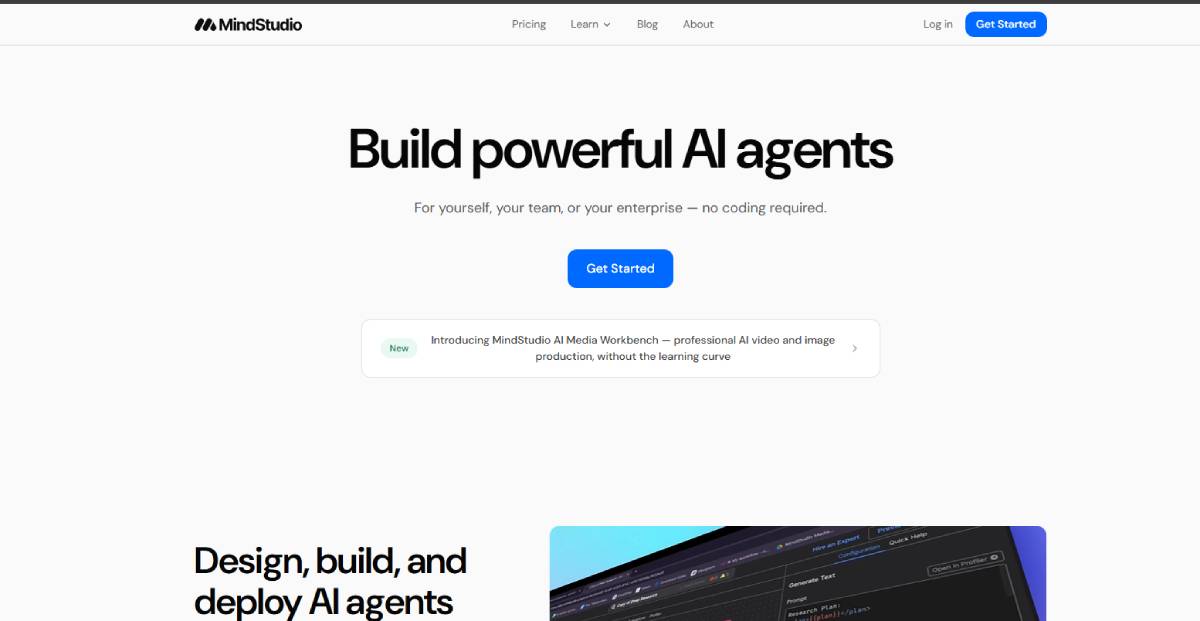
MindStudio’s platform enables users to create AI agents capable of executing complex digital tasks such as research, data analysis, content creation, and workflow automation. The company positions the platform as a no-code or low-code solution, allowing non-technical professionals to design custom AI tools quickly.

The platform integrates with widely used AI models and enterprise software, enabling businesses to deploy automated assistants across operations, customer service, marketing, and analytics. Organizations can configure agents using visual interfaces and modular tools, reducing development time.

By lowering barriers to AI deployment, MindStudio aims to attract startups, enterprises, and independent creators seeking scalable AI automation without building proprietary infrastructure.

The emergence of platforms like MindStudio reflects a broader global shift toward AI agent ecosystems, where autonomous or semi-autonomous software performs tasks traditionally handled by human teams. Enterprises increasingly seek AI-driven automation to improve productivity, reduce operational costs, and enhance decision-making capabilities.

This trend coincides with rapid advancements in generative AI, large language models, and automation platforms. Companies across sectors from finance and marketing to healthcare and logistics are experimenting with AI agents capable of executing multi-step processes.

Historically, developing such tools required specialized machine learning teams and significant infrastructure investment. However, the rise of no-code AI platforms has begun to democratize development, enabling business teams to build custom AI workflows independently.

Industry observers note that this shift may accelerate AI adoption globally while simultaneously reshaping workforce structures, enterprise software markets, and digital productivity strategies.

Technology analysts suggest that platforms like MindStudio could significantly accelerate enterprise AI adoption by simplifying development and reducing technical barriers. By allowing business professionals to create AI agents without coding expertise, such platforms may expand AI deployment beyond traditional engineering teams.

Industry strategists highlight that AI agents are increasingly viewed as digital co-workers capable of performing research, generating insights, and automating routine processes. This capability could unlock substantial productivity gains across sectors.

Experts also emphasize the importance of governance frameworks to ensure that autonomous agents operate responsibly, particularly when handling sensitive business data or customer interactions.

Executives within the AI sector frequently describe the next wave of digital transformation as “agent-driven computing,” where networks of AI assistants collaborate with human teams to manage tasks, analyze information, and optimize operations in real time.

For businesses, the rise of AI agent platforms presents opportunities to streamline operations, enhance decision-making, and scale digital services with fewer resources. Companies adopting such systems may gain competitive advantages by automating research, customer support, and internal workflows.

Investors are also paying close attention to the rapidly expanding AI agent market, which analysts predict could become a major segment of enterprise software. Platforms enabling faster deployment may capture significant market share.

However, policymakers and regulators may increasingly examine the governance of AI-driven systems, particularly regarding transparency, accountability, and workforce impacts. Organizations implementing AI agents may need to establish policies addressing oversight, ethical usage, and data security.

Looking ahead, AI agent platforms like MindStudio could play a central role in the next phase of enterprise automation. Decision-makers will closely watch how businesses integrate these tools into operations, how regulators address governance challenges, and whether AI agents evolve into fully autonomous digital collaborators. The trajectory suggests that organizations investing early in agent-driven workflows may shape the future of global productivity.

Source: MindStudio Official Platform
Date: March 6, 2026

  • Featured tools
Beautiful AI
Free

Beautiful AI is an AI-powered presentation platform that automates slide design and formatting, enabling users to create polished, on-brand presentations quickly.

#
Presentation
Learn more
Scalenut AI
Free

Scalenut AI is an all-in-one SEO content platform that combines AI-driven writing, keyword research, competitor insights, and optimization tools to help you plan, create, and rank content.

#
SEO
Learn more

Learn more about future of AI

Join 80,000+ Ai enthusiast getting weekly updates on exciting AI tools.
Thank you! Your submission has been received!
Oops! Something went wrong while submitting the form.

MindStudio Expands No Code Platform for Enterprise AI Agents

March 6, 2026

MindStudio’s platform enables users to create AI agents capable of executing complex digital tasks such as research, data analysis, content creation, and workflow automation.

A major development unfolded as MindStudio AI introduced an expanded platform designed to help businesses build and deploy powerful AI agents without extensive coding expertise. The move signals a strategic shift toward democratizing artificial intelligence development, enabling enterprises, startups, and creators to automate workflows and accelerate AI adoption across industries.

MindStudio’s platform enables users to create AI agents capable of executing complex digital tasks such as research, data analysis, content creation, and workflow automation. The company positions the platform as a no-code or low-code solution, allowing non-technical professionals to design custom AI tools quickly.

The platform integrates with widely used AI models and enterprise software, enabling businesses to deploy automated assistants across operations, customer service, marketing, and analytics. Organizations can configure agents using visual interfaces and modular tools, reducing development time.

By lowering barriers to AI deployment, MindStudio aims to attract startups, enterprises, and independent creators seeking scalable AI automation without building proprietary infrastructure.

The emergence of platforms like MindStudio reflects a broader global shift toward AI agent ecosystems, where autonomous or semi-autonomous software performs tasks traditionally handled by human teams. Enterprises increasingly seek AI-driven automation to improve productivity, reduce operational costs, and enhance decision-making capabilities.

This trend coincides with rapid advancements in generative AI, large language models, and automation platforms. Companies across sectors from finance and marketing to healthcare and logistics are experimenting with AI agents capable of executing multi-step processes.

Historically, developing such tools required specialized machine learning teams and significant infrastructure investment. However, the rise of no-code AI platforms has begun to democratize development, enabling business teams to build custom AI workflows independently.

Industry observers note that this shift may accelerate AI adoption globally while simultaneously reshaping workforce structures, enterprise software markets, and digital productivity strategies.

Technology analysts suggest that platforms like MindStudio could significantly accelerate enterprise AI adoption by simplifying development and reducing technical barriers. By allowing business professionals to create AI agents without coding expertise, such platforms may expand AI deployment beyond traditional engineering teams.

Industry strategists highlight that AI agents are increasingly viewed as digital co-workers capable of performing research, generating insights, and automating routine processes. This capability could unlock substantial productivity gains across sectors.

Experts also emphasize the importance of governance frameworks to ensure that autonomous agents operate responsibly, particularly when handling sensitive business data or customer interactions.

Executives within the AI sector frequently describe the next wave of digital transformation as “agent-driven computing,” where networks of AI assistants collaborate with human teams to manage tasks, analyze information, and optimize operations in real time.

For businesses, the rise of AI agent platforms presents opportunities to streamline operations, enhance decision-making, and scale digital services with fewer resources. Companies adopting such systems may gain competitive advantages by automating research, customer support, and internal workflows.

Investors are also paying close attention to the rapidly expanding AI agent market, which analysts predict could become a major segment of enterprise software. Platforms enabling faster deployment may capture significant market share.

However, policymakers and regulators may increasingly examine the governance of AI-driven systems, particularly regarding transparency, accountability, and workforce impacts. Organizations implementing AI agents may need to establish policies addressing oversight, ethical usage, and data security.

Looking ahead, AI agent platforms like MindStudio could play a central role in the next phase of enterprise automation. Decision-makers will closely watch how businesses integrate these tools into operations, how regulators address governance challenges, and whether AI agents evolve into fully autonomous digital collaborators. The trajectory suggests that organizations investing early in agent-driven workflows may shape the future of global productivity.

Source: MindStudio Official Platform
Date: March 6, 2026

Promote Your Tool

Copy Embed Code

Similar Blogs

March 18, 2026
|

Micron Set for Earnings Surge from AI Demand

Micron is set to report its Q1 2026 earnings next week, with analysts forecasting substantial year-over-year growth due to heightened demand for DRAM and NAND memory in AI applications.
Read more
March 18, 2026
|

Meta Manus Expands AI Agent Desktop Reach

Meta’s Manus desktop app allows users to deploy the AI agent outside cloud-only environments, enhancing speed, personalization, and offline capabilities.
Read more
March 18, 2026
|

AI Advertising Crackdown Bans “Remove Anything” Claims

The ruling by the Advertising Standards Authority determined that the ad’s claims were misleading and could exaggerate the app’s capabilities.
Read more
March 18, 2026
|

Court Ruling Boosts Perplexity AI Competition

A court decision has halted efforts by Amazon to ban or limit AI agents developed by Perplexity AI on its platform. The ruling allows continued deployment and operation of these AI tools, at least temporarily.
Read more
March 18, 2026
|

Compute Divide Intensifies US China AI Rivalry

The growing disparity in computing power driven by access to advanced semiconductors and large-scale data centers is becoming central to AI competitiveness.
Read more
March 18, 2026
|

Samsung Signals AI Driven Chip Boom Into 2026

An executive at Samsung Electronics indicated that demand for AI-related semiconductors is expected to remain robust through 2026, driven by expanding use cases in data.
Read more