



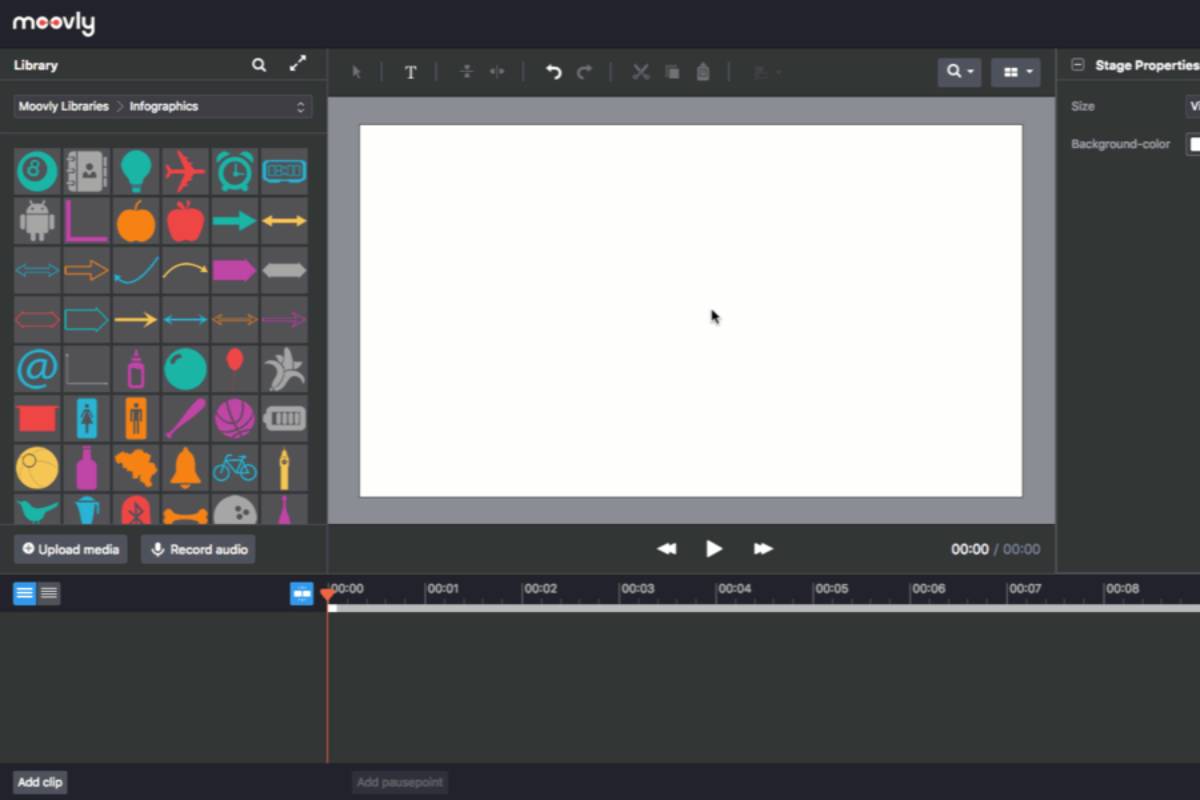
Moovly Studio is strengthening digital content creation by giving organizations a browser-based environment for producing professional videos, presentations and visual communications. The platform addresses growing demand for faster content production as businesses increasingly use video for marketing, training, internal communication and customer engagement across global digital channels.
Moovly Studio provides tools for creating videos and visual content using templates, stock media, graphics, animations and customizable elements. Its browser-based model allows users to develop content without relying exclusively on advanced video-production software.
The platform is designed for businesses, educators, marketers and communication teams seeking to produce branded visual material more efficiently. Users can combine text, images, video, audio and animation within customizable projects.
Moovly also emphasizes collaboration and brand consistency, capabilities that are increasingly relevant for organizations managing distributed content teams. The platform's positioning reflects the growing convergence of video creation, presentation design and digital marketing workflows.
The expansion of visual-content platforms reflects a fundamental change in corporate communication. Video has moved beyond traditional advertising and entertainment into employee training, customer education, product demonstrations, social media and executive communications.
Historically, producing high-quality video required specialized software, technical expertise and dedicated production teams. Cloud-based platforms have lowered that barrier by allowing non-specialists to create and edit visual content through browser-based interfaces.
Moovly Studio operates within this broader democratization of content production. Its combination of templates, media assets, animation and editing tools allows organizations to produce content without building every visual element from scratch.
The trend has accelerated alongside remote work and digital customer engagement. Companies increasingly need more content across more channels, creating pressure to reduce production time while maintaining brand consistency.
For executives, the strategic question is whether visual-content platforms can improve communication speed and quality without creating additional governance, licensing or brand-management challenges.
Moovly's platform strategy centers on making professional-looking visual content accessible to users without extensive production expertise. Templates and reusable media assets can help organizations standardize content while shortening development cycles.
For marketing teams, this can support faster production of campaign assets, product explainers and social media videos. For HR and corporate communications departments, similar capabilities can be applied to onboarding, internal announcements and employee training.
The broader content-technology market is increasingly incorporating artificial intelligence, automation and reusable brand systems. These capabilities can accelerate content production but also introduce new challenges around quality control, intellectual-property rights and brand consistency.
From an executive perspective, the value of a platform such as Moovly Studio should therefore be assessed through business outcomes rather than output volume alone. Faster production is valuable when it improves customer engagement, communication effectiveness or operational efficiency while maintaining appropriate brand and content standards.
For businesses, browser-based video creation can reduce dependence on specialized production resources and enable more teams to produce visual content independently. This can potentially lower production costs and accelerate marketing and communication cycles.
For investors and executives, scalable content production can become strategically important as businesses compete for attention across increasingly crowded digital channels. Customers and employees may also benefit from clearer, more engaging visual communication.
The policy dimension includes copyright, licensing, data protection and responsible use of digital assets. Organizations should maintain clear rules governing stock media, brand assets, user-generated content and AI-assisted production.
Executives should also evaluate collaboration controls, brand governance, security and total content-production costs before expanding visual creation across an organization. Visual communication platforms are likely to move toward increasingly automated and AI-assisted production, with deeper integration into marketing, learning and collaboration systems. Moovly Studio is positioned within this broader shift toward accessible enterprise content creation. Decision-makers should monitor AI capabilities, asset licensing, collaboration, brand controls and measurable engagement outcomes. The next competitive advantage will come from producing relevant visual content faster without sacrificing quality, consistency or governance.
Source: Moovly Studio and Crozdesk
Date: August 13, 2026


