
New Tool Reveals AI Role in Student Writing

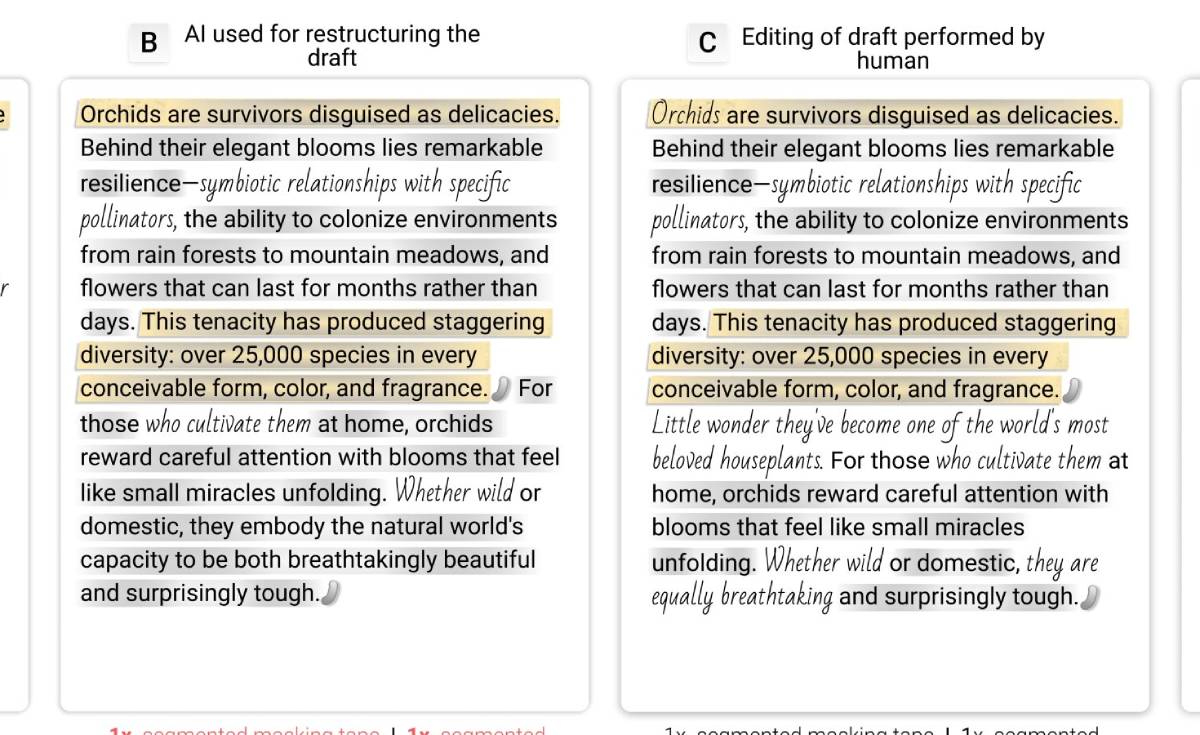
A newly developed tool enables educators to identify and visualize how AI platforms contribute to student-written content. The system tracks AI-assisted inputs, edits, and suggestions, offering a clearer breakdown of human versus machine-generated contributions.

April 27, 2026
|

A major development unfolded as researchers unveiled a new tool designed to make AI’s contribution to student writing visible, signaling a strategic shift toward transparency in AI platforms and AI frameworks used in education. The innovation carries significant implications for academic integrity, edtech markets, and policy frameworks governing AI-assisted learning.

A newly developed tool enables educators to identify and visualize how AI platforms contribute to student-written content. The system tracks AI-assisted inputs, edits, and suggestions, offering a clearer breakdown of human versus machine-generated contributions. It is designed to integrate with existing educational workflows, supporting teachers in evaluating originality and effort.

Developed amid growing reliance on generative AI tools in classrooms, the technology addresses concerns around plagiarism and undisclosed AI assistance. The initiative reflects broader efforts to create accountability within AI frameworks, ensuring that students and institutions maintain transparency while still leveraging AI-driven productivity tools.

The development aligns with a broader trend across global education systems where AI adoption is accelerating faster than institutional safeguards. Generative AI platforms have become widely used by students for drafting essays, solving problems, and enhancing writing quality.

However, this rapid integration has created challenges for educators attempting to distinguish between original student work and AI-assisted outputs. Traditional plagiarism detection tools are often ineffective against AI-generated text, prompting demand for more advanced solutions.

At the same time, universities and schools worldwide are revising academic integrity policies to address AI usage. Some institutions have embraced AI as a learning aid, while others have imposed strict limitations.

This evolving landscape underscores the need for AI frameworks that prioritize transparency, enabling responsible use without undermining educational outcomes or assessment credibility.

Education experts argue that tools like this represent a critical step toward balancing innovation with accountability. Analysts note that AI platforms are unlikely to be removed from classrooms; instead, the focus is shifting toward managing their use effectively.

Academic leaders emphasize that transparency not prohibition is the sustainable path forward. By making AI contributions visible, educators can better assess student understanding and engagement.

Technology experts also highlight that such tools could set new standards for explainability within AI frameworks, extending beyond education into enterprise and regulatory contexts. However, some critics caution that over-reliance on monitoring tools could create privacy concerns or discourage creative use of AI.

Overall, the consensus suggests that visibility into AI usage will become a cornerstone of trust in digital learning environments. For edtech companies, the shift could redefine product development strategies, with increased emphasis on transparency features within AI platforms. Vendors may need to integrate tracking and explainability capabilities to remain competitive.

Investors could view this as an emerging segment within the AI market—tools that audit and monitor AI usage. Educational institutions will need to update policies, balancing enforcement with flexibility to encourage responsible AI use.

For policymakers, the development raises broader questions about disclosure requirements for AI-generated content across sectors. Regulations may evolve to mandate transparency standards, influencing how AI frameworks are deployed in education and beyond.

Looking ahead, transparency tools are likely to become standard components of AI platforms used in education. Decision-makers should monitor adoption rates and how institutions integrate these systems into assessment models.

As AI frameworks continue to evolve, the ability to track and explain machine contributions will be critical to maintaining trust. The next phase of AI in education will hinge not just on capability, but on accountability.

Source: Phys.org
Date: April 2026

  • Featured tools
Writesonic AI
Free

Writesonic AI is a versatile AI writing platform designed for marketers, entrepreneurs, and content creators. It helps users create blog posts, ad copies, product descriptions, social media posts, and more with ease. With advanced AI models and user-friendly tools, Writesonic streamlines content production and saves time for busy professionals.

#
Copywriting
Learn more
Tome AI
Free

Tome AI is an AI-powered storytelling and presentation tool designed to help users create compelling narratives and presentations quickly and efficiently. It leverages advanced AI technologies to generate content, images, and animations based on user input.

#
Presentation
#
Startup Tools
Learn more

Learn more about future of AI

Join 80,000+ Ai enthusiast getting weekly updates on exciting AI tools.
Thank you! Your submission has been received!
Oops! Something went wrong while submitting the form.

New Tool Reveals AI Role in Student Writing

April 27, 2026

A newly developed tool enables educators to identify and visualize how AI platforms contribute to student-written content. The system tracks AI-assisted inputs, edits, and suggestions, offering a clearer breakdown of human versus machine-generated contributions.

A major development unfolded as researchers unveiled a new tool designed to make AI’s contribution to student writing visible, signaling a strategic shift toward transparency in AI platforms and AI frameworks used in education. The innovation carries significant implications for academic integrity, edtech markets, and policy frameworks governing AI-assisted learning.

A newly developed tool enables educators to identify and visualize how AI platforms contribute to student-written content. The system tracks AI-assisted inputs, edits, and suggestions, offering a clearer breakdown of human versus machine-generated contributions. It is designed to integrate with existing educational workflows, supporting teachers in evaluating originality and effort.

Developed amid growing reliance on generative AI tools in classrooms, the technology addresses concerns around plagiarism and undisclosed AI assistance. The initiative reflects broader efforts to create accountability within AI frameworks, ensuring that students and institutions maintain transparency while still leveraging AI-driven productivity tools.

The development aligns with a broader trend across global education systems where AI adoption is accelerating faster than institutional safeguards. Generative AI platforms have become widely used by students for drafting essays, solving problems, and enhancing writing quality.

However, this rapid integration has created challenges for educators attempting to distinguish between original student work and AI-assisted outputs. Traditional plagiarism detection tools are often ineffective against AI-generated text, prompting demand for more advanced solutions.

At the same time, universities and schools worldwide are revising academic integrity policies to address AI usage. Some institutions have embraced AI as a learning aid, while others have imposed strict limitations.

This evolving landscape underscores the need for AI frameworks that prioritize transparency, enabling responsible use without undermining educational outcomes or assessment credibility.

Education experts argue that tools like this represent a critical step toward balancing innovation with accountability. Analysts note that AI platforms are unlikely to be removed from classrooms; instead, the focus is shifting toward managing their use effectively.

Academic leaders emphasize that transparency not prohibition is the sustainable path forward. By making AI contributions visible, educators can better assess student understanding and engagement.

Technology experts also highlight that such tools could set new standards for explainability within AI frameworks, extending beyond education into enterprise and regulatory contexts. However, some critics caution that over-reliance on monitoring tools could create privacy concerns or discourage creative use of AI.

Overall, the consensus suggests that visibility into AI usage will become a cornerstone of trust in digital learning environments. For edtech companies, the shift could redefine product development strategies, with increased emphasis on transparency features within AI platforms. Vendors may need to integrate tracking and explainability capabilities to remain competitive.

Investors could view this as an emerging segment within the AI market—tools that audit and monitor AI usage. Educational institutions will need to update policies, balancing enforcement with flexibility to encourage responsible AI use.

For policymakers, the development raises broader questions about disclosure requirements for AI-generated content across sectors. Regulations may evolve to mandate transparency standards, influencing how AI frameworks are deployed in education and beyond.

Looking ahead, transparency tools are likely to become standard components of AI platforms used in education. Decision-makers should monitor adoption rates and how institutions integrate these systems into assessment models.

As AI frameworks continue to evolve, the ability to track and explain machine contributions will be critical to maintaining trust. The next phase of AI in education will hinge not just on capability, but on accountability.

Source: Phys.org
Date: April 2026

Promote Your Tool

Copy Embed Code

Similar Blogs

April 29, 2026
|

Dell XPS 16 Balances Performance Pricing Trade-Off

The Dell XPS 16 positions itself as a flagship large-screen laptop offering strong performance, premium design, and advanced display capabilities.
Read more
April 29, 2026
|

Logitech Redefines Gaming Hybrid Keyboard Innovation

The Logitech G512 X gaming keyboard integrates a hybrid switch architecture combining mechanical responsiveness with analog-level input control.
Read more
April 29, 2026
|

Acer Predator Deal Signals Gaming Hardware Shift

The Acer Predator Helios Neo 16 AI gaming laptop is currently available at a discount of approximately $560, positioning it as a competitively priced high-end device.
Read more
April 29, 2026
|

Elgato 4K Webcam Redefines Video Standards

The Elgato Facecam 4K webcam is currently being offered at approximately $160, positioning it competitively within the premium webcam segment.
Read more
April 29, 2026
|

Musk Altman Clash Exposes Global AI Faultlines

The opening day of the legal confrontation between Musk and Altman centered on disputes tied to the origins and direction of OpenAI.
Read more
April 29, 2026
|

Viture Beast Signals Breakthrough in AR Displays

The Viture Beast display glasses introduce a high-resolution virtual screen experience, enabling users to project large-format displays through lightweight wearable hardware.
Read more