
North Dakota University Showcases Human Centric AI

Academic institutions like the University of North Dakota are becoming key contributors to this evolution, serving as hubs for research, experimentation, and workforce development.

March 27, 2026
|
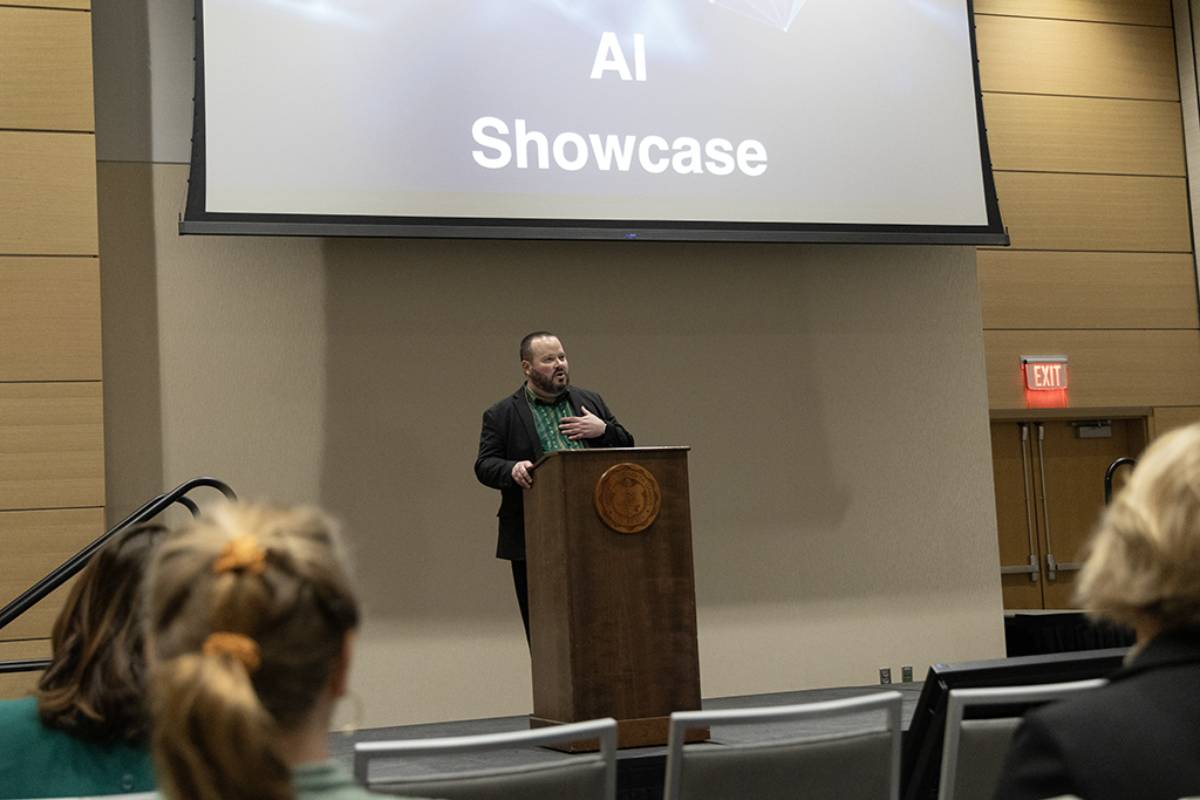
Image source: Justin Montigne speaks at the AI and Human Innovation Showcase at UND. Photo by Adam Kurtz/UND Today.

A significant development in AI thought leadership emerged as the University of North Dakota highlighted a human-centered approach to artificial intelligence at its annual showcase. The event underscores a growing global emphasis on aligning AI innovation with ethics, usability, and societal impact critical priorities for businesses, policymakers, and technology leaders.

  • The University of North Dakota hosted its annual AI showcase, focusing on human-centered design and responsible AI development.
  • Researchers, students, and industry collaborators presented projects integrating AI with real-world applications, including healthcare, education, and workforce solutions.
  • The event emphasized usability, ethical considerations, and human-AI collaboration rather than purely technical advancement.
  • Academic institutions are increasingly playing a strategic role in shaping AI innovation pipelines and talent development.
  • The showcase reflects broader efforts to align AI deployment with societal needs, influencing both enterprise adoption strategies and public policy discussions globally.

The development aligns with a broader trend across global markets where human-centered AI is gaining prominence as organizations seek to balance innovation with responsibility. As AI adoption accelerates across industries, concerns around bias, transparency, and societal impact have prompted a shift toward more ethical and inclusive design frameworks.

Academic institutions like the University of North Dakota are becoming key contributors to this evolution, serving as hubs for research, experimentation, and workforce development. Governments and international organizations are also advancing guidelines for responsible AI, reflecting increasing regulatory attention. Historically, technological innovation has often outpaced ethical considerations, but the AI era is driving a more proactive approach. This shift is particularly relevant as businesses integrate AI into critical operations, making trust, accountability, and human oversight essential components of long-term success.

Academic leaders at the event emphasized that human-centered AI is essential for building trust and ensuring sustainable adoption. “Technology must serve people, not the other way around,” noted a faculty expert involved in the showcase. Industry analysts echo this perspective, highlighting that organizations prioritizing ethical AI are more likely to gain stakeholder confidence and regulatory approval. Researchers showcased projects demonstrating how AI can augment human decision-making while maintaining transparency and accountability.

Policy experts stress that collaboration between academia, industry, and government will be critical in shaping effective AI governance frameworks. Meanwhile, business leaders are increasingly looking to universities for talent and innovation partnerships, recognizing their role in developing practical, responsible AI solutions. The event reinforces the importance of aligning technological progress with societal values.

For global executives, the emphasis on human-centered AI signals a need to integrate ethical considerations into core business strategies. Companies may need to invest in responsible AI frameworks, governance models, and workforce training to ensure compliance and maintain trust. Investors are likely to favor organizations demonstrating strong ethical AI practices, particularly in regulated industries.

Policymakers will continue to develop guidelines that prioritize transparency, fairness, and accountability, influencing how AI systems are designed and deployed. For consumers, the shift could lead to more trustworthy and user-friendly AI applications. Organizations that fail to adopt human-centric approaches risk reputational damage, regulatory challenges, and reduced market competitiveness.

Human-centered AI is expected to become a defining standard across industries as adoption deepens. Decision-makers should monitor evolving regulatory frameworks, academic-industry collaborations, and advancements in ethical AI design. Universities will continue to play a critical role in shaping talent pipelines and innovation strategies. Ultimately, the future of AI will depend on balancing technological capability with human values, ensuring sustainable and inclusive growth in the digital economy.

Source: University of North Dakota Blog (UND Today)
Date: March 2026

  • Featured tools
Hostinger Horizons
Freemium

Hostinger Horizons is an AI-powered platform that allows users to build and deploy custom web applications without writing code. It packs hosting, domain management and backend integration into a unified tool for rapid app creation.

#
Startup Tools
#
Coding
#
Project Management
Learn more
Beautiful AI
Free

Beautiful AI is an AI-powered presentation platform that automates slide design and formatting, enabling users to create polished, on-brand presentations quickly.

#
Presentation
Learn more

Learn more about future of AI

Join 80,000+ Ai enthusiast getting weekly updates on exciting AI tools.
Thank you! Your submission has been received!
Oops! Something went wrong while submitting the form.

North Dakota University Showcases Human Centric AI

March 27, 2026

Academic institutions like the University of North Dakota are becoming key contributors to this evolution, serving as hubs for research, experimentation, and workforce development.

Image source: Justin Montigne speaks at the AI and Human Innovation Showcase at UND. Photo by Adam Kurtz/UND Today.

A significant development in AI thought leadership emerged as the University of North Dakota highlighted a human-centered approach to artificial intelligence at its annual showcase. The event underscores a growing global emphasis on aligning AI innovation with ethics, usability, and societal impact critical priorities for businesses, policymakers, and technology leaders.

  • The University of North Dakota hosted its annual AI showcase, focusing on human-centered design and responsible AI development.
  • Researchers, students, and industry collaborators presented projects integrating AI with real-world applications, including healthcare, education, and workforce solutions.
  • The event emphasized usability, ethical considerations, and human-AI collaboration rather than purely technical advancement.
  • Academic institutions are increasingly playing a strategic role in shaping AI innovation pipelines and talent development.
  • The showcase reflects broader efforts to align AI deployment with societal needs, influencing both enterprise adoption strategies and public policy discussions globally.

The development aligns with a broader trend across global markets where human-centered AI is gaining prominence as organizations seek to balance innovation with responsibility. As AI adoption accelerates across industries, concerns around bias, transparency, and societal impact have prompted a shift toward more ethical and inclusive design frameworks.

Academic institutions like the University of North Dakota are becoming key contributors to this evolution, serving as hubs for research, experimentation, and workforce development. Governments and international organizations are also advancing guidelines for responsible AI, reflecting increasing regulatory attention. Historically, technological innovation has often outpaced ethical considerations, but the AI era is driving a more proactive approach. This shift is particularly relevant as businesses integrate AI into critical operations, making trust, accountability, and human oversight essential components of long-term success.

Academic leaders at the event emphasized that human-centered AI is essential for building trust and ensuring sustainable adoption. “Technology must serve people, not the other way around,” noted a faculty expert involved in the showcase. Industry analysts echo this perspective, highlighting that organizations prioritizing ethical AI are more likely to gain stakeholder confidence and regulatory approval. Researchers showcased projects demonstrating how AI can augment human decision-making while maintaining transparency and accountability.

Policy experts stress that collaboration between academia, industry, and government will be critical in shaping effective AI governance frameworks. Meanwhile, business leaders are increasingly looking to universities for talent and innovation partnerships, recognizing their role in developing practical, responsible AI solutions. The event reinforces the importance of aligning technological progress with societal values.

For global executives, the emphasis on human-centered AI signals a need to integrate ethical considerations into core business strategies. Companies may need to invest in responsible AI frameworks, governance models, and workforce training to ensure compliance and maintain trust. Investors are likely to favor organizations demonstrating strong ethical AI practices, particularly in regulated industries.

Policymakers will continue to develop guidelines that prioritize transparency, fairness, and accountability, influencing how AI systems are designed and deployed. For consumers, the shift could lead to more trustworthy and user-friendly AI applications. Organizations that fail to adopt human-centric approaches risk reputational damage, regulatory challenges, and reduced market competitiveness.

Human-centered AI is expected to become a defining standard across industries as adoption deepens. Decision-makers should monitor evolving regulatory frameworks, academic-industry collaborations, and advancements in ethical AI design. Universities will continue to play a critical role in shaping talent pipelines and innovation strategies. Ultimately, the future of AI will depend on balancing technological capability with human values, ensuring sustainable and inclusive growth in the digital economy.

Source: University of North Dakota Blog (UND Today)
Date: March 2026

Promote Your Tool

Copy Embed Code

Similar Blogs

March 27, 2026
|

VSCO Expands AI Editing Suite Competition

VSCO, traditionally known for its aesthetic-focused filters and community-driven platform, is adapting to this shift by embedding AI into its core offerings.
Read more
March 27, 2026
|

ByteDance Integrates AI Video Model Into CapCut

The development aligns with a broader trend across global markets where generative AI is transforming content creation, particularly in video a format central to digital engagement. Platforms are increasingly embedding AI tools to enable faster production, personalization, and scalability for creators and brands.
Read more
March 27, 2026
|

AI Copyright Battle Intensifies Over Training Data

Companies like Meta and Nvidia play central roles in the AI ecosystem Meta in developing AI models and platforms, and Nvidia in providing the hardware that powers them.
Read more
March 27, 2026
|

TSMC Dominates AI Chip Manufacturing Surge

The development aligns with a broader trend across global markets where AI is driving unprecedented demand for high-performance semiconductors. Advanced chips are essential for training and deploying large-scale AI models, making fabrication capacity a critical bottleneck.
Read more
March 27, 2026
|

US Court Halts Anthropic Ban Amid Security Tensions

A major development unfolded in the U.S. technology and policy landscape as a federal judge temporarily blocked the Trump administration’s restrictions on Anthropic.
Read more
March 27, 2026
|

Wikipedia Moves to Ban AI Generated Articles

The development aligns with a broader trend across global markets where institutions are grappling with the impact of generative AI on information integrity. As AI tools become capable of producing large volumes of text, concerns around misinformation, bias, and factual accuracy have intensified.
Read more