
Nvidia CEO Promotes AI as Tool

Nvidia continues to invest heavily in AI research and deployment, including GPUs for generative AI and enterprise AI solutions. The CEO’s comments are particularly relevant for employees in tech, manufacturing, and creative industries.

April 2, 2026
|

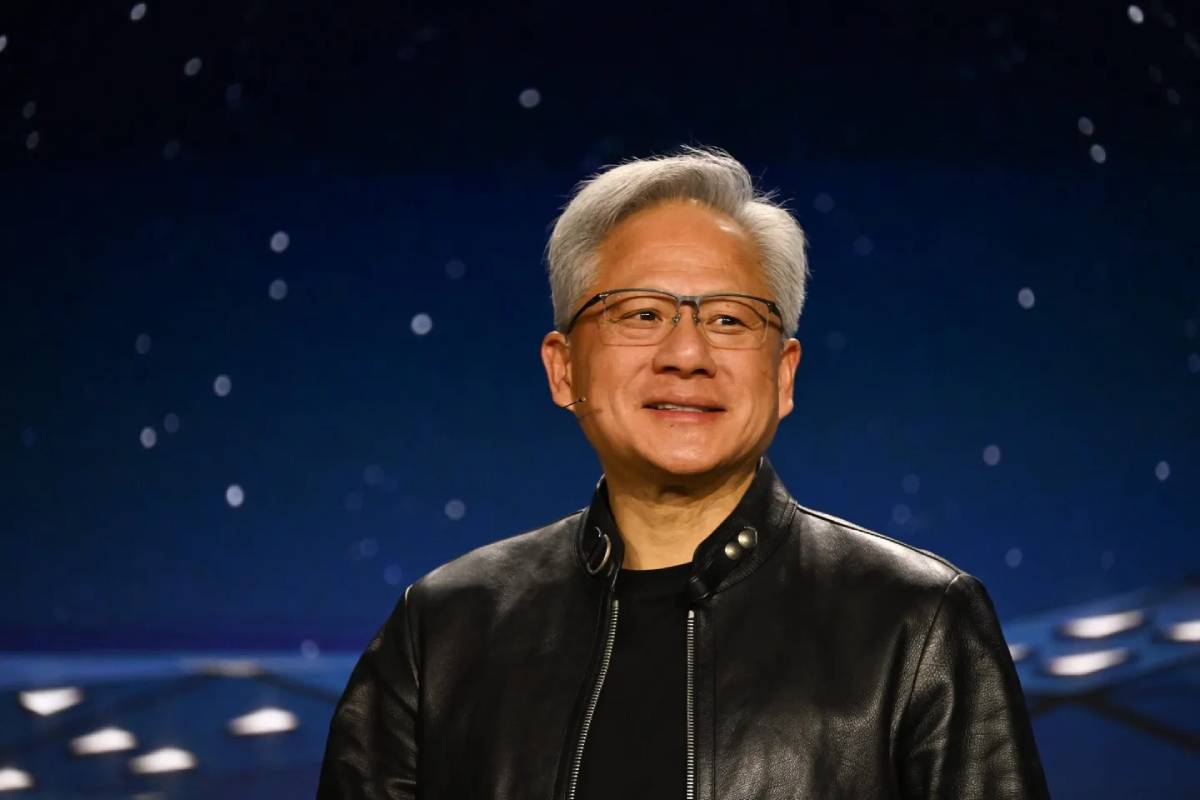
A major development unfolded as Jensen Huang addressed concerns among employees about AI displacing jobs, clarifying that AI should be viewed as a tool to enhance work rather than replace it. The statement has implications for workforce strategy, corporate training, and investor confidence in technology-driven labor markets.

In a recent interview, Huang emphasized that fear of AI often stems from confusing job functions with the tools used to perform them. He encouraged workers to focus on skills that complement AI capabilities, rather than seeing AI as a replacement.

Nvidia continues to invest heavily in AI research and deployment, including GPUs for generative AI and enterprise AI solutions. The CEO’s comments are particularly relevant for employees in tech, manufacturing, and creative industries, where AI adoption is accelerating.

Analysts note that the guidance may influence corporate communications, training programs, and investor sentiment, highlighting the role of leadership in managing AI-driven workforce transitions globally.

The development aligns with a broader trend across global markets where AI adoption is reshaping labor dynamics. Companies from software to manufacturing increasingly deploy AI tools to optimize operations, automate repetitive tasks, and enhance decision-making.

Historically, technological shifts from mechanization to digital automation have prompted workforce anxieties, often requiring reskilling and leadership communication to maintain morale and productivity. Nvidia, a key AI hardware and software provider, is central to enabling AI-driven transformation across sectors, making its internal messaging particularly influential.

Globally, policymakers and labor organizations are monitoring AI’s impact on employment, productivity, and skills development. Huang’s remarks underscore the importance of reframing AI adoption as augmentation rather than replacement, guiding both corporate strategy and public discourse on workforce readiness in an AI-powered economy.

Industry analysts highlight that leadership messaging is critical for shaping workforce perceptions. “Framing AI as a tool rather than a threat can reduce employee anxiety and improve adoption outcomes,” notes a senior technology analyst.

Nvidia executives emphasize ongoing investments in training programs, skill development, and tools that integrate AI into everyday workflows. “Our goal is to empower employees to leverage AI effectively, ensuring both operational efficiency and career growth,” said a company spokesperson.

Labor market experts suggest that clear communication from top executives helps mitigate resistance to AI, while investors assess whether AI adoption strategies enhance productivity without destabilizing workforce morale. Analysts also point out that corporate transparency regarding AI’s role in operations and career trajectories is increasingly important for global competitiveness.

For global executives, Huang’s guidance reinforces the need to align AI adoption with employee engagement and upskilling strategies. Organizations must implement training programs and design AI workflows that augment human capabilities while preserving job satisfaction.

Investors may view transparent workforce management as a signal of operational resilience amid AI-driven transformation. Policymakers could use such examples to inform workforce development initiatives, reskilling programs, and AI labor regulations.

The development suggests that strategic communication, skill alignment, and ethical AI deployment are becoming central to maintaining productivity, workforce stability, and investor confidence in an AI-enabled business landscape.

Looking ahead, decision-makers should monitor employee adoption metrics, reskilling initiatives, and AI integration effectiveness. Companies that communicate AI’s role as an enabler rather than a replacement are likely to achieve smoother workforce transitions.

Uncertainties remain regarding regulatory guidance, global adoption rates, and sector-specific impacts on employment. Nvidia’s approach may serve as a benchmark for leadership in managing AI-driven labor shifts across industries worldwide.

Source: Fortune
Date: April 2026

  • Featured tools
Ai Fiesta
Paid

AI Fiesta is an all-in-one productivity platform that gives users access to multiple leading AI models through a single interface. It includes features like prompt enhancement, image generation, audio transcription and side-by-side model comparison.

#
Copywriting
#
Art Generator
Learn more
Alli AI
Free

Alli AI is an all-in-one, AI-powered SEO automation platform that streamlines on-page optimization, site auditing, speed improvements, schema generation, internal linking, and ranking insights.

#
SEO
Learn more

Learn more about future of AI

Join 80,000+ Ai enthusiast getting weekly updates on exciting AI tools.
Thank you! Your submission has been received!
Oops! Something went wrong while submitting the form.

Nvidia CEO Promotes AI as Tool

April 2, 2026

Nvidia continues to invest heavily in AI research and deployment, including GPUs for generative AI and enterprise AI solutions. The CEO’s comments are particularly relevant for employees in tech, manufacturing, and creative industries.

A major development unfolded as Jensen Huang addressed concerns among employees about AI displacing jobs, clarifying that AI should be viewed as a tool to enhance work rather than replace it. The statement has implications for workforce strategy, corporate training, and investor confidence in technology-driven labor markets.

In a recent interview, Huang emphasized that fear of AI often stems from confusing job functions with the tools used to perform them. He encouraged workers to focus on skills that complement AI capabilities, rather than seeing AI as a replacement.

Nvidia continues to invest heavily in AI research and deployment, including GPUs for generative AI and enterprise AI solutions. The CEO’s comments are particularly relevant for employees in tech, manufacturing, and creative industries, where AI adoption is accelerating.

Analysts note that the guidance may influence corporate communications, training programs, and investor sentiment, highlighting the role of leadership in managing AI-driven workforce transitions globally.

The development aligns with a broader trend across global markets where AI adoption is reshaping labor dynamics. Companies from software to manufacturing increasingly deploy AI tools to optimize operations, automate repetitive tasks, and enhance decision-making.

Historically, technological shifts from mechanization to digital automation have prompted workforce anxieties, often requiring reskilling and leadership communication to maintain morale and productivity. Nvidia, a key AI hardware and software provider, is central to enabling AI-driven transformation across sectors, making its internal messaging particularly influential.

Globally, policymakers and labor organizations are monitoring AI’s impact on employment, productivity, and skills development. Huang’s remarks underscore the importance of reframing AI adoption as augmentation rather than replacement, guiding both corporate strategy and public discourse on workforce readiness in an AI-powered economy.

Industry analysts highlight that leadership messaging is critical for shaping workforce perceptions. “Framing AI as a tool rather than a threat can reduce employee anxiety and improve adoption outcomes,” notes a senior technology analyst.

Nvidia executives emphasize ongoing investments in training programs, skill development, and tools that integrate AI into everyday workflows. “Our goal is to empower employees to leverage AI effectively, ensuring both operational efficiency and career growth,” said a company spokesperson.

Labor market experts suggest that clear communication from top executives helps mitigate resistance to AI, while investors assess whether AI adoption strategies enhance productivity without destabilizing workforce morale. Analysts also point out that corporate transparency regarding AI’s role in operations and career trajectories is increasingly important for global competitiveness.

For global executives, Huang’s guidance reinforces the need to align AI adoption with employee engagement and upskilling strategies. Organizations must implement training programs and design AI workflows that augment human capabilities while preserving job satisfaction.

Investors may view transparent workforce management as a signal of operational resilience amid AI-driven transformation. Policymakers could use such examples to inform workforce development initiatives, reskilling programs, and AI labor regulations.

The development suggests that strategic communication, skill alignment, and ethical AI deployment are becoming central to maintaining productivity, workforce stability, and investor confidence in an AI-enabled business landscape.

Looking ahead, decision-makers should monitor employee adoption metrics, reskilling initiatives, and AI integration effectiveness. Companies that communicate AI’s role as an enabler rather than a replacement are likely to achieve smoother workforce transitions.

Uncertainties remain regarding regulatory guidance, global adoption rates, and sector-specific impacts on employment. Nvidia’s approach may serve as a benchmark for leadership in managing AI-driven labor shifts across industries worldwide.

Source: Fortune
Date: April 2026

Promote Your Tool

Copy Embed Code

Similar Blogs

April 2, 2026
|

Nscale Builds Finland Data Center for AI

Nscale’s planned facility in Harjavalta will focus on high-performance AI workloads, leveraging Finland’s access to renewable energy and favorable climate for efficient cooling.
Read more
April 2, 2026
|

Kyndryl Drives AI-Native Infrastructure with Agents

Kyndryl introduced Agentic Service Management as a next-generation platform leveraging AI agents to automate IT operations, incident resolution, and workflow orchestration.
Read more
April 2, 2026
|

Professor Uses AI to Transform Education

The AI debate app engages students by presenting counterarguments, prompting deeper reasoning and discussion. The project emerged after the professor observed overreliance on generative AI for homework and assignments, reducing analytical engagement.
Read more
April 2, 2026
|

Governance Challenges Rise Amid AI Agents

The Transparency Coalition’s report outlines several critical vulnerabilities in AI agent frameworks, including unintentional task automation, poor interpretability, and susceptibility to manipulation. OpenClaw, a widely adopted framework, is cited for enabling rapid deployment of autonomous agents with limited oversight.
Read more
April 2, 2026
|

Investor Confidence Lifts AI Software Stock

Ives’ analysis singles out one AI software company as a high-conviction buy, citing robust growth in AI adoption, enterprise contracts, and product innovation.
Read more
April 2, 2026
|

Modest Time Savings Seen with AI Scribes

Despite adoption, EHR usage remained significant, with workflow inefficiencies persisting. The study highlighted inconsistencies in AI tool utilization, reflecting varying comfort levels, training gaps, and integration challenges among healthcare staff.
Read more