
NVIDIA Expands Latin America Push With AI Day

NVIDIA executives highlighted demand for high-performance GPUs, AI frameworks, and cloud-based compute solutions powering sectors such as finance, healthcare, energy, and agribusiness.

February 24, 2026
|

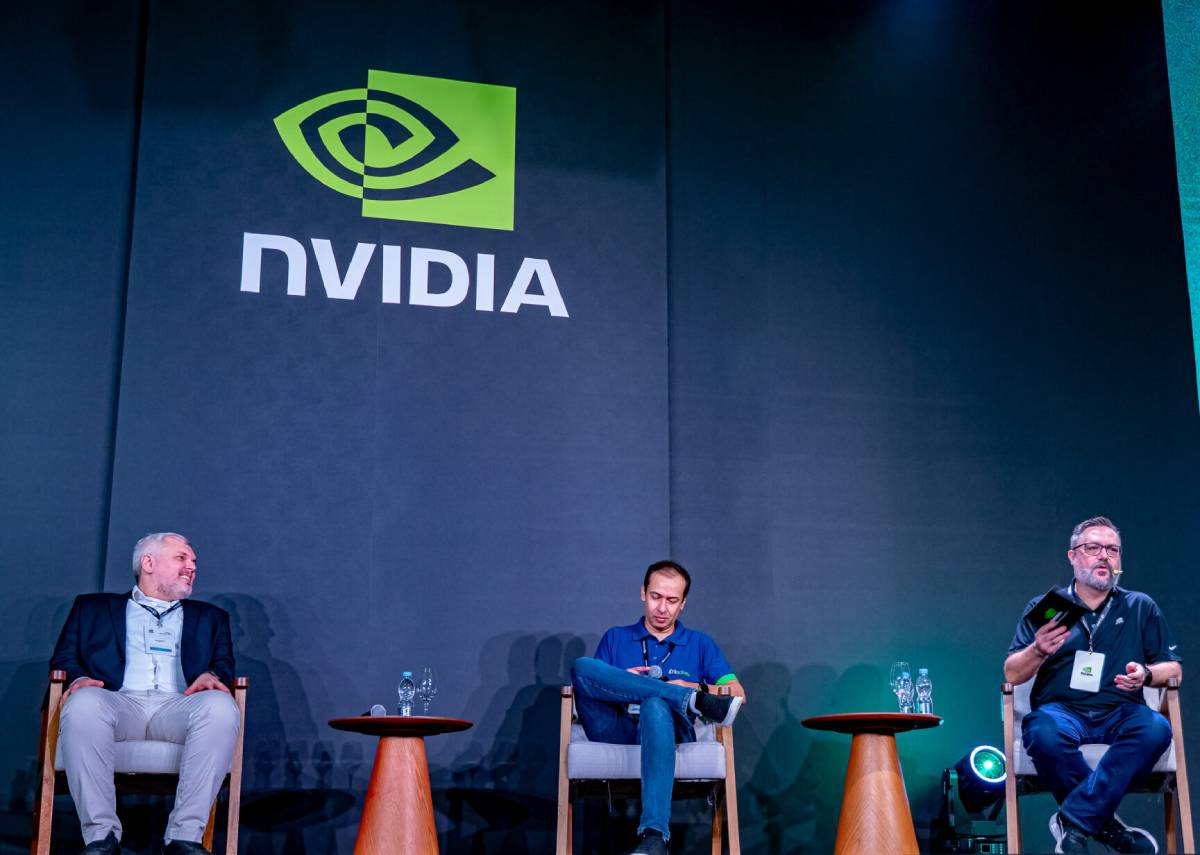
A strategic expansion into Latin America’s AI ecosystem took center stage as NVIDIA hosted its first AI Day in São Paulo. The event signals the chipmaker’s intent to deepen regional partnerships, accelerate AI infrastructure deployment, and position Brazil as a growing node in the global artificial intelligence economy.

The inaugural AI Day brought together developers, startups, enterprise leaders, and public-sector stakeholders to showcase advancements in accelerated computing, generative AI, and industry-specific AI applications.

NVIDIA executives highlighted demand for high-performance GPUs, AI frameworks, and cloud-based compute solutions powering sectors such as finance, healthcare, energy, and agribusiness.

The event emphasized ecosystem development from training local talent to strengthening collaborations with universities and enterprises. Brazil, Latin America’s largest economy, is emerging as a regional AI hub, supported by expanding data center capacity and government-backed digital transformation initiatives.

The gathering underscores NVIDIA’s broader strategy to embed its hardware and software stack into national AI roadmaps worldwide. The development aligns with a broader trend in which AI infrastructure investment is expanding beyond North America, Europe, and East Asia. As demand for generative AI accelerates, countries are competing to build domestic capacity in data centers, advanced chips, and AI research talent.

NVIDIA, whose GPUs underpin much of today’s AI model training and inference workloads, has become central to this global expansion. The company’s platforms are widely used by hyperscalers, startups, and research institutions.

Latin America has historically lagged in high-performance computing infrastructure compared to the US and China. However, rising digital adoption, fintech innovation, and cloud penetration are reshaping the region’s technology landscape.

By hosting AI Day in São Paulo, NVIDIA is reinforcing its role not just as a chip supplier, but as an ecosystem architect supporting regional AI ambition.

Industry analysts view NVIDIA’s regional outreach as both commercially strategic and geopolitically astute. Expanding into emerging markets diversifies revenue streams and strengthens supply chain resilience.

Executives at the event reportedly emphasized the importance of “sovereign AI” enabling nations to build and manage their own AI capabilities rather than relying entirely on foreign infrastructure.

Technology policy experts note that Brazil’s regulatory environment and growing startup ecosystem make it a promising AI growth market. At the same time, infrastructure constraints including energy reliability and semiconductor supply remain structural challenges.

Market observers suggest NVIDIA’s ability to cultivate local developer communities may determine long-term platform loyalty, particularly as competitors seek footholds in emerging economies.

The event reflects the broader race to globalize AI adoption beyond established tech capitals. For enterprises in Latin America, NVIDIA’s engagement could accelerate AI deployment across industries, lowering barriers to access advanced computing tools.

Investors may interpret the expansion as a signal of sustained global demand for AI infrastructure, reinforcing the company’s strategic positioning. Governments in the region could view the partnership opportunities as catalysts for economic modernization and workforce upskilling. However, policymakers must balance AI-driven growth with data governance, cybersecurity, and energy policy considerations. For global executives, the takeaway is clear: emerging markets are becoming critical battlegrounds in the AI infrastructure race.

The next phase will likely involve expanded cloud partnerships, data center investments, and talent development initiatives across Latin America. Decision-makers will watch whether Brazil can convert ecosystem momentum into scalable AI startups and enterprise adoption. As AI competition becomes increasingly global, regional hubs like São Paulo may play a decisive role in shaping the next wave of innovation.

Source: NVIDIA Blog
Date: February 2026

  • Featured tools
Hostinger Horizons
Freemium

Hostinger Horizons is an AI-powered platform that allows users to build and deploy custom web applications without writing code. It packs hosting, domain management and backend integration into a unified tool for rapid app creation.

#
Startup Tools
#
Coding
#
Project Management
Learn more
Twistly AI
Paid

Twistly AI is a PowerPoint add-in that allows users to generate full slide decks, improve existing presentations, and convert various content types into polished slides directly within Microsoft PowerPoint.It streamlines presentation creation using AI-powered text analysis, image generation and content conversion.

#
Presentation
Learn more

Learn more about future of AI

Join 80,000+ Ai enthusiast getting weekly updates on exciting AI tools.
Thank you! Your submission has been received!
Oops! Something went wrong while submitting the form.

NVIDIA Expands Latin America Push With AI Day

February 24, 2026

NVIDIA executives highlighted demand for high-performance GPUs, AI frameworks, and cloud-based compute solutions powering sectors such as finance, healthcare, energy, and agribusiness.

A strategic expansion into Latin America’s AI ecosystem took center stage as NVIDIA hosted its first AI Day in São Paulo. The event signals the chipmaker’s intent to deepen regional partnerships, accelerate AI infrastructure deployment, and position Brazil as a growing node in the global artificial intelligence economy.

The inaugural AI Day brought together developers, startups, enterprise leaders, and public-sector stakeholders to showcase advancements in accelerated computing, generative AI, and industry-specific AI applications.

NVIDIA executives highlighted demand for high-performance GPUs, AI frameworks, and cloud-based compute solutions powering sectors such as finance, healthcare, energy, and agribusiness.

The event emphasized ecosystem development from training local talent to strengthening collaborations with universities and enterprises. Brazil, Latin America’s largest economy, is emerging as a regional AI hub, supported by expanding data center capacity and government-backed digital transformation initiatives.

The gathering underscores NVIDIA’s broader strategy to embed its hardware and software stack into national AI roadmaps worldwide. The development aligns with a broader trend in which AI infrastructure investment is expanding beyond North America, Europe, and East Asia. As demand for generative AI accelerates, countries are competing to build domestic capacity in data centers, advanced chips, and AI research talent.

NVIDIA, whose GPUs underpin much of today’s AI model training and inference workloads, has become central to this global expansion. The company’s platforms are widely used by hyperscalers, startups, and research institutions.

Latin America has historically lagged in high-performance computing infrastructure compared to the US and China. However, rising digital adoption, fintech innovation, and cloud penetration are reshaping the region’s technology landscape.

By hosting AI Day in São Paulo, NVIDIA is reinforcing its role not just as a chip supplier, but as an ecosystem architect supporting regional AI ambition.

Industry analysts view NVIDIA’s regional outreach as both commercially strategic and geopolitically astute. Expanding into emerging markets diversifies revenue streams and strengthens supply chain resilience.

Executives at the event reportedly emphasized the importance of “sovereign AI” enabling nations to build and manage their own AI capabilities rather than relying entirely on foreign infrastructure.

Technology policy experts note that Brazil’s regulatory environment and growing startup ecosystem make it a promising AI growth market. At the same time, infrastructure constraints including energy reliability and semiconductor supply remain structural challenges.

Market observers suggest NVIDIA’s ability to cultivate local developer communities may determine long-term platform loyalty, particularly as competitors seek footholds in emerging economies.

The event reflects the broader race to globalize AI adoption beyond established tech capitals. For enterprises in Latin America, NVIDIA’s engagement could accelerate AI deployment across industries, lowering barriers to access advanced computing tools.

Investors may interpret the expansion as a signal of sustained global demand for AI infrastructure, reinforcing the company’s strategic positioning. Governments in the region could view the partnership opportunities as catalysts for economic modernization and workforce upskilling. However, policymakers must balance AI-driven growth with data governance, cybersecurity, and energy policy considerations. For global executives, the takeaway is clear: emerging markets are becoming critical battlegrounds in the AI infrastructure race.

The next phase will likely involve expanded cloud partnerships, data center investments, and talent development initiatives across Latin America. Decision-makers will watch whether Brazil can convert ecosystem momentum into scalable AI startups and enterprise adoption. As AI competition becomes increasingly global, regional hubs like São Paulo may play a decisive role in shaping the next wave of innovation.

Source: NVIDIA Blog
Date: February 2026

Promote Your Tool

Copy Embed Code

Similar Blogs

March 9, 2026
|

Nota AI Demonstrates On Device AI at Embedded World

Nota AI plans to showcase a fully integrated AI solution spanning device-level optimization, real-time analytics, and industrial deployment. The demonstration at Embedded World 2026.
Read more
March 9, 2026
|

Netflix Buys Ben Affleck’s AI Start Up for Innovation

Netflix completed the acquisition of Ben Affleck’s AI start-up, a company specializing in generative AI tools for video production, script analysis, and automated editing.
Read more
March 9, 2026
|

AWS Boosts AI Workforce Skills Via College Alliance

Amazon Web Services (AWS) is scaling its partnership with the National Applied AI Consortium to broaden AI-focused training programs across community colleges in the United States.
Read more
March 9, 2026
|

Samsung Seeks Global AI Partnerships to Counter Apple

Samsung is actively exploring partnerships with leading artificial intelligence developers to strengthen its ecosystem of AI-powered devices. The South Korean technology giant aims to integrate advanced generative AI capabilities across smartphones.
Read more
March 9, 2026
|

OpenAI Robotics Chief Exit Fuels Pentagon AI Partnership Debate

A senior robotics leader at OpenAI stepped down following internal concerns surrounding the company’s AI collaboration with the Pentagon.
Read more
March 9, 2026
|

White House Advances New Rules for Global AI Alliances

Officials within the United States administration are exploring tighter rules governing partnerships between American AI companies and international entities. The proposal aims to scrutinize technology-sharing arrangements.
Read more