
Nvidia’s Huang Calls AI Robotics ‘Once in Generation’ Opportunity Europe

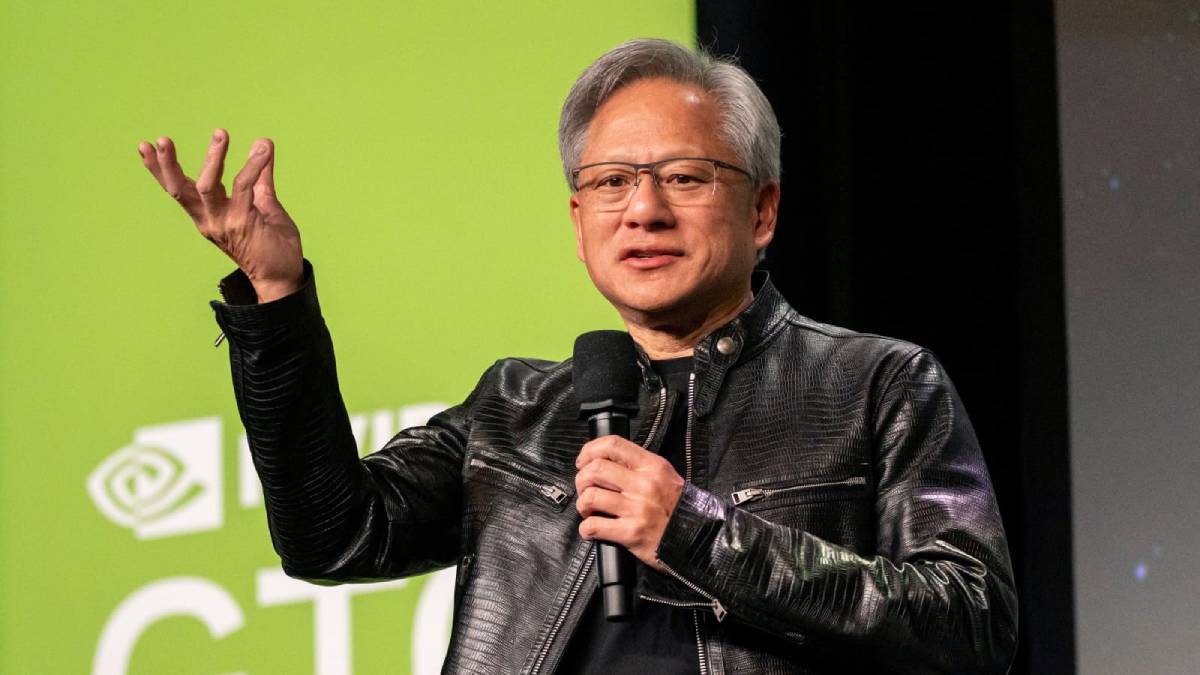
During the World Economic Forum 2026, Huang emphasized Europe’s unique industrial base as fertile ground for AI robotics deployment. He cited collaborations with manufacturing leaders.

January 22, 2026
|

A major development unfolded today as Nvidia CEO Jensen Huang highlighted AI-driven robotics as a “once-in-a-generation” growth opportunity for Europe. Huang’s remarks signal a strategic pivot toward industrial automation and AI integration, underscoring the continent’s potential to lead in robotics innovation, reshape manufacturing ecosystems, and strengthen its competitive position against the US and Asia.

During the World Economic Forum 2026, Huang emphasized Europe’s unique industrial base as fertile ground for AI robotics deployment. He cited collaborations with manufacturing leaders, research institutions, and technology startups as pivotal in accelerating adoption.

Nvidia plans to expand AI hardware and software support for robotic automation across sectors including automotive, logistics, and healthcare. The timeline for broader implementation spans the next 3–5 years, with pilot programs already underway in Germany, France, and the Nordics. Stakeholders highlighted potential economic gains, including job creation in high-tech manufacturing, enhanced supply chain efficiency, and increased global competitiveness.

The development aligns with a broader trend of Europe striving to assert technological sovereignty in AI and robotics. Historically reliant on hardware imports and foreign AI platforms, European industries face pressure to localize AI expertise to maintain competitiveness. Recent EU initiatives, including Horizon Europe funding for robotics research, aim to foster homegrown innovation, reduce dependency, and accelerate industrial digitalization.

Globally, AI robotics adoption has surged, driven by productivity demands, labor shortages, and industrial automation trends. Europe’s extensive manufacturing ecosystem from automotive giants to precision machinery producers positions it to leverage AI robotics effectively. Huang’s statements highlight the continent’s opportunity to lead in next-generation automation while navigating regulatory frameworks and labor dynamics, potentially setting global benchmarks for AI-integrated industrial strategy.

Industry analysts describe Huang’s remarks as a clarion call for European innovation. “Europe can harness AI robotics to bridge gaps in efficiency and competitiveness relative to the US and Asia,” said a senior analyst at a global consulting firm.

European policymakers and corporate executives are reportedly evaluating public-private partnerships to accelerate AI adoption while safeguarding labor interests. Nvidia executives noted plans for increased AI tooling support, developer programs, and robotics simulation platforms for European enterprises. Analysts highlight that Nvidia’s leadership in AI chips and software frameworks positions the company as a key enabler of Europe’s robotics ambitions. Reactions from manufacturing and logistics leaders indicate optimism about potential productivity gains, though some caution remains regarding workforce transitions and regulatory alignment.

For European executives, Huang’s statement could redefine operational and investment strategies, encouraging accelerated AI robotics integration across manufacturing and service sectors. Businesses may need to reassess capital allocation for automation, workforce reskilling, and supply chain digitalization.

Investors are eyeing robotics and AI technology companies with potential exposure to European industrial deployment. Policymakers face pressure to balance innovation incentives with labor market stability, regulatory oversight, and technology standards. Analysts warn that early adopters may gain competitive advantages, while late adopters risk lagging behind in productivity and global market positioning.

Decision-makers should monitor pilot robotics deployments, AI hardware investments, and public-private initiatives across Europe. Attention will focus on workforce adaptation, regulatory AI frameworks, and integration efficiency. Over the next 3–5 years, AI robotics could redefine European industrial competitiveness, offering both economic upside and challenges in technology governance.

Source & Date

Source: CNBC
Date: January 21, 2026

  • Featured tools
Scalenut AI
Free

Scalenut AI is an all-in-one SEO content platform that combines AI-driven writing, keyword research, competitor insights, and optimization tools to help you plan, create, and rank content.

#
SEO
Learn more
Neuron AI
Free

Neuron AI is an AI-driven content optimization platform that helps creators produce SEO-friendly content by combining semantic SEO, competitor analysis, and AI-assisted writing workflows.

#
SEO
Learn more

Learn more about future of AI

Join 80,000+ Ai enthusiast getting weekly updates on exciting AI tools.
Thank you! Your submission has been received!
Oops! Something went wrong while submitting the form.

Nvidia’s Huang Calls AI Robotics ‘Once in Generation’ Opportunity Europe

January 22, 2026

During the World Economic Forum 2026, Huang emphasized Europe’s unique industrial base as fertile ground for AI robotics deployment. He cited collaborations with manufacturing leaders.

A major development unfolded today as Nvidia CEO Jensen Huang highlighted AI-driven robotics as a “once-in-a-generation” growth opportunity for Europe. Huang’s remarks signal a strategic pivot toward industrial automation and AI integration, underscoring the continent’s potential to lead in robotics innovation, reshape manufacturing ecosystems, and strengthen its competitive position against the US and Asia.

During the World Economic Forum 2026, Huang emphasized Europe’s unique industrial base as fertile ground for AI robotics deployment. He cited collaborations with manufacturing leaders, research institutions, and technology startups as pivotal in accelerating adoption.

Nvidia plans to expand AI hardware and software support for robotic automation across sectors including automotive, logistics, and healthcare. The timeline for broader implementation spans the next 3–5 years, with pilot programs already underway in Germany, France, and the Nordics. Stakeholders highlighted potential economic gains, including job creation in high-tech manufacturing, enhanced supply chain efficiency, and increased global competitiveness.

The development aligns with a broader trend of Europe striving to assert technological sovereignty in AI and robotics. Historically reliant on hardware imports and foreign AI platforms, European industries face pressure to localize AI expertise to maintain competitiveness. Recent EU initiatives, including Horizon Europe funding for robotics research, aim to foster homegrown innovation, reduce dependency, and accelerate industrial digitalization.

Globally, AI robotics adoption has surged, driven by productivity demands, labor shortages, and industrial automation trends. Europe’s extensive manufacturing ecosystem from automotive giants to precision machinery producers positions it to leverage AI robotics effectively. Huang’s statements highlight the continent’s opportunity to lead in next-generation automation while navigating regulatory frameworks and labor dynamics, potentially setting global benchmarks for AI-integrated industrial strategy.

Industry analysts describe Huang’s remarks as a clarion call for European innovation. “Europe can harness AI robotics to bridge gaps in efficiency and competitiveness relative to the US and Asia,” said a senior analyst at a global consulting firm.

European policymakers and corporate executives are reportedly evaluating public-private partnerships to accelerate AI adoption while safeguarding labor interests. Nvidia executives noted plans for increased AI tooling support, developer programs, and robotics simulation platforms for European enterprises. Analysts highlight that Nvidia’s leadership in AI chips and software frameworks positions the company as a key enabler of Europe’s robotics ambitions. Reactions from manufacturing and logistics leaders indicate optimism about potential productivity gains, though some caution remains regarding workforce transitions and regulatory alignment.

For European executives, Huang’s statement could redefine operational and investment strategies, encouraging accelerated AI robotics integration across manufacturing and service sectors. Businesses may need to reassess capital allocation for automation, workforce reskilling, and supply chain digitalization.

Investors are eyeing robotics and AI technology companies with potential exposure to European industrial deployment. Policymakers face pressure to balance innovation incentives with labor market stability, regulatory oversight, and technology standards. Analysts warn that early adopters may gain competitive advantages, while late adopters risk lagging behind in productivity and global market positioning.

Decision-makers should monitor pilot robotics deployments, AI hardware investments, and public-private initiatives across Europe. Attention will focus on workforce adaptation, regulatory AI frameworks, and integration efficiency. Over the next 3–5 years, AI robotics could redefine European industrial competitiveness, offering both economic upside and challenges in technology governance.

Source & Date

Source: CNBC
Date: January 21, 2026

Promote Your Tool

Copy Embed Code

Similar Blogs

January 30, 2026
|

Perplexity Secures $750M AI Cloud Partnership with Microsoft

A major development unfolded today as Perplexity, the AI search and answer platform, signed a $750 million cloud deal with Microsoft. The partnership positions Microsoft as a strategic enabler for Perplexity’s AI infrastructure.
Read more
January 30, 2026
|

Enterprise Leaders Fuel Unsanctioned AI Use, Sparking Governance Concerns

The CIO report shows that unsanctioned AI adoption spans multiple departments, including marketing, sales, and operations, often without IT or legal oversight. Survey data indicates that executive endorsement.
Read more
January 30, 2026
|

Apple Expands AI Footprint with $1.6B Q.ai Acquisition

Apple finalized the acquisition of Q.ai, a startup specializing in AI-driven audio analysis, speech recognition, and immersive sound generation. The deal, reportedly valued at $1.6 billion.
Read more
January 30, 2026
|

Salesforce Accelerates Enterprise AI Scaling, Leading Digital Transformation

Salesforce is embedding AI tools across Sales Cloud, Marketing Cloud, and Service Cloud, enabling predictive analytics, automated workflows, and intelligent customer engagement.
Read more
January 30, 2026
|

Meta Shows AI Advertising Edge, Outshines Microsoft Returns

Meta reported enhanced ad targeting and personalization through AI, leading to measurable improvements in engagement and monetization. AI tools are now embedded across ad placement.
Read more
January 30, 2026
|

Deloitte Warns AI Deployments Outpace Safety, Governance Framework

Deloitte’s latest report emphasizes that enterprises are deploying AI agents faster than frameworks can ensure ethical and safe operation. The study notes increased use of autonomous AI in finance.
Read more