



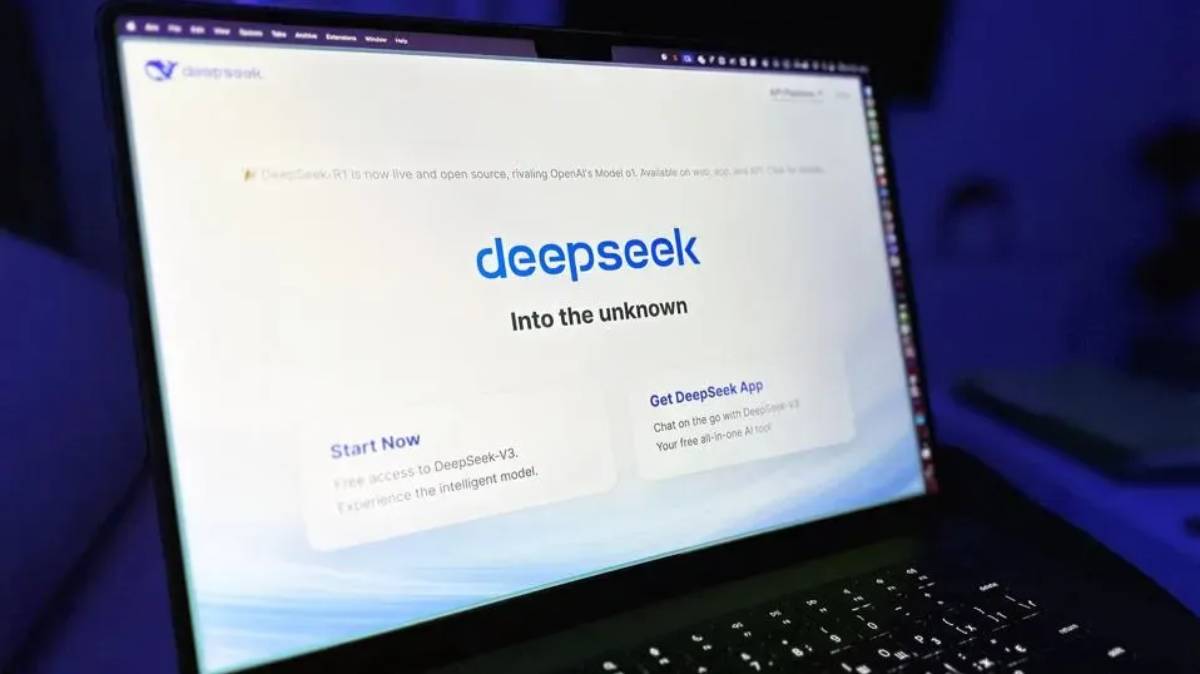
A new front has opened in the global AI race as OpenAI accused China-linked DeepSeek of distilling US-developed models to sharpen its competitive edge. The allegations intensify scrutiny over intellectual property, export controls, and technological sovereignty in the high-stakes artificial intelligence sector.
OpenAI claims DeepSeek leveraged model distillation techniques a process where a smaller model learns from the outputs of a more advanced system to replicate capabilities derived from US AI research.
The accusations suggest potential violations of usage policies and raise broader concerns about safeguarding proprietary AI architectures. The dispute unfolds amid tightening US export controls on advanced chips and AI technologies destined for China. Policymakers in Washington have increasingly framed AI leadership as a matter of national security.
DeepSeek has emerged as a notable AI contender within China’s rapidly expanding technology ecosystem, competing in large language model development and enterprise AI services.
The episode underscores growing friction between US and Chinese AI firms as competition intensifies. The development aligns with a broader geopolitical contest over AI supremacy. Since the launch of generative AI systems such as ChatGPT, global investment in large language models has surged.
Model distillation is a legitimate and widely used machine learning technique. However, controversy arises when it involves extracting value from proprietary systems without authorization.
The US government has implemented sweeping export restrictions on advanced semiconductor technology to curb China’s access to high-performance AI training hardware. In response, Chinese firms have accelerated domestic AI development efforts.
This clash reflects a larger pattern of technological decoupling between the world’s two largest economies. Intellectual property protection, data governance, and model transparency are increasingly central to AI policy frameworks worldwide.
For multinational enterprises, the dispute signals rising operational and compliance complexity. Industry analysts note that proving unauthorized model distillation can be technically challenging. AI systems often exhibit overlapping behaviors due to similar training methodologies and public datasets.
OpenAI’s allegations highlight the difficulty of enforcing intellectual property norms in generative AI, where outputs not source code may reveal competitive insight. Policy experts argue that the case could influence future AI licensing structures, watermarking technologies, and model traceability standards.
Geopolitical strategists see the dispute as emblematic of broader US–China technological rivalry, particularly in frontier computing.
While DeepSeek’s response will be closely scrutinized, observers suggest the controversy may prompt tighter contractual safeguards and expanded monitoring of API usage across the industry. The incident reinforces how AI competition now intersects directly with national economic security concerns.
For corporate leaders, the dispute underscores the importance of compliance frameworks when integrating third-party AI tools. Enterprises must evaluate contractual obligations, data provenance, and cross-border risk exposure.
Investors may anticipate heightened regulatory oversight of AI partnerships and licensing models, potentially impacting valuations. Governments could respond with stricter export controls, enforcement actions, or clearer legal standards around model replication.
The case also raises questions about the enforceability of AI intellectual property in an era where knowledge diffusion is rapid and global. For global businesses operating across US and Chinese markets, strategic alignment decisions may grow increasingly complex.
The next phase will hinge on whether formal investigations or policy responses follow. Industry watchers will track regulatory reactions in Washington and Beijing, as well as any legal proceedings.
As AI capabilities scale, safeguarding innovation while maintaining global collaboration will remain a delicate balancing act. In the AI era, technological advantage is no longer purely commercial it is strategic.
Source: Bloomberg
Date: February 12, 2026


