
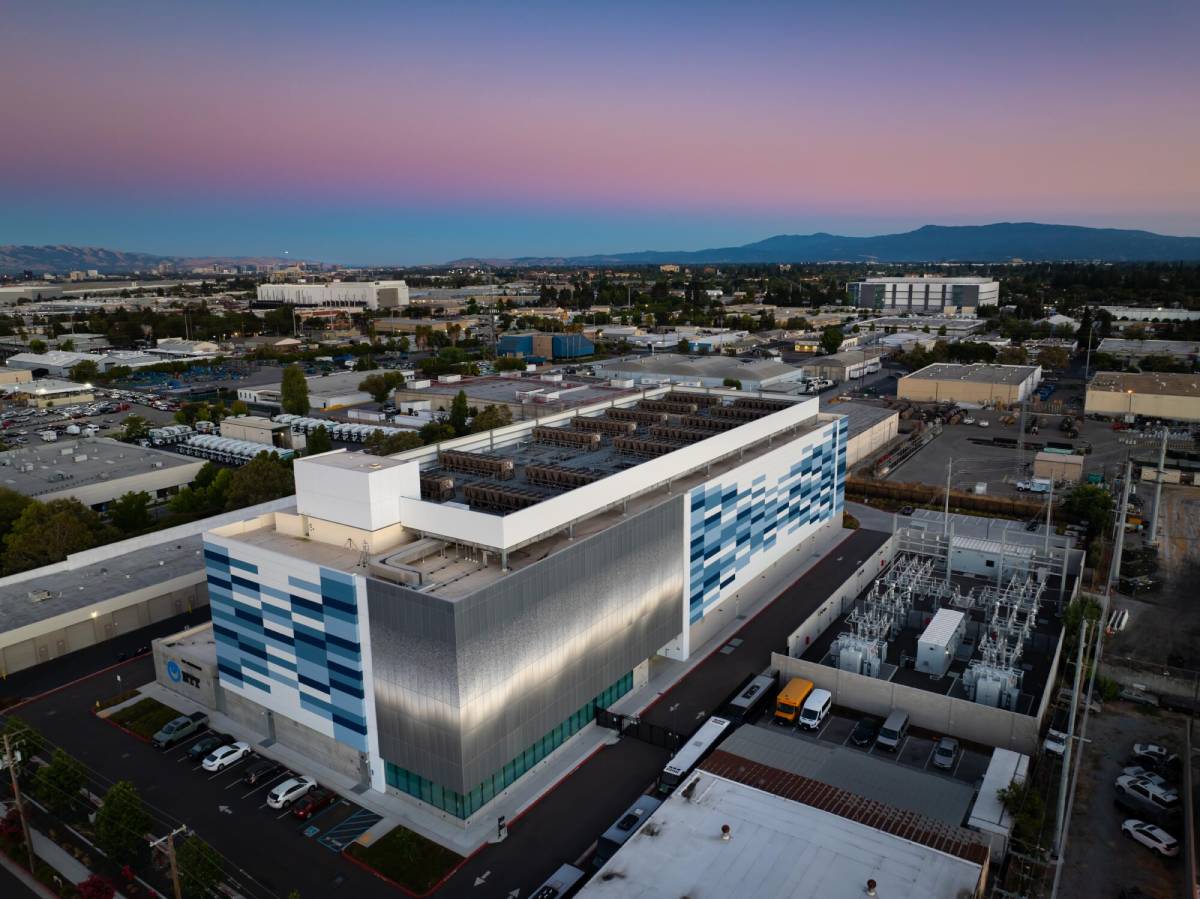
PG&E Shields Central Valley as AI Power Demand Surges

PG&E stated that new or expanding AI data centers connecting to its grid would be required to bear the cost of necessary infrastructure upgrades, rather than passing those expenses onto existing ratepayers.

February 19, 2026
|

Pacific Gas and Electric Company (PG&E) has vowed that rising electricity demand from AI-driven data centers will not lead to higher power bills for customers in California’s Central Valley. The assurance comes amid mounting concerns that the AI infrastructure boom could strain grids and shift energy costs onto households and small businesses.

PG&E stated that new or expanding AI data centers connecting to its grid would be required to bear the cost of necessary infrastructure upgrades, rather than passing those expenses onto existing ratepayers.

The utility emphasized that large-load customers  including hyperscale data center operators must fund transmission and distribution improvements tied directly to their power usage. The Central Valley has emerged as a potential hub for data center expansion due to available land and grid access. The announcement follows heightened public scrutiny over whether rapid AI-related energy consumption could drive residential electricity rate hikes in California.

Regulatory oversight from the California Public Utilities Commission remains central to implementation. The development aligns with a broader national debate over how the AI data center boom will reshape energy markets. Generative AI systems require immense computing power, driving exponential growth in electricity consumption across data center clusters. Utilities nationwide are grappling with how to finance grid upgrades while maintaining affordability.

California, already facing elevated electricity costs and wildfire-related infrastructure investments, is particularly sensitive to ratepayer impacts. Historically, utilities have used cost-allocation mechanisms to determine who pays for system expansions. The rapid scaling of AI workloads is testing traditional regulatory models.

For policymakers and executives, the issue extends beyond California. Similar tensions are emerging in Texas, Virginia, and other data center-heavy states, where balancing economic development with consumer protection is becoming increasingly complex.

Energy policy experts note that requiring large AI operators to directly fund infrastructure upgrades could set an important precedent for equitable cost distribution. Utility analysts argue that transparent cost-allocation frameworks are essential to prevent public backlash against AI expansion.

PG&E executives have emphasized that economic growth from data center investments must not compromise affordability for existing customers. Industry observers highlight that hyperscale operators often negotiate long-term power purchase agreements and may invest in on-site renewable generation to mitigate grid strain.

However, experts caution that even if direct upgrade costs are covered by data centers, broader system capacity expansions could indirectly influence rate structures over time. Regulators are likely to closely monitor implementation to ensure compliance and fairness. For AI companies and hyperscale cloud providers, the message is clear: infrastructure expansion will come with direct financial responsibility.

This could raise capital expenditure requirements for new facilities but may also provide greater regulatory clarity. Investors in utility stocks may view the approach as risk-mitigating, reducing political exposure tied to consumer rate hikes.

From a policy standpoint, the model could influence how other states manage AI-driven electricity demand growth. Governments may increasingly require large industrial users to shoulder grid upgrade costs, redefining energy financing frameworks in the AI era.

As AI infrastructure projects advance in California, attention will turn to how effectively PG&E enforces its cost-allocation commitments. Regulatory approvals, community response, and long-term grid reliability metrics will shape outcomes. The broader question remains: can utilities scale to meet AI’s power appetite without triggering consumer backlash?

California’s approach may become a template for managing the energy economics of the AI revolution.

Source: ABC30
Date: February 2026

  • Featured tools
Neuron AI
Free

Neuron AI is an AI-driven content optimization platform that helps creators produce SEO-friendly content by combining semantic SEO, competitor analysis, and AI-assisted writing workflows.

#
SEO
Learn more
Symphony Ayasdi AI
Free

SymphonyAI Sensa is an AI-powered surveillance and financial crime detection platform that surfaces hidden risk behavior through explainable, AI-driven analytics.

#
Finance
Learn more

Learn more about future of AI

Join 80,000+ Ai enthusiast getting weekly updates on exciting AI tools.
Thank you! Your submission has been received!
Oops! Something went wrong while submitting the form.

PG&E Shields Central Valley as AI Power Demand Surges

February 19, 2026

PG&E stated that new or expanding AI data centers connecting to its grid would be required to bear the cost of necessary infrastructure upgrades, rather than passing those expenses onto existing ratepayers.

Pacific Gas and Electric Company (PG&E) has vowed that rising electricity demand from AI-driven data centers will not lead to higher power bills for customers in California’s Central Valley. The assurance comes amid mounting concerns that the AI infrastructure boom could strain grids and shift energy costs onto households and small businesses.

PG&E stated that new or expanding AI data centers connecting to its grid would be required to bear the cost of necessary infrastructure upgrades, rather than passing those expenses onto existing ratepayers.

The utility emphasized that large-load customers  including hyperscale data center operators must fund transmission and distribution improvements tied directly to their power usage. The Central Valley has emerged as a potential hub for data center expansion due to available land and grid access. The announcement follows heightened public scrutiny over whether rapid AI-related energy consumption could drive residential electricity rate hikes in California.

Regulatory oversight from the California Public Utilities Commission remains central to implementation. The development aligns with a broader national debate over how the AI data center boom will reshape energy markets. Generative AI systems require immense computing power, driving exponential growth in electricity consumption across data center clusters. Utilities nationwide are grappling with how to finance grid upgrades while maintaining affordability.

California, already facing elevated electricity costs and wildfire-related infrastructure investments, is particularly sensitive to ratepayer impacts. Historically, utilities have used cost-allocation mechanisms to determine who pays for system expansions. The rapid scaling of AI workloads is testing traditional regulatory models.

For policymakers and executives, the issue extends beyond California. Similar tensions are emerging in Texas, Virginia, and other data center-heavy states, where balancing economic development with consumer protection is becoming increasingly complex.

Energy policy experts note that requiring large AI operators to directly fund infrastructure upgrades could set an important precedent for equitable cost distribution. Utility analysts argue that transparent cost-allocation frameworks are essential to prevent public backlash against AI expansion.

PG&E executives have emphasized that economic growth from data center investments must not compromise affordability for existing customers. Industry observers highlight that hyperscale operators often negotiate long-term power purchase agreements and may invest in on-site renewable generation to mitigate grid strain.

However, experts caution that even if direct upgrade costs are covered by data centers, broader system capacity expansions could indirectly influence rate structures over time. Regulators are likely to closely monitor implementation to ensure compliance and fairness. For AI companies and hyperscale cloud providers, the message is clear: infrastructure expansion will come with direct financial responsibility.

This could raise capital expenditure requirements for new facilities but may also provide greater regulatory clarity. Investors in utility stocks may view the approach as risk-mitigating, reducing political exposure tied to consumer rate hikes.

From a policy standpoint, the model could influence how other states manage AI-driven electricity demand growth. Governments may increasingly require large industrial users to shoulder grid upgrade costs, redefining energy financing frameworks in the AI era.

As AI infrastructure projects advance in California, attention will turn to how effectively PG&E enforces its cost-allocation commitments. Regulatory approvals, community response, and long-term grid reliability metrics will shape outcomes. The broader question remains: can utilities scale to meet AI’s power appetite without triggering consumer backlash?

California’s approach may become a template for managing the energy economics of the AI revolution.

Source: ABC30
Date: February 2026

Promote Your Tool

Copy Embed Code

Similar Blogs

February 19, 2026
|

Macron Doubles Down on EU AI Rulebook Enforcement

Speaking amid intensifying global debate over AI regulation, Macron reaffirmed support for the EU’s landmark AI rulebook, widely known as the EU AI Act.
Read more
February 19, 2026
|

India France Push Global AI Democratization Agenda at Summit

Speaking at the India AI Impact Summit, Modi and Macron emphasized equitable access to AI tools, open innovation frameworks, and safeguards against technological monopolization.
Read more
February 19, 2026
|

Saudi Capital Powers Musk’s xAI Expansion in $3 Billion Strategic Bet

Saudi investment firm Humain has taken a $3 billion stake in xAI, the artificial intelligence venture launched by Elon Musk.
Read more
February 19, 2026
|

Palantir Wins Partial Legal Victory in AI Dispute

A significant legal development unfolded as Palantir Technologies secured a partial court victory in its dispute with former employees tied to an AI startup.
Read more
February 19, 2026
|

US Federal Agencies Accelerate AI Adoption to Meet Efficiency Mandates

Departments are consolidating human resources, procurement, financial management, and IT services into shared service centers.
Read more
February 19, 2026
|

Global Optics Dented as Gates Skips India AI Summit

The summit, positioned as a flagship gathering for India’s AI ecosystem, was expected to feature Bill Gates as a central speaker. His absence, reportedly communicated shortly before the event, created confusion among delegates and partners.
Read more