
Philippines Partners Microsoft to Fast Track AI Literacy

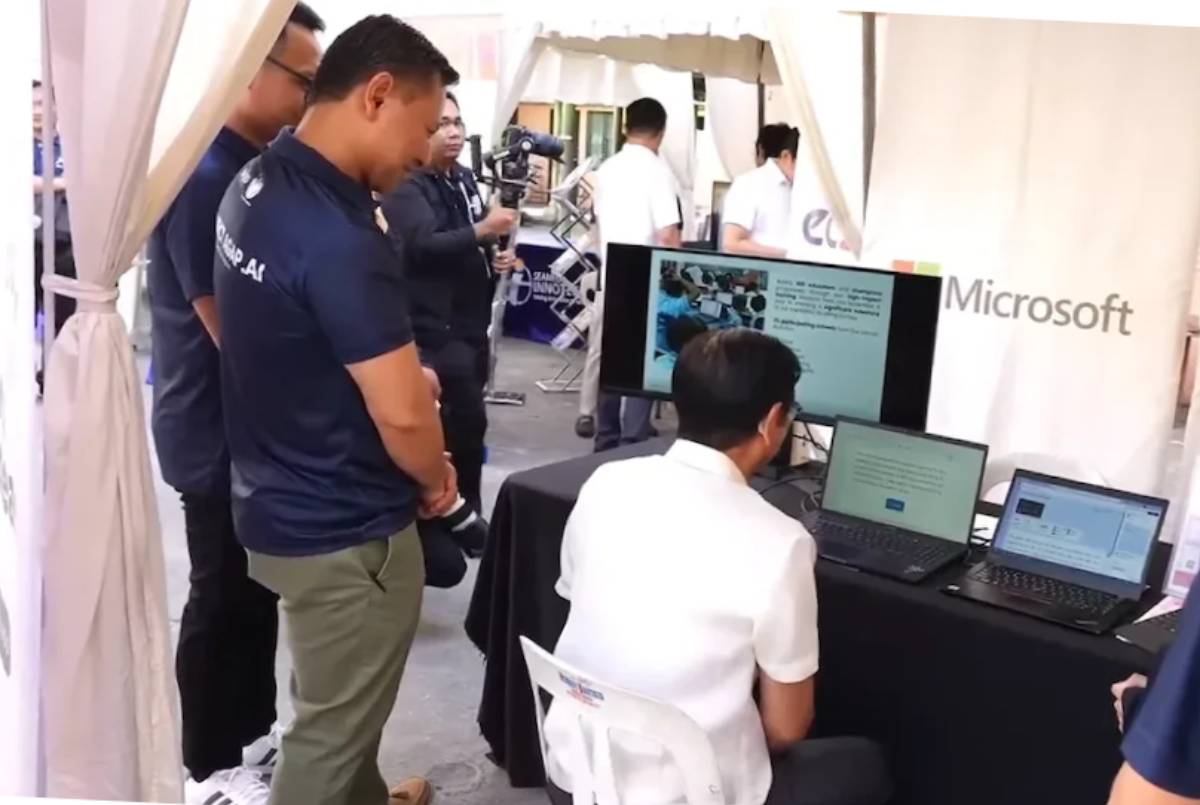
DepEd and Microsoft have launched a multi-pronged collaboration aimed at addressing learning gaps while embedding AI skills across the Philippine education system. The initiative focuses on teacher upskilling.

February 4, 2026
|

A major development unfolded in Southeast Asia’s education sector as the Philippines’ Department of Education (DepEd) partnered with Microsoft to accelerate learning recovery and expand AI literacy nationwide. The initiative signals a strategic investment in digital skills, with long-term implications for workforce readiness, economic competitiveness, and public-sector transformation.

DepEd and Microsoft have launched a multi-pronged collaboration aimed at addressing learning gaps while embedding AI skills across the Philippine education system. The initiative focuses on teacher upskilling, student access to digital learning tools, and the responsible integration of AI into classrooms.

Microsoft will provide technology platforms, cloud-based tools, and AI-enabled learning resources, while DepEd will oversee nationwide implementation across public schools. The partnership builds on existing digital education programs and is designed to scale rapidly. It also aligns with the government’s broader digital transformation agenda, positioning education as a foundational pillar for future economic growth and workforce development.

The Philippines, like many countries, continues to address learning disruptions that emerged during prolonged school closures and uneven access to digital resources. Learning recovery has become a national priority as policymakers seek to mitigate long-term impacts on productivity and human capital.

At the same time, global demand for AI and digital skills is accelerating, reshaping labor markets and redefining competitiveness across industries. Governments are increasingly integrating AI literacy into public education systems to ensure inclusive participation in the digital economy.

This collaboration reflects a broader trend across Asia-Pacific, where public-private partnerships are being leveraged to modernize education infrastructure. By combining government reach with enterprise technology capabilities, countries aim to close digital divides while preparing students and educators for an AI-driven future.

Education officials have framed the initiative as a strategic response to both immediate learning challenges and long-term skills development. Leaders within DepEd have emphasized that digital and AI literacy are no longer optional competencies but essential life skills for future generations.

Microsoft executives have highlighted the importance of responsible AI adoption, stressing that educators must be equipped not only with tools but also with frameworks that promote ethical, safe, and effective use of AI in learning environments.

Industry analysts view the partnership as a model for how emerging economies can accelerate digital readiness through structured collaboration with global technology providers. Experts note that success will depend on execution at scale, teacher engagement, and sustained investment in digital infrastructure, particularly in underserved regions.

For businesses, the initiative signals a future workforce better equipped with digital and AI competencies, strengthening the Philippines’ position as a talent hub in the global services and technology economy. Companies may benefit from a deeper pipeline of AI-literate graduates over the next decade.

Investors could see this as a positive indicator of long-term human capital development and policy stability. For policymakers, the partnership reinforces the role of AI education in national competitiveness while raising important questions around data privacy, equitable access, and curriculum governance. Consumers and families stand to gain from improved learning outcomes and stronger alignment between education and future job markets.

Attention will now turn to implementation speed, teacher adoption, and measurable learning outcomes. Decision-makers will watch whether the program delivers equitable impact across urban and rural regions. As AI continues to reshape economies, the Philippines’ approach could serve as a regional benchmark for integrating AI literacy into public education at scale.

Source & Date

Source: Microsoft News / Department of Education, Philippines
Date: February 2026

  • Featured tools
WellSaid Ai
Free

WellSaid AI is an advanced text-to-speech platform that transforms written text into lifelike, human-quality voiceovers.

#
Text to Speech
Learn more
Hostinger Website Builder
Paid

Hostinger Website Builder is a drag-and-drop website creator bundled with hosting and AI-powered tools, designed for businesses, blogs and small shops with minimal technical effort.It makes launching a site fast and affordable, with templates, responsive design and built-in hosting all in one.

#
Productivity
#
Startup Tools
#
Ecommerce
Learn more

Learn more about future of AI

Join 80,000+ Ai enthusiast getting weekly updates on exciting AI tools.
Thank you! Your submission has been received!
Oops! Something went wrong while submitting the form.

Philippines Partners Microsoft to Fast Track AI Literacy

February 4, 2026

DepEd and Microsoft have launched a multi-pronged collaboration aimed at addressing learning gaps while embedding AI skills across the Philippine education system. The initiative focuses on teacher upskilling.

A major development unfolded in Southeast Asia’s education sector as the Philippines’ Department of Education (DepEd) partnered with Microsoft to accelerate learning recovery and expand AI literacy nationwide. The initiative signals a strategic investment in digital skills, with long-term implications for workforce readiness, economic competitiveness, and public-sector transformation.

DepEd and Microsoft have launched a multi-pronged collaboration aimed at addressing learning gaps while embedding AI skills across the Philippine education system. The initiative focuses on teacher upskilling, student access to digital learning tools, and the responsible integration of AI into classrooms.

Microsoft will provide technology platforms, cloud-based tools, and AI-enabled learning resources, while DepEd will oversee nationwide implementation across public schools. The partnership builds on existing digital education programs and is designed to scale rapidly. It also aligns with the government’s broader digital transformation agenda, positioning education as a foundational pillar for future economic growth and workforce development.

The Philippines, like many countries, continues to address learning disruptions that emerged during prolonged school closures and uneven access to digital resources. Learning recovery has become a national priority as policymakers seek to mitigate long-term impacts on productivity and human capital.

At the same time, global demand for AI and digital skills is accelerating, reshaping labor markets and redefining competitiveness across industries. Governments are increasingly integrating AI literacy into public education systems to ensure inclusive participation in the digital economy.

This collaboration reflects a broader trend across Asia-Pacific, where public-private partnerships are being leveraged to modernize education infrastructure. By combining government reach with enterprise technology capabilities, countries aim to close digital divides while preparing students and educators for an AI-driven future.

Education officials have framed the initiative as a strategic response to both immediate learning challenges and long-term skills development. Leaders within DepEd have emphasized that digital and AI literacy are no longer optional competencies but essential life skills for future generations.

Microsoft executives have highlighted the importance of responsible AI adoption, stressing that educators must be equipped not only with tools but also with frameworks that promote ethical, safe, and effective use of AI in learning environments.

Industry analysts view the partnership as a model for how emerging economies can accelerate digital readiness through structured collaboration with global technology providers. Experts note that success will depend on execution at scale, teacher engagement, and sustained investment in digital infrastructure, particularly in underserved regions.

For businesses, the initiative signals a future workforce better equipped with digital and AI competencies, strengthening the Philippines’ position as a talent hub in the global services and technology economy. Companies may benefit from a deeper pipeline of AI-literate graduates over the next decade.

Investors could see this as a positive indicator of long-term human capital development and policy stability. For policymakers, the partnership reinforces the role of AI education in national competitiveness while raising important questions around data privacy, equitable access, and curriculum governance. Consumers and families stand to gain from improved learning outcomes and stronger alignment between education and future job markets.

Attention will now turn to implementation speed, teacher adoption, and measurable learning outcomes. Decision-makers will watch whether the program delivers equitable impact across urban and rural regions. As AI continues to reshape economies, the Philippines’ approach could serve as a regional benchmark for integrating AI literacy into public education at scale.

Source & Date

Source: Microsoft News / Department of Education, Philippines
Date: February 2026

Promote Your Tool

Copy Embed Code

Similar Blogs

February 4, 2026
|

OpenAI Pushes Autonomous Coding as Enterprises Reassess Software Control

OpenAI’s Codex app introduces a more autonomous approach to software development, enabling AI agents to write, modify, and reason over code with minimal human input. Designed for enterprise environments.
Read more
February 4, 2026
|

HSBC Warns Credit Markets Against Overheating on AI Optimism

HSBC’s credit strategists have urged investors to guard against what they describe as “AI exuberance” creeping into debt markets. According to their analysis, optimism around artificial intelligence is beginning to influence credit spreads.
Read more
February 4, 2026
|

Elon Musk Merges Rocket and AI Ventures Ahead Listing

Elon Musk has brought together key elements of his aerospace and AI operations, creating a unified entity designed to streamline governance, capital allocation, and strategic execution.
Read more
February 4, 2026
|

AI Agent Social Platform Security Flaw Raises Emerging Digital Risk Alarms

Cybersecurity firm Wiz identified a significant security gap in Moltbook that could have exposed sensitive system data and internal infrastructure. The flaw reportedly stemmed from misconfigured cloud resources.
Read more
February 4, 2026
|

SoftBank and Intel Team Up to Build Next Gen AI Memory

SoftBank and Intel will jointly work on advanced memory solutions aimed at improving data movement, power efficiency, and performance in AI systems. The partnership focuses on addressing limitations in existing memory.
Read more
February 4, 2026
|

Accenture Finds AI Boosts Supply Chain Margins Over 23%

A major shift in enterprise operations is underway as Accenture reports that companies deploying artificial intelligence across supply chains are achieving margin gains of up to 23 percent.
Read more