
Pipeline CRM Strengthens Sales Pipeline Management

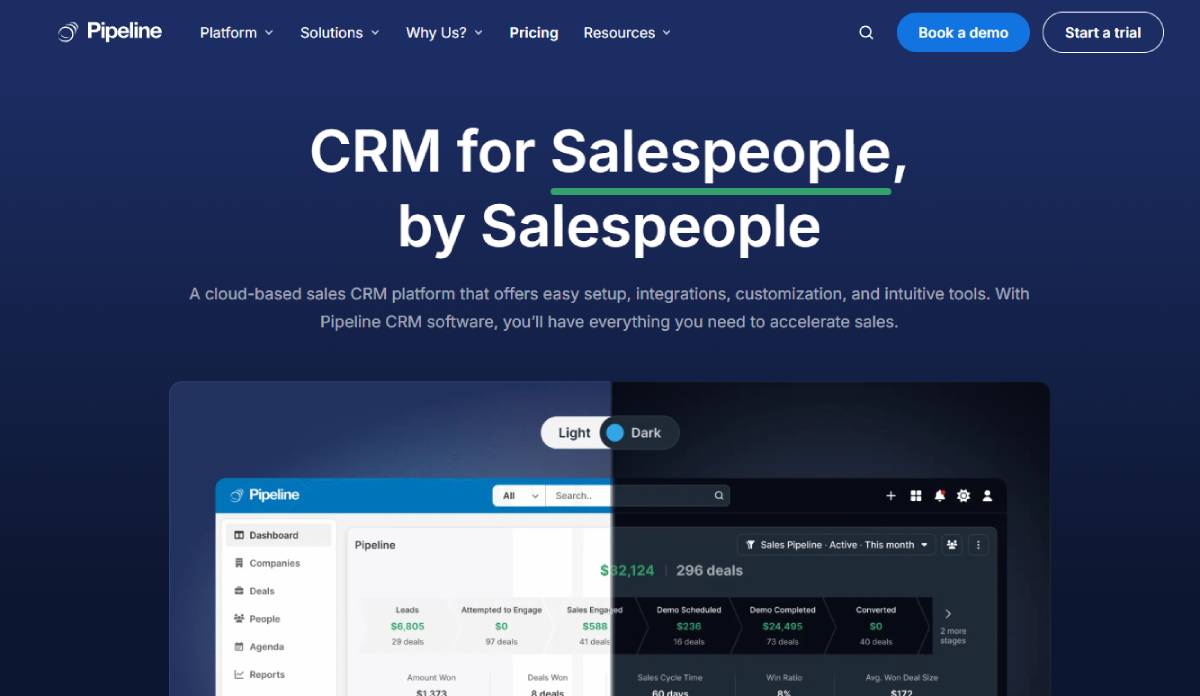
Pipeline CRM provides tools designed to help sales teams manage contacts, leads, opportunities and customer interactions within a centralized environment. Its core focus is on making the sales pipeline easier to visualize and manage.

August 13, 2026
|

Pipeline CRM is strengthening digital sales management by helping businesses organize leads, track opportunities and manage customer relationships through a centralized platform. Its positioning reflects growing demand for streamlined CRM technology as companies seek greater visibility into sales pipelines, improved forecasting and more consistent processes for converting prospects into revenue.

Pipeline CRM provides tools designed to help sales teams manage contacts, leads, opportunities and customer interactions within a centralized environment. Its core focus is on making the sales pipeline easier to visualize and manage.

The platform supports activities such as opportunity tracking, sales-stage management, contact organization and reporting. These capabilities can help sales teams understand where prospects are positioned and identify opportunities requiring follow-up.

Pipeline CRM is particularly relevant to small and mid-sized organizations seeking a focused customer relationship management system without excessive complexity.

Its approach reflects the broader evolution of CRM software from contact databases toward systems that provide sales teams with structured workflows and greater visibility into revenue opportunities.

Customer relationship management has become central to modern business strategy as organizations seek to turn increasingly complex customer interactions into predictable revenue. Sales teams need to track prospects across multiple stages while maintaining accurate information about communications, opportunities and expected outcomes.

Historically, businesses often relied on spreadsheets, email and disconnected databases to manage sales pipelines. These methods can create information gaps and make it difficult for managers to obtain a reliable view of sales performance.

Pipeline CRM operates within the broader shift toward centralized sales-management technology. By organizing customer and opportunity information around a structured pipeline, CRM platforms can help businesses establish more consistent sales processes.

The economic relevance is significant because sales visibility directly affects forecasting, resource allocation and revenue planning. Poor pipeline management can result in missed opportunities, inconsistent follow-up and unreliable forecasts.

For executives, CRM technology is therefore increasingly regarded as a strategic source of commercial intelligence rather than simply a sales administration tool. Pipeline CRM's value is centered on helping sales teams maintain a structured view of prospects and opportunities. A centralized pipeline can provide managers with greater visibility into deal progression and allow teams to identify where additional attention may be required.

Sales-management experts generally emphasize that CRM success depends heavily on data quality and user adoption. A sophisticated system cannot produce reliable forecasts if sales representatives do not consistently maintain accurate opportunity information.

The broader CRM market is also moving toward automation, AI-assisted forecasting and deeper integration with marketing, customer service and financial systems. These developments are making CRM platforms increasingly important to the entire revenue organization.

For executives, the key consideration is whether a CRM system improves measurable outcomes such as sales-cycle efficiency, conversion rates, forecasting accuracy and customer retention.

The most effective implementations typically combine technology with clear sales processes, defined responsibilities and consistent data management practices. For businesses, Pipeline CRM can help centralize sales information, improve opportunity visibility and reduce reliance on fragmented sales-management processes. Better pipeline data can support more informed decisions about sales priorities and resource allocation.

For executives and investors, stronger forecasting capabilities can improve visibility into potential revenue and business performance. Sales teams may also benefit from clearer processes for managing prospects and following opportunities through the sales cycle.

The policy dimension centers primarily on customer-data privacy, security and responsible information management. Organizations must ensure that customer information stored in CRM systems is handled according to applicable privacy and security requirements.

Executives should evaluate data security, integrations, reporting, customization, scalability and user adoption when selecting CRM technology. CRM platforms are expected to become increasingly intelligent as AI-assisted forecasting, automated follow-ups, predictive lead scoring and workflow automation become more widespread. Pipeline CRM is positioned within this broader evolution toward data-driven sales management. Decision-makers should monitor automation, analytics, integrations and data quality as they evaluate CRM investments. The long-term advantage will come from transforming pipeline information into reliable revenue intelligence and faster, more coordinated sales execution.

Source: Pipeline CRM and Crozdesk
Date: August 13, 2026

  • Featured tools
Murf Ai
Free

Murf AI Review – Advanced AI Voice Generator for Realistic Voiceovers

#
Text to Speech
Learn more
Outplay AI
Free

Outplay AI is a dynamic sales engagement platform combining AI-powered outreach, multi-channel automation, and performance tracking to help teams optimize conversion and pipeline generation.

#
Sales
Learn more

Learn more about future of AI

Join 80,000+ Ai enthusiast getting weekly updates on exciting AI tools.
Thank you! Your submission has been received!
Oops! Something went wrong while submitting the form.

Pipeline CRM Strengthens Sales Pipeline Management

August 13, 2026

Pipeline CRM provides tools designed to help sales teams manage contacts, leads, opportunities and customer interactions within a centralized environment. Its core focus is on making the sales pipeline easier to visualize and manage.

Pipeline CRM is strengthening digital sales management by helping businesses organize leads, track opportunities and manage customer relationships through a centralized platform. Its positioning reflects growing demand for streamlined CRM technology as companies seek greater visibility into sales pipelines, improved forecasting and more consistent processes for converting prospects into revenue.

Pipeline CRM provides tools designed to help sales teams manage contacts, leads, opportunities and customer interactions within a centralized environment. Its core focus is on making the sales pipeline easier to visualize and manage.

The platform supports activities such as opportunity tracking, sales-stage management, contact organization and reporting. These capabilities can help sales teams understand where prospects are positioned and identify opportunities requiring follow-up.

Pipeline CRM is particularly relevant to small and mid-sized organizations seeking a focused customer relationship management system without excessive complexity.

Its approach reflects the broader evolution of CRM software from contact databases toward systems that provide sales teams with structured workflows and greater visibility into revenue opportunities.

Customer relationship management has become central to modern business strategy as organizations seek to turn increasingly complex customer interactions into predictable revenue. Sales teams need to track prospects across multiple stages while maintaining accurate information about communications, opportunities and expected outcomes.

Historically, businesses often relied on spreadsheets, email and disconnected databases to manage sales pipelines. These methods can create information gaps and make it difficult for managers to obtain a reliable view of sales performance.

Pipeline CRM operates within the broader shift toward centralized sales-management technology. By organizing customer and opportunity information around a structured pipeline, CRM platforms can help businesses establish more consistent sales processes.

The economic relevance is significant because sales visibility directly affects forecasting, resource allocation and revenue planning. Poor pipeline management can result in missed opportunities, inconsistent follow-up and unreliable forecasts.

For executives, CRM technology is therefore increasingly regarded as a strategic source of commercial intelligence rather than simply a sales administration tool. Pipeline CRM's value is centered on helping sales teams maintain a structured view of prospects and opportunities. A centralized pipeline can provide managers with greater visibility into deal progression and allow teams to identify where additional attention may be required.

Sales-management experts generally emphasize that CRM success depends heavily on data quality and user adoption. A sophisticated system cannot produce reliable forecasts if sales representatives do not consistently maintain accurate opportunity information.

The broader CRM market is also moving toward automation, AI-assisted forecasting and deeper integration with marketing, customer service and financial systems. These developments are making CRM platforms increasingly important to the entire revenue organization.

For executives, the key consideration is whether a CRM system improves measurable outcomes such as sales-cycle efficiency, conversion rates, forecasting accuracy and customer retention.

The most effective implementations typically combine technology with clear sales processes, defined responsibilities and consistent data management practices. For businesses, Pipeline CRM can help centralize sales information, improve opportunity visibility and reduce reliance on fragmented sales-management processes. Better pipeline data can support more informed decisions about sales priorities and resource allocation.

For executives and investors, stronger forecasting capabilities can improve visibility into potential revenue and business performance. Sales teams may also benefit from clearer processes for managing prospects and following opportunities through the sales cycle.

The policy dimension centers primarily on customer-data privacy, security and responsible information management. Organizations must ensure that customer information stored in CRM systems is handled according to applicable privacy and security requirements.

Executives should evaluate data security, integrations, reporting, customization, scalability and user adoption when selecting CRM technology. CRM platforms are expected to become increasingly intelligent as AI-assisted forecasting, automated follow-ups, predictive lead scoring and workflow automation become more widespread. Pipeline CRM is positioned within this broader evolution toward data-driven sales management. Decision-makers should monitor automation, analytics, integrations and data quality as they evaluate CRM investments. The long-term advantage will come from transforming pipeline information into reliable revenue intelligence and faster, more coordinated sales execution.

Source: Pipeline CRM and Crozdesk
Date: August 13, 2026

Promote Your Tool

Copy Embed Code

Similar Blogs

August 13, 2026
|

Retail Inventory Software Drives Smarter Stock

Modern retail inventory platforms are designed to centralize information about products, stock levels, purchases and sales across physical and digital channels.
Read more
August 13, 2026
|

Coevera Advances AI-Driven Sales Management

Coevera combines visual sales pipeline management with automation, reporting and AI-assisted capabilities designed for modern sales organizations. Its platform enables teams to organize opportunities, monitor deal progression and centralize customer information.
Read more
August 13, 2026
|

Pipeline CRM Strengthens Sales Pipeline Management

Pipeline CRM provides tools designed to help sales teams manage contacts, leads, opportunities and customer interactions within a centralized environment. Its core focus is on making the sales pipeline easier to visualize and manage.
Read more
August 13, 2026
|

ContractWorks Advances Digital Contract Management

ContractWorks provides organizations with tools for storing, organizing and managing contracts in a centralized digital repository.
Read more
August 13, 2026
|

AlienVault USM Strengthens Cybersecurity Monitoring

AlienVault USM combines multiple security functions within a unified monitoring framework, including intrusion detection, vulnerability assessment, asset discovery, behavioral monitoring and security event management.
Read more
August 13, 2026
|

Plate IQ Advances Automated Payables Management

Plate IQ focuses on automating accounts payable workflows, helping organizations capture invoice information, organize financial data and manage supplier payments through a centralized digital environment.
Read more