



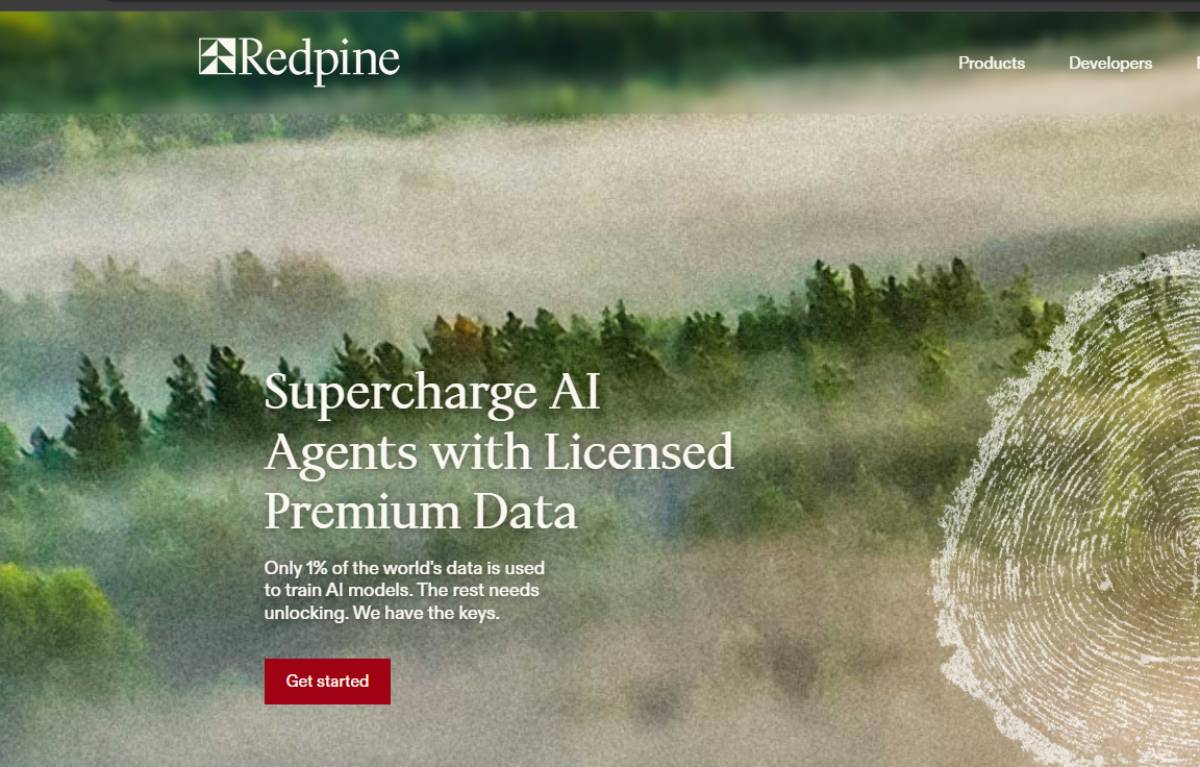
Stockholm-based AI infrastructure startup Redpine has secured $8 million in seed funding to address one of artificial intelligence’s biggest challenges: access to high-quality training data. The company aims to build a scalable marketplace for AI data, helping enterprises and developers improve model performance while reducing the complexity of sourcing reliable datasets.
Redpine has raised €8 million in funding to accelerate the development of its AI training data platform. The Stockholm-based company is focused on creating an infrastructure layer that enables easier discovery, management, and access to high-quality datasets required for advanced AI systems.
The funding will support product development, engineering expansion, and partnerships with organizations producing specialized data. Redpine’s approach positions it within the rapidly growing AI infrastructure market, where companies are competing to solve data availability, quality, and compliance challenges.
The startup’s ambition is to become a central marketplace connecting AI developers with trusted training data sources. The rise of generative AI has shifted attention from computing power alone to the quality and availability of training data. While large language models continue advancing, companies increasingly recognize that accurate, diverse, and legally compliant datasets are critical for building reliable AI applications.
Redpine’s growth reflects a broader industry movement toward specialized AI infrastructure companies supporting the next generation of machine learning. Similar to how cloud platforms transformed software development, AI data marketplaces are emerging as essential components of the technology ecosystem.
Across Europe, startups are working to strengthen regional AI capabilities and reduce dependence on major global technology providers. The demand for transparent, secure, and high-quality data solutions is expected to accelerate as enterprises deploy AI across healthcare, finance, manufacturing, and government services.
Industry analysts view AI data infrastructure as one of the most important investment areas as organizations move from AI experimentation toward large-scale deployment. The challenge is no longer simply creating AI models but ensuring those models are trained on accurate, diverse, and ethically sourced information.
Redpine’s funding signals investor confidence in companies addressing the foundational layers of the AI ecosystem. By improving access to quality datasets, platforms like Redpine could help businesses shorten development cycles and improve AI reliability.
Technology leaders increasingly emphasize that future AI competitiveness will depend on control over critical resources, including computing capacity, algorithms, and proprietary data. Redpine’s strategy aligns with this shift by focusing on the data supply chain that powers modern artificial intelligence.
For businesses adopting AI, Redpine’s platform represents a potential solution to one of the biggest operational barriers: finding trustworthy training data. Enterprises could benefit from faster AI development, improved model accuracy, and reduced compliance risks.
Investors are closely watching AI infrastructure startups as opportunities expand beyond consumer-facing applications into the underlying technology stack. Companies that successfully solve data challenges may become strategic partners for global enterprises.
From a policy perspective, the development highlights Europe’s ambition to build stronger AI capabilities while maintaining standards around privacy, transparency, and responsible technology use. Data governance will remain a critical factor shaping the future AI economy.
Redpine’s next phase will likely focus on scaling its platform, expanding partnerships, and proving demand among enterprise AI developers. As competition intensifies across the AI infrastructure market, companies that can provide trusted and efficient data solutions may gain a significant advantage. The coming years will reveal whether AI data marketplaces become as essential to artificial intelligence as cloud platforms became to modern software development.
Source: Nordic Tech News
Date: July 2026


