



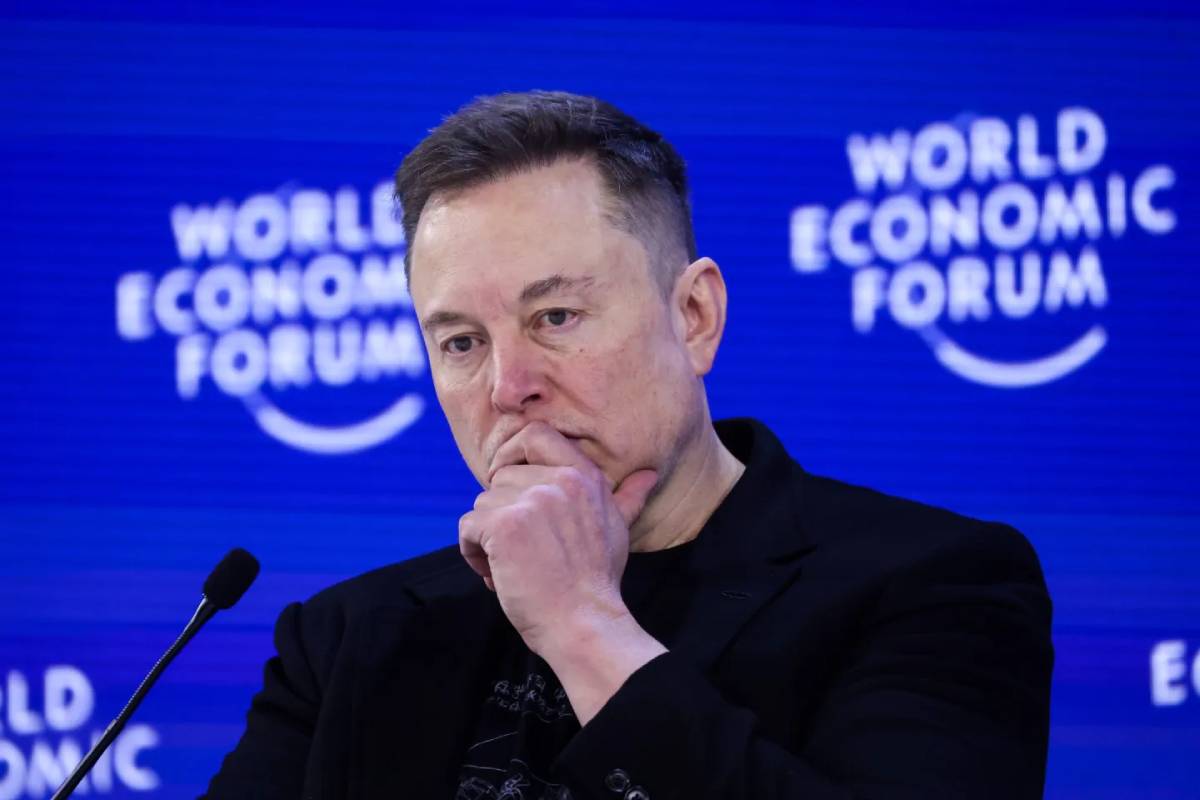
A major development unfolded as Elon Musk suggested that saving for retirement could become irrelevant in a future shaped by advanced AI platforms and AI frameworks. The remarks signal a strategic shift in how leaders view wealth creation, labor markets, and long-term financial planning in an increasingly automated global economy.
Elon Musk argued that advanced AI platforms and evolving AI frameworks could enable a post-scarcity economy where traditional financial concerns, including retirement savings, diminish.
His comments reflect a broader vision of AI dramatically increasing productivity through scalable automation systems. The discussion comes amid rapid deployment of enterprise-grade AI platforms across industries.
Stakeholders include workers, financial institutions, pension systems, and policymakers adapting to AI-led transformation. The remarks have triggered debate over whether current AI frameworks can realistically deliver such economic abundance within foreseeable timelines.
The development aligns with a broader trend across global markets where AI platforms and AI frameworks are becoming foundational to enterprise and economic infrastructure. Organizations are increasingly embedding AI into core operations, from supply chains to decision-making systems, enabling unprecedented efficiency gains.
The rise of large-scale AI platforms powered by cloud computing and advanced models has accelerated automation beyond manual and repetitive tasks into cognitive domains. At the same time, AI frameworks are shaping how these technologies are deployed, governed, and scaled across industries.
However, global financial systems including retirement planning remain anchored in traditional economic assumptions. While leaders like Elon Musk envision a radical transformation, the transition from productivity gains to widespread economic abundance remains uncertain and uneven across regions.
Industry analysts suggest that while AI platforms are already delivering measurable productivity gains, the leap to a fully abundant economy depends on how AI frameworks address distribution, governance, and access.
Economists emphasize that technological capability alone does not determine economic outcomes policy design and institutional structures play a critical role. Even the most advanced AI platforms require supportive frameworks to ensure equitable benefit distribution.
Experts also highlight that enterprises adopting AI frameworks strategically are more likely to capture long-term value, particularly when integrating human oversight with automated systems.
While Musk’s vision reflects long-term potential, analysts caution that current AI frameworks are still evolving and may take years to mature into systems capable of fundamentally reshaping global economic models.
For global executives, the discussion underscores the importance of investing in scalable AI platforms while aligning with robust AI frameworks for governance and risk management.
Businesses may need to rethink workforce strategies as automation expands across knowledge-intensive roles. Investors are likely to track companies building foundational AI platforms as key drivers of future value creation.
From a policy standpoint, governments must design AI frameworks that balance innovation with economic stability, particularly around employment and retirement systems. The shift signals that long-term financial planning models may need to evolve alongside technological progress.
Looking ahead, the interplay between AI platforms, AI frameworks, and economic systems will define the trajectory of global markets. Decision-makers should monitor how quickly these technologies translate into real-world productivity and whether policy frameworks can keep pace.
The critical question remains whether AI-driven abundance will materialize broadly or remain concentrated among early adopters and leading economies.
Source: Fortune
Date: April 26, 2026


