



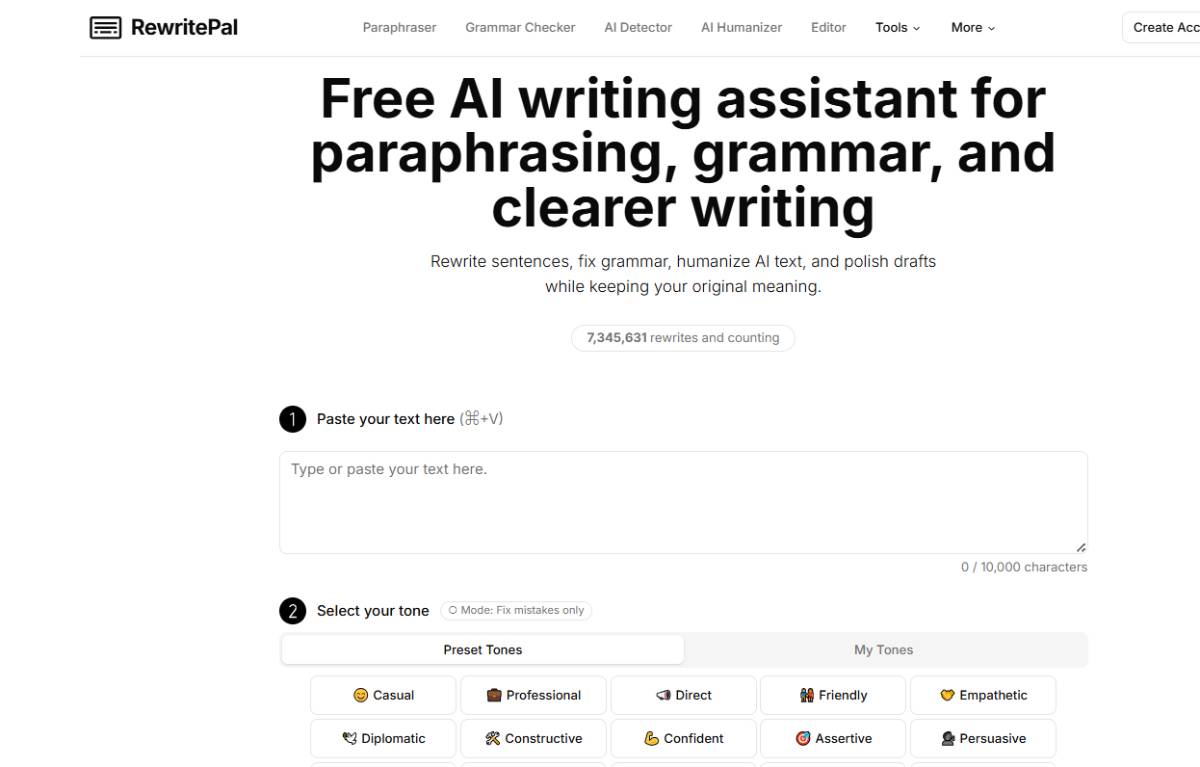
A significant development is emerging in the digital content ecosystem as AI-powered writing tools continue reshaping how individuals and businesses create, refine, and optimize text. RewritePal represents the growing adoption of automated rewriting solutions designed to improve productivity, enhance communication quality, and support professionals managing large-scale content operations.
RewritePal operates within the expanding category of AI-driven content enhancement platforms, helping users modify, improve, and restructure written material for different purposes. The platform reflects increasing demand for faster content production across marketing, business communication, education, and digital publishing.
Key stakeholders include content creators, enterprises, marketers, students, and technology providers developing AI-assisted productivity solutions. Businesses are increasingly integrating automated writing tools to reduce manual editing time and improve workflow efficiency.
The growth of platforms like RewritePal highlights a broader shift toward intelligent software systems that support human creativity while automating repetitive language-related tasks across multiple industries.
The rise of AI-powered writing assistants is transforming the global content and productivity landscape. Organizations across industries are adopting artificial intelligence to streamline communication, generate ideas, improve clarity, and accelerate publishing processes.
This development aligns with a broader trend across global markets where companies are investing in automation technologies to increase efficiency and reduce operational complexity. From marketing campaigns and customer communications to internal documentation and educational materials, AI-based writing platforms are becoming valuable tools in everyday workflows.
The expansion of generative AI has also increased competition among software providers, pushing platforms to deliver better accuracy, customization, and user experience. However, concerns around originality, data privacy, content authenticity, and responsible AI usage remain important considerations for businesses adopting these technologies.
Industry analysts believe AI writing technologies will continue evolving as businesses seek more efficient ways to manage growing content demands. Experts suggest that successful platforms will be those that combine automation with human oversight, ensuring quality, accuracy, and brand consistency.
Technology specialists highlight that AI-assisted rewriting tools can provide significant productivity benefits by helping users refine language, adjust tone, and improve readability. However, analysts emphasize that organizations must establish clear guidelines for responsible AI adoption.
Digital transformation leaders note that AI content solutions are becoming part of broader workplace automation strategies. As competition increases, providers will likely focus on advanced language models, personalization features, multilingual capabilities, and integration with existing business software ecosystems.
For businesses, AI rewriting platforms can improve operational efficiency by reducing the time required for editing, content optimization, and communication management. Marketing teams, customer service departments, and corporate communications groups may benefit from faster content workflows.
Investors may view AI productivity software as part of the expanding enterprise automation market, where demand continues growing across industries. However, companies must evaluate accuracy, security, and compliance before implementing such tools at scale.
From a policy perspective, governments and regulators are increasingly focused on AI transparency, intellectual property protection, and responsible technology development. Organizations will need to balance innovation with ethical standards as AI becomes more integrated into professional environments.
The future of AI-powered rewriting solutions will likely be shaped by improved language models, deeper workflow integration, and stronger personalization capabilities. Decision-makers should monitor developments in AI regulation, enterprise adoption, and advancements in automated content intelligence. Platforms that successfully combine efficiency, reliability, and responsible AI practices will be positioned to play a significant role in the next generation of digital productivity tools.
Source: AlternativeTo
Date: July 30, 2026


