
Sferal AI Launches Global AI Automation Dictionary

The launch of an AI automation dictionary reflects the broader challenge facing industries worldwide: rapid technological development outpacing shared understanding of terminology and capabilities.

March 9, 2026
|

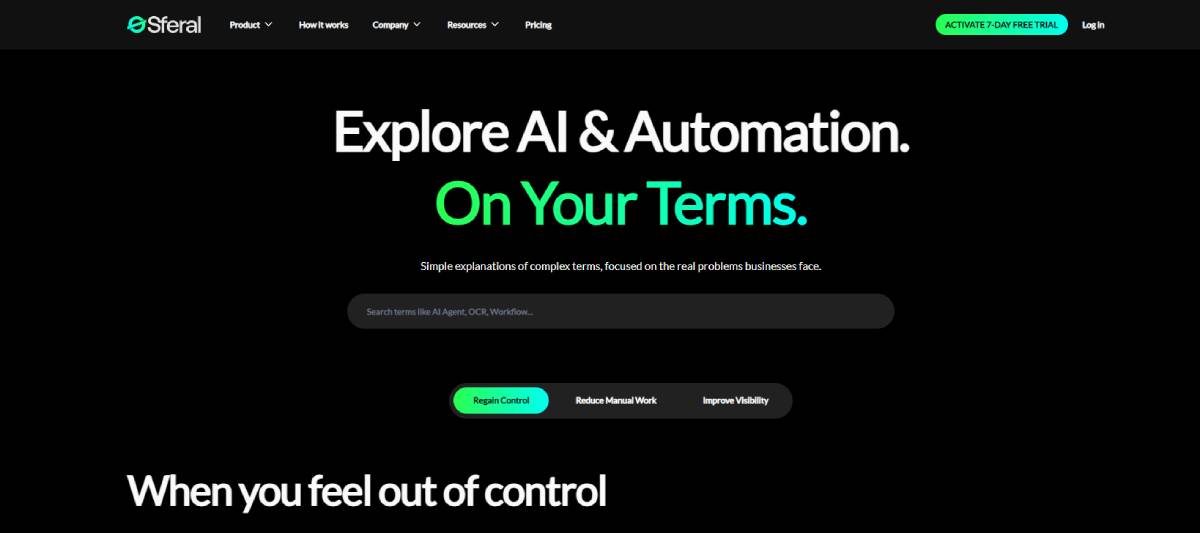
A notable development in the artificial intelligence ecosystem emerged as Sferal.ai introduced a comprehensive online AI Automation Dictionary, aimed at standardizing terminology across the rapidly evolving AI landscape. The initiative targets executives, developers, policymakers, and analysts seeking clearer understanding of AI technologies shaping enterprise transformation and global digital economies.

  • Sferal.ai launched a publicly accessible AI terminology dictionary, designed to explain core concepts in automation, machine learning, and enterprise AI applications.
  • The glossary provides structured definitions for terms related to conversational AI, automation frameworks, neural networks, and generative technologies.
  • The platform aims to support business leaders, developers, researchers, and policy professionals navigating complex AI terminology.
  • The release comes amid accelerating enterprise adoption of automation tools and AI-driven decision systems.
  • By organizing terminology into an accessible knowledge base, the initiative seeks to reduce confusion across industries adopting AI technologies and improve cross-sector communication around innovation and regulation.

The launch of an AI automation dictionary reflects the broader challenge facing industries worldwide: rapid technological development outpacing shared understanding of terminology and capabilities. Artificial intelligence has expanded beyond research labs into nearly every sector from finance and manufacturing to healthcare and government policy.

However, the speed of innovation has created fragmentation in language used by developers, executives, regulators, and investors. Terms such as generative AI, autonomous agents, prompt engineering, and AI orchestration are often interpreted differently across industries.

The initiative from Sferal.ai aligns with a growing movement toward AI literacy and standardized knowledge frameworks. Governments, corporations, and academic institutions increasingly recognize that shared vocabulary is essential for effective policy development, technology adoption, and international collaboration. As AI becomes a strategic economic driver, understanding its terminology is becoming a foundational requirement for global decision-makers.

Technology analysts view the development as part of a wider push to improve AI literacy among executives and policymakers. Industry experts note that many organizations struggle not with implementing AI tools, but with understanding the terminology surrounding them.

A senior enterprise automation consultant commented that structured resources like the dictionary help “bridge the communication gap between technical teams and leadership,” enabling more effective AI adoption strategies.

Executives within Sferal.ai have positioned the dictionary as an educational resource intended to support developers, startups, and enterprise teams working with automation technologies.

Market observers also highlight that standardized terminology can improve collaboration between regulators and technology companies, particularly as governments worldwide introduce new frameworks governing AI safety, transparency, and responsible deployment.

For corporate leaders and policymakers, the emergence of structured AI knowledge resources could have practical implications. Businesses implementing automation technologies require clear internal understanding of AI capabilities and limitations to make strategic investments.

A standardized terminology framework may also support better communication between corporate leadership, technical teams, and regulators. Investors evaluating AI startups could benefit from clearer descriptions of technologies and capabilities, reducing ambiguity in market narratives.

At the policy level, governments developing AI governance frameworks may rely on shared terminology to craft clearer regulations and compliance standards. As artificial intelligence increasingly influences national competitiveness, improving collective understanding of AI concepts could become a strategic priority.

Looking ahead, initiatives like the AI Automation Dictionary may evolve into broader AI knowledge hubs, integrating tutorials, case studies, and regulatory guidance. Decision-makers will likely watch how educational tools influence enterprise AI adoption and policy alignment. As artificial intelligence continues reshaping global industries, establishing a common language around the technology may prove critical to responsible innovation and cross-border collaboration.

Source: Sferal.ai
Date: March 2026

  • Featured tools
Twistly AI
Paid

Twistly AI is a PowerPoint add-in that allows users to generate full slide decks, improve existing presentations, and convert various content types into polished slides directly within Microsoft PowerPoint.It streamlines presentation creation using AI-powered text analysis, image generation and content conversion.

#
Presentation
Learn more
Outplay AI
Free

Outplay AI is a dynamic sales engagement platform combining AI-powered outreach, multi-channel automation, and performance tracking to help teams optimize conversion and pipeline generation.

#
Sales
Learn more

Learn more about future of AI

Join 80,000+ Ai enthusiast getting weekly updates on exciting AI tools.
Thank you! Your submission has been received!
Oops! Something went wrong while submitting the form.

Sferal AI Launches Global AI Automation Dictionary

March 9, 2026

The launch of an AI automation dictionary reflects the broader challenge facing industries worldwide: rapid technological development outpacing shared understanding of terminology and capabilities.

A notable development in the artificial intelligence ecosystem emerged as Sferal.ai introduced a comprehensive online AI Automation Dictionary, aimed at standardizing terminology across the rapidly evolving AI landscape. The initiative targets executives, developers, policymakers, and analysts seeking clearer understanding of AI technologies shaping enterprise transformation and global digital economies.

  • Sferal.ai launched a publicly accessible AI terminology dictionary, designed to explain core concepts in automation, machine learning, and enterprise AI applications.
  • The glossary provides structured definitions for terms related to conversational AI, automation frameworks, neural networks, and generative technologies.
  • The platform aims to support business leaders, developers, researchers, and policy professionals navigating complex AI terminology.
  • The release comes amid accelerating enterprise adoption of automation tools and AI-driven decision systems.
  • By organizing terminology into an accessible knowledge base, the initiative seeks to reduce confusion across industries adopting AI technologies and improve cross-sector communication around innovation and regulation.

The launch of an AI automation dictionary reflects the broader challenge facing industries worldwide: rapid technological development outpacing shared understanding of terminology and capabilities. Artificial intelligence has expanded beyond research labs into nearly every sector from finance and manufacturing to healthcare and government policy.

However, the speed of innovation has created fragmentation in language used by developers, executives, regulators, and investors. Terms such as generative AI, autonomous agents, prompt engineering, and AI orchestration are often interpreted differently across industries.

The initiative from Sferal.ai aligns with a growing movement toward AI literacy and standardized knowledge frameworks. Governments, corporations, and academic institutions increasingly recognize that shared vocabulary is essential for effective policy development, technology adoption, and international collaboration. As AI becomes a strategic economic driver, understanding its terminology is becoming a foundational requirement for global decision-makers.

Technology analysts view the development as part of a wider push to improve AI literacy among executives and policymakers. Industry experts note that many organizations struggle not with implementing AI tools, but with understanding the terminology surrounding them.

A senior enterprise automation consultant commented that structured resources like the dictionary help “bridge the communication gap between technical teams and leadership,” enabling more effective AI adoption strategies.

Executives within Sferal.ai have positioned the dictionary as an educational resource intended to support developers, startups, and enterprise teams working with automation technologies.

Market observers also highlight that standardized terminology can improve collaboration between regulators and technology companies, particularly as governments worldwide introduce new frameworks governing AI safety, transparency, and responsible deployment.

For corporate leaders and policymakers, the emergence of structured AI knowledge resources could have practical implications. Businesses implementing automation technologies require clear internal understanding of AI capabilities and limitations to make strategic investments.

A standardized terminology framework may also support better communication between corporate leadership, technical teams, and regulators. Investors evaluating AI startups could benefit from clearer descriptions of technologies and capabilities, reducing ambiguity in market narratives.

At the policy level, governments developing AI governance frameworks may rely on shared terminology to craft clearer regulations and compliance standards. As artificial intelligence increasingly influences national competitiveness, improving collective understanding of AI concepts could become a strategic priority.

Looking ahead, initiatives like the AI Automation Dictionary may evolve into broader AI knowledge hubs, integrating tutorials, case studies, and regulatory guidance. Decision-makers will likely watch how educational tools influence enterprise AI adoption and policy alignment. As artificial intelligence continues reshaping global industries, establishing a common language around the technology may prove critical to responsible innovation and cross-border collaboration.

Source: Sferal.ai
Date: March 2026

Promote Your Tool

Copy Embed Code

Similar Blogs

March 18, 2026
|

AI Advertising Crackdown Bans “Remove Anything” Claims

The ruling by the Advertising Standards Authority determined that the ad’s claims were misleading and could exaggerate the app’s capabilities.
Read more
March 18, 2026
|

Court Ruling Boosts Perplexity AI Competition

A court decision has halted efforts by Amazon to ban or limit AI agents developed by Perplexity AI on its platform. The ruling allows continued deployment and operation of these AI tools, at least temporarily.
Read more
March 18, 2026
|

Compute Divide Intensifies US China AI Rivalry

The growing disparity in computing power driven by access to advanced semiconductors and large-scale data centers is becoming central to AI competitiveness.
Read more
March 18, 2026
|

Samsung Signals AI Driven Chip Boom Into 2026

An executive at Samsung Electronics indicated that demand for AI-related semiconductors is expected to remain robust through 2026, driven by expanding use cases in data.
Read more
March 18, 2026
|

Datavault AI Sets Earnings Date Amid Growth Focus

Datavault AI confirmed it will release its fourth-quarter and full-year 2025 financial results in the coming weeks, followed by a management-hosted conference call to discuss performance and outlook.
Read more
March 18, 2026
|

Nvidia Resumes China AI Chip Production Constraints

Nvidia CEO Jensen Huang confirmed the company will resume production of AI chips designed specifically for the Chinese market, aligning with regulatory requirements imposed by the United States.
Read more