
Singify Accelerates AI Music Creation Amid Generative Audio Disruption

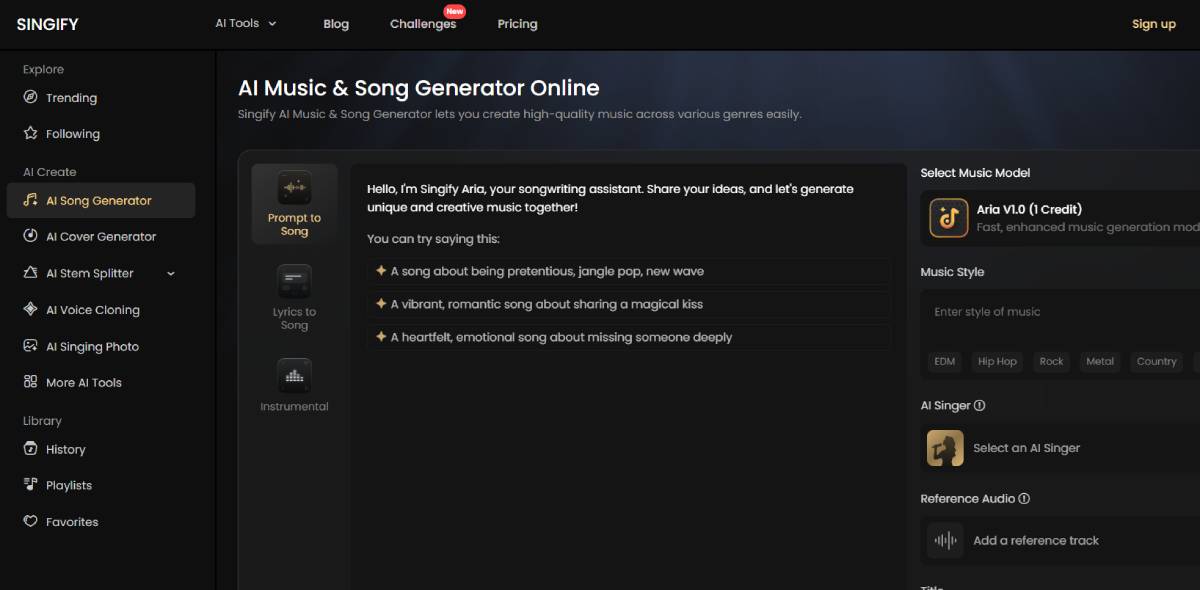
Singify, developed by FineShare, provides an AI-powered platform enabling users to generate songs, transform voices, and create music covers with minimal technical expertise.

March 6, 2026
|

A new development in the generative AI ecosystem is reshaping the music creation landscape as Singify introduces tools that allow users to generate songs, vocals, and covers using artificial intelligence. The platform highlights a growing shift toward AI-driven audio production, with implications for the global music industry, digital creators, and media businesses.

Singify, developed by FineShare, provides an AI-powered platform enabling users to generate songs, transform voices, and create music covers with minimal technical expertise.

Key capabilities include:

  • AI-generated song creation from text prompts
  • Voice conversion and AI singing models
  • Rapid music cover generation
  • Accessible tools for creators, streamers, and content producers

The platform reflects the rapid expansion of generative AI into creative industries, where artificial intelligence can replicate or simulate musical styles, vocal performances, and production elements.

By lowering barriers to entry, Singify aims to democratize music creation while enabling creators to produce content faster for platforms such as social media, streaming services, and digital marketing campaigns. The emergence of AI music generators comes amid a broader transformation in the creative technology sector.

Over the past two years, generative AI tools have expanded beyond text and images into audio, video, and interactive media. Platforms such as OpenAI, Google, and emerging startups have invested heavily in synthetic media technologies. Within the music industry, AI-generated vocals and compositions have sparked both excitement and controversy.

Record labels and artist organizations have raised concerns about copyright protection, unauthorized voice replication, and the economic impact on musicians. At the same time, content creators and independent producers are embracing AI tools to speed up production and reduce costs.

Platforms like Singify reflect the growing convergence between artificial intelligence, creator economies, and digital entertainment infrastructure. Industry analysts say AI-generated music could become one of the fastest-growing segments within the generative AI market.

Technology researchers argue that platforms capable of synthesizing vocals and music tracks in real time may significantly change how digital content is produced. Media strategists note that AI music tools enable rapid creation of soundtracks for short-form content, advertising campaigns, and gaming environments.

However, experts also emphasize the legal and ethical challenges surrounding AI-generated voices. Music industry stakeholders including labels, performing rights organizations, and artists have increasingly called for clearer regulations governing voice cloning and AI-assisted music production.

Policy experts suggest that the next phase of development will likely involve licensing frameworks and authentication systems designed to protect intellectual property while allowing innovation in AI-powered creativity.

For businesses, AI music platforms like Singify could dramatically reduce the time and cost required to produce audio content. Marketing agencies, gaming studios, and media companies may increasingly rely on AI-generated music to scale content production across digital channels.

Investors are also watching the generative audio market closely as part of the broader artificial intelligence boom. However, policymakers and regulators face mounting pressure to address copyright protection and voice ownership rights.

As AI-generated music becomes more realistic, governments and industry groups may introduce new legal frameworks to ensure that artists retain control over their likeness and creative output. For executives, the challenge will be balancing innovation with responsible use of synthetic media technologies.

As generative AI expands deeper into the entertainment sector, platforms like Singify may become central tools for the creator economy. Future advancements could include real-time AI songwriting, personalized music generation, and deeper integration with streaming and social media platforms.

For industry leaders, the coming years will determine whether AI music tools evolve into collaborative creative systems or disrupt traditional music production models entirely.

Source: Singify (FineShare)
Date: March 6, 2026

  • Featured tools
Hostinger Horizons
Freemium

Hostinger Horizons is an AI-powered platform that allows users to build and deploy custom web applications without writing code. It packs hosting, domain management and backend integration into a unified tool for rapid app creation.

#
Startup Tools
#
Coding
#
Project Management
Learn more
Twistly AI
Paid

Twistly AI is a PowerPoint add-in that allows users to generate full slide decks, improve existing presentations, and convert various content types into polished slides directly within Microsoft PowerPoint.It streamlines presentation creation using AI-powered text analysis, image generation and content conversion.

#
Presentation
Learn more

Learn more about future of AI

Join 80,000+ Ai enthusiast getting weekly updates on exciting AI tools.
Thank you! Your submission has been received!
Oops! Something went wrong while submitting the form.

Singify Accelerates AI Music Creation Amid Generative Audio Disruption

March 6, 2026

Singify, developed by FineShare, provides an AI-powered platform enabling users to generate songs, transform voices, and create music covers with minimal technical expertise.

A new development in the generative AI ecosystem is reshaping the music creation landscape as Singify introduces tools that allow users to generate songs, vocals, and covers using artificial intelligence. The platform highlights a growing shift toward AI-driven audio production, with implications for the global music industry, digital creators, and media businesses.

Singify, developed by FineShare, provides an AI-powered platform enabling users to generate songs, transform voices, and create music covers with minimal technical expertise.

Key capabilities include:

  • AI-generated song creation from text prompts
  • Voice conversion and AI singing models
  • Rapid music cover generation
  • Accessible tools for creators, streamers, and content producers

The platform reflects the rapid expansion of generative AI into creative industries, where artificial intelligence can replicate or simulate musical styles, vocal performances, and production elements.

By lowering barriers to entry, Singify aims to democratize music creation while enabling creators to produce content faster for platforms such as social media, streaming services, and digital marketing campaigns. The emergence of AI music generators comes amid a broader transformation in the creative technology sector.

Over the past two years, generative AI tools have expanded beyond text and images into audio, video, and interactive media. Platforms such as OpenAI, Google, and emerging startups have invested heavily in synthetic media technologies. Within the music industry, AI-generated vocals and compositions have sparked both excitement and controversy.

Record labels and artist organizations have raised concerns about copyright protection, unauthorized voice replication, and the economic impact on musicians. At the same time, content creators and independent producers are embracing AI tools to speed up production and reduce costs.

Platforms like Singify reflect the growing convergence between artificial intelligence, creator economies, and digital entertainment infrastructure. Industry analysts say AI-generated music could become one of the fastest-growing segments within the generative AI market.

Technology researchers argue that platforms capable of synthesizing vocals and music tracks in real time may significantly change how digital content is produced. Media strategists note that AI music tools enable rapid creation of soundtracks for short-form content, advertising campaigns, and gaming environments.

However, experts also emphasize the legal and ethical challenges surrounding AI-generated voices. Music industry stakeholders including labels, performing rights organizations, and artists have increasingly called for clearer regulations governing voice cloning and AI-assisted music production.

Policy experts suggest that the next phase of development will likely involve licensing frameworks and authentication systems designed to protect intellectual property while allowing innovation in AI-powered creativity.

For businesses, AI music platforms like Singify could dramatically reduce the time and cost required to produce audio content. Marketing agencies, gaming studios, and media companies may increasingly rely on AI-generated music to scale content production across digital channels.

Investors are also watching the generative audio market closely as part of the broader artificial intelligence boom. However, policymakers and regulators face mounting pressure to address copyright protection and voice ownership rights.

As AI-generated music becomes more realistic, governments and industry groups may introduce new legal frameworks to ensure that artists retain control over their likeness and creative output. For executives, the challenge will be balancing innovation with responsible use of synthetic media technologies.

As generative AI expands deeper into the entertainment sector, platforms like Singify may become central tools for the creator economy. Future advancements could include real-time AI songwriting, personalized music generation, and deeper integration with streaming and social media platforms.

For industry leaders, the coming years will determine whether AI music tools evolve into collaborative creative systems or disrupt traditional music production models entirely.

Source: Singify (FineShare)
Date: March 6, 2026

Promote Your Tool

Copy Embed Code

Similar Blogs

March 6, 2026
|

Thoughtly Launches No Code AI Phone Agents for Automation

Thoughtly’s launch aligns with a global trend toward AI-driven enterprise automation and intelligent customer engagement. As businesses grapple with rising operational costs and the need for 24/7 customer support.
Read more
March 6, 2026
|

Broadcom Rises on CEO Optimism for AI Growth

Broadcom shares rallied sharply after CEO Hock Tan outlined a robust outlook for AI-driven demand in the semiconductor sector.
Read more
March 6, 2026
|

Alibaba Surges in AI Commerce, Outpaces Amazon OpenAI

Alibaba has rolled out AI-powered features across its e-commerce platforms, including smart product recommendations, automated customer support, and dynamic pricing engines.
Read more
March 6, 2026
|

ByteDance AI Ambitions Hindered by Compute, Copyright Limits

ByteDance, the Chinese tech powerhouse behind TikTok, faces mounting obstacles in its AI expansion as limited access to high-performance computing and ongoing copyright disputes slow its ambitions.
Read more
March 6, 2026
|

Donald Trump Anthropic Clash Threatens United States AI Strategy

The conflict centers on disagreements between the administration of Donald Trump and leading AI firm Anthropic over safety restrictions embedded in advanced AI systems.
Read more
March 6, 2026
|

United States Weighs Global AI Chip Export Rules for Nvidia, AMD

US officials are reportedly drafting new regulations that would expand government oversight of global sales of advanced artificial intelligence chips produced by leading semiconductor firms such as Nvidia and AMD.
Read more