
Swiss Salvation Army Expands Contracts

The Salvation Army Switzerland has increased its operational revenue to approximately CHF 239 million, supported by a rise in service contracts awarded by state authorities.

July 6, 2026
|
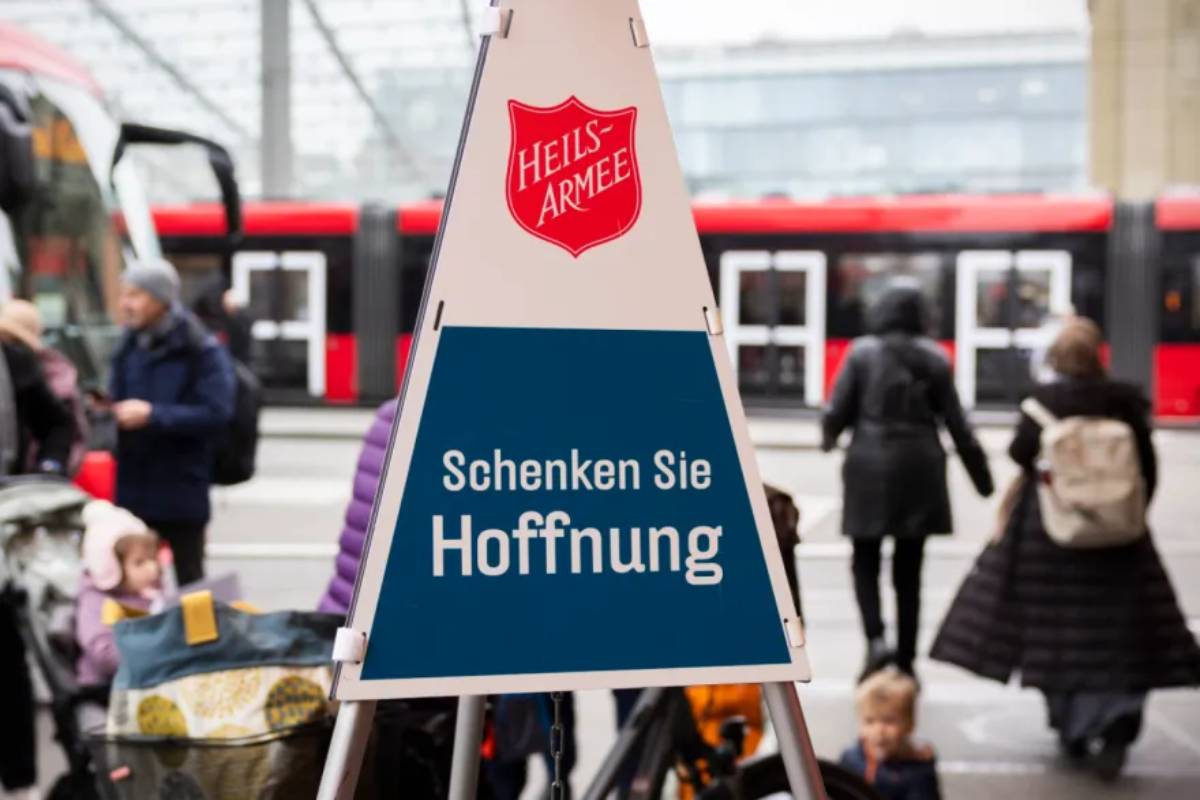
Image Source: Swissinfo

The Salvation Army in Switzerland is expanding its footprint in public service delivery as it secures additional government contracts across social welfare operations. The development reflects a growing reliance on non-profit organisations to support state functions, raising questions about the evolving boundaries between public responsibility and outsourced social services.

The Salvation Army Switzerland has increased its operational revenue to approximately CHF 239 million, supported by a rise in service contracts awarded by state authorities. The organisation is now playing a larger role in areas such as social housing support, rehabilitation programmes, and assistance services for vulnerable populations. Government partnerships have become a key revenue driver, reinforcing its position as a quasi-public service provider.

The expansion highlights a structural shift in Switzerland’s welfare delivery model, where non-government organisations are increasingly integrated into formal state service frameworks to manage cost efficiency and service reach.

Switzerland has long relied on a hybrid welfare model combining strong state institutions with significant participation from non-profit and faith-based organisations. Over the past decade, fiscal pressures and rising demand for social services have encouraged governments to outsource selected responsibilities to specialised service providers.

The Salvation Army has historically been one of the most established partners in this ecosystem, particularly in homelessness support, addiction recovery, and reintegration programmes. Its expanded role reflects broader European trends where governments seek scalable, cost-efficient social service delivery models without fully expanding public sector staffing.

This shift also aligns with increasing complexity in social needs, including migration pressures, urban housing shortages, and mental health challenges. As a result, third-sector organisations are becoming embedded in state welfare infrastructure rather than operating solely as supplementary actors.

Public policy analysts describe the expansion of contract-based welfare delivery as a “quiet structural transformation” of European social systems. They argue that organisations like The Salvation Army are increasingly functioning as operational extensions of the state rather than independent charities.

Social sector experts note that while this model improves flexibility and responsiveness, it also raises governance concerns around accountability, service consistency, and long-term funding stability. There is ongoing debate about whether outsourcing essential services risks fragmenting welfare delivery standards.

Policy observers also highlight that hybrid models can improve innovation in service design, as non-profits often operate closer to affected communities. However, they caution that dependency on state contracts may challenge organisational independence over time, particularly when budget cycles tighten or policy priorities shift.

For governments, the development reinforces a growing reliance on third-sector organisations to manage complex social welfare demands, particularly in housing and rehabilitation services. This could lead to expanded public-private service frameworks across Europe.

For non-profit operators, increased state contracting offers revenue stability but also introduces regulatory oversight and performance accountability pressures similar to public institutions. Scaling operations may require more formalised governance structures.

For policymakers, the shift raises strategic questions about the long-term sustainability of outsourced welfare systems and the risk of over-dependence on a limited pool of large service providers. It also highlights the need for clearer performance benchmarks and funding predictability.

The Salvation Army’s growing role in Swiss public service delivery is likely to continue as governments seek efficient alternatives to direct service expansion. Future developments will depend on contract sustainability, political appetite for outsourcing, and the organisation’s ability to scale while maintaining service quality. The balance between cost efficiency and accountability will remain central to the model’s long-term viability.

Source: Swissinfo
Date: 2026

  • Featured tools
Murf Ai
Free

Murf AI Review – Advanced AI Voice Generator for Realistic Voiceovers

#
Text to Speech
Learn more
Surfer AI
Free

Surfer AI is an AI-powered content creation assistant built into the Surfer SEO platform, designed to generate SEO-optimized articles from prompts, leveraging data from search results to inform tone, structure, and relevance.

#
SEO
Learn more

Learn more about future of AI

Join 80,000+ Ai enthusiast getting weekly updates on exciting AI tools.
Thank you! Your submission has been received!
Oops! Something went wrong while submitting the form.

Swiss Salvation Army Expands Contracts

July 6, 2026

The Salvation Army Switzerland has increased its operational revenue to approximately CHF 239 million, supported by a rise in service contracts awarded by state authorities.

Image Source: Swissinfo

The Salvation Army in Switzerland is expanding its footprint in public service delivery as it secures additional government contracts across social welfare operations. The development reflects a growing reliance on non-profit organisations to support state functions, raising questions about the evolving boundaries between public responsibility and outsourced social services.

The Salvation Army Switzerland has increased its operational revenue to approximately CHF 239 million, supported by a rise in service contracts awarded by state authorities. The organisation is now playing a larger role in areas such as social housing support, rehabilitation programmes, and assistance services for vulnerable populations. Government partnerships have become a key revenue driver, reinforcing its position as a quasi-public service provider.

The expansion highlights a structural shift in Switzerland’s welfare delivery model, where non-government organisations are increasingly integrated into formal state service frameworks to manage cost efficiency and service reach.

Switzerland has long relied on a hybrid welfare model combining strong state institutions with significant participation from non-profit and faith-based organisations. Over the past decade, fiscal pressures and rising demand for social services have encouraged governments to outsource selected responsibilities to specialised service providers.

The Salvation Army has historically been one of the most established partners in this ecosystem, particularly in homelessness support, addiction recovery, and reintegration programmes. Its expanded role reflects broader European trends where governments seek scalable, cost-efficient social service delivery models without fully expanding public sector staffing.

This shift also aligns with increasing complexity in social needs, including migration pressures, urban housing shortages, and mental health challenges. As a result, third-sector organisations are becoming embedded in state welfare infrastructure rather than operating solely as supplementary actors.

Public policy analysts describe the expansion of contract-based welfare delivery as a “quiet structural transformation” of European social systems. They argue that organisations like The Salvation Army are increasingly functioning as operational extensions of the state rather than independent charities.

Social sector experts note that while this model improves flexibility and responsiveness, it also raises governance concerns around accountability, service consistency, and long-term funding stability. There is ongoing debate about whether outsourcing essential services risks fragmenting welfare delivery standards.

Policy observers also highlight that hybrid models can improve innovation in service design, as non-profits often operate closer to affected communities. However, they caution that dependency on state contracts may challenge organisational independence over time, particularly when budget cycles tighten or policy priorities shift.

For governments, the development reinforces a growing reliance on third-sector organisations to manage complex social welfare demands, particularly in housing and rehabilitation services. This could lead to expanded public-private service frameworks across Europe.

For non-profit operators, increased state contracting offers revenue stability but also introduces regulatory oversight and performance accountability pressures similar to public institutions. Scaling operations may require more formalised governance structures.

For policymakers, the shift raises strategic questions about the long-term sustainability of outsourced welfare systems and the risk of over-dependence on a limited pool of large service providers. It also highlights the need for clearer performance benchmarks and funding predictability.

The Salvation Army’s growing role in Swiss public service delivery is likely to continue as governments seek efficient alternatives to direct service expansion. Future developments will depend on contract sustainability, political appetite for outsourcing, and the organisation’s ability to scale while maintaining service quality. The balance between cost efficiency and accountability will remain central to the model’s long-term viability.

Source: Swissinfo
Date: 2026

Promote Your Tool

Copy Embed Code

Similar Blogs

July 6, 2026
|

Swiss Victory Overshadowed By Viral

Switzerland secured a victory over Algeria in a World Cup fixture, strengthening its position in the tournament standings and energising its fan base.
Read more
July 6, 2026
|

Four Swiss Companies Enter Top 100

The latest global corporate ranking places four Switzerland-based companies among the top 100 worldwide, reflecting strong performance across key financial and operational metrics.
Read more
July 6, 2026
|

Swiss Cantons Crack Down Scams

Several Swiss cantons have jointly initiated enforcement actions targeting criminal groups behind “fake police” scams, where fraudsters impersonate law enforcement officials to extract money or sensitive personal data from victims.
Read more
July 6, 2026
|

Swiss Salvation Army Expands Contracts

The Salvation Army Switzerland has increased its operational revenue to approximately CHF 239 million, supported by a rise in service contracts awarded by state authorities.
Read more
July 6, 2026
|

Temu Breaks Into Swiss Top

Chinese-owned e-commerce platform Temu has secured a position among the top five e-commerce sites in Switzerland, just three years after its market entry.
Read more
July 6, 2026
|

CorPower Ocean Secures €53M Funding

CorPower Ocean has secured €53 million in Series B financing to accelerate development and deployment of its wave energy conversion systems.
Read more