



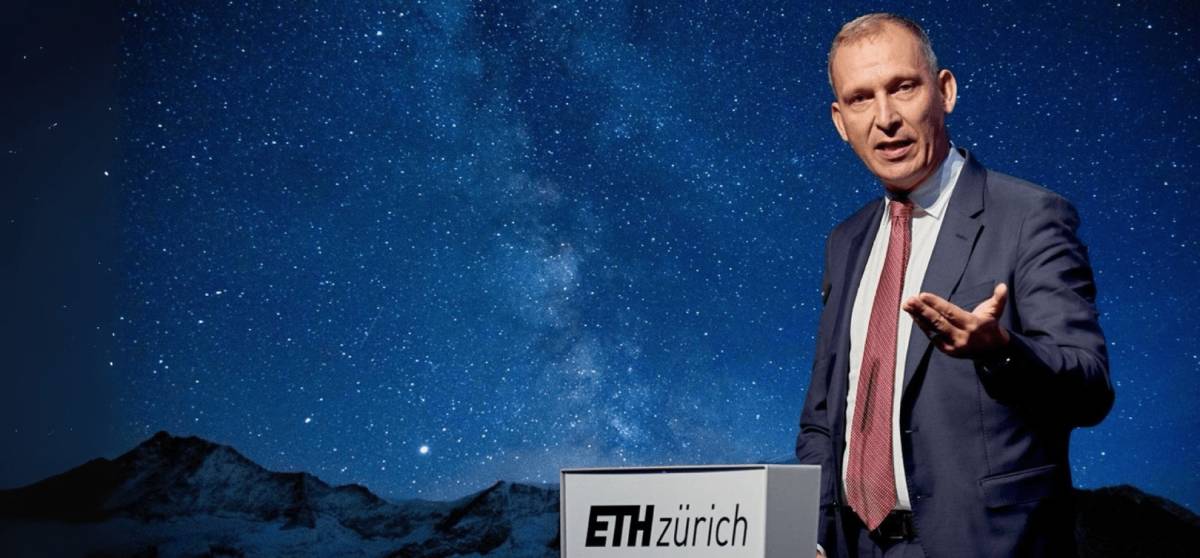
A leading Swiss space researcher has been recognized with a prestigious scientific award, underscoring Switzerland’s growing influence in global space science and advanced aerospace research. The recognition highlights breakthroughs in space systems, satellite technologies, and astrophysics, reinforcing Europe’s strategic position in next-generation space exploration and innovation ecosystems.
The award honors decades of research contributions in space science, including advancements in satellite instrumentation, orbital systems analysis, and deep-space observation technologies. The Swiss researcher has played a pivotal role in multiple international collaborations involving space agencies and research institutions across Europe.
The recognition was announced at a leading scientific forum, bringing together aerospace experts, policymakers, and research leaders. The achievement reflects Switzerland’s continued investment in high-precision scientific research and its integration within broader European space initiatives.
The award also highlights increasing global collaboration in space exploration, particularly in data-driven astrophysics and satellite-based Earth observation systems. Space research has become a critical pillar of technological sovereignty and scientific competitiveness globally. European nations, including Switzerland, have steadily strengthened their position in advanced space systems, contributing to missions involving planetary exploration, climate monitoring, and satellite communications.
Switzerland’s research ecosystem benefits from strong academic institutions, precision engineering expertise, and participation in multinational space programs. Over the past decade, space science has shifted from government-led exploration to a hybrid model involving public agencies, private aerospace firms, and research universities.
This evolution has expanded opportunities for innovation in satellite miniaturization, orbital analytics, and space-based environmental monitoring. The award reflects not only individual excellence but also the broader strategic importance of scientific leadership in shaping the future of space technology and Earth observation infrastructure.
Scientific experts emphasize that such recognitions highlight the increasing importance of interdisciplinary research in modern space exploration. Analysts note that breakthroughs in satellite systems and astrophysical modeling are now central to both scientific discovery and commercial space applications.
A European aerospace researcher commented that “space science is no longer isolated exploration it is a foundation for climate intelligence, communication systems, and global security frameworks.” Industry observers also point to the growing role of academic-industry collaboration in accelerating innovation cycles.
However, experts caution that sustaining leadership in space research requires continuous investment in talent development, infrastructure, and cross-border collaboration. The competitive landscape is intensifying as countries expand their space capabilities through both public and private sector initiatives.
For the aerospace and technology sectors, the award underscores the importance of advanced research in driving innovation pipelines for satellite systems, data analytics, and space-based infrastructure services. Businesses involved in aerospace engineering and Earth observation stand to benefit from increased visibility and collaboration opportunities.
For policymakers, the recognition reinforces the need for sustained investment in scientific research ecosystems and international cooperation in space governance. It also highlights the strategic value of space technologies in areas such as climate monitoring, defense, and communications.
The development further positions Europe as a key hub for high-precision space research and innovation leadership. Looking ahead, Switzerland is expected to deepen its role in European and global space research programs, particularly in satellite innovation and astrophysical studies. The award may encourage further collaboration between academia, government agencies, and private aerospace firms. As global competition in space accelerates, scientific leadership and research excellence will remain central to strategic technological advancement.
Source: Swiss Tech News
Date: June 2026


