



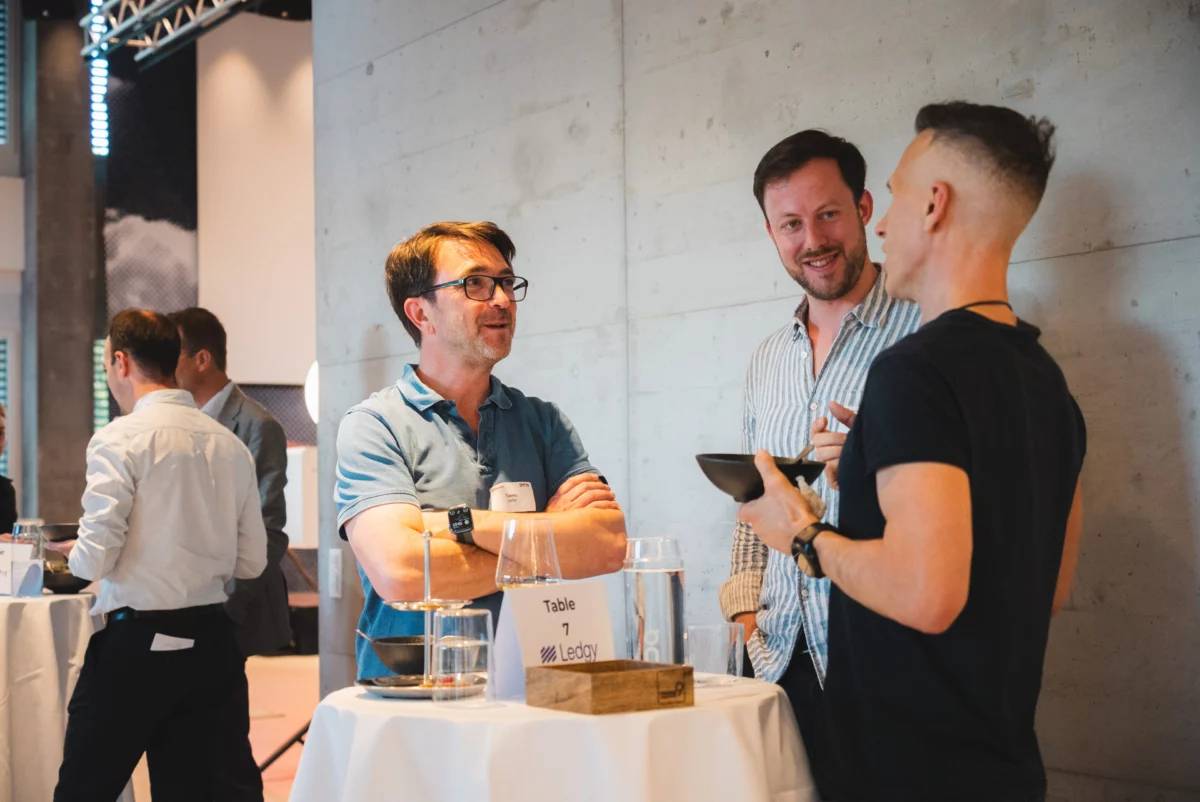
A new high-energy tech community initiative under the banner “Kick Ass Globally” marked the first major gathering of Project Switzerland’s ecosystem. The event underscores Switzerland’s push to strengthen grassroots innovation networks, connecting founders, engineers, and investors in a bid to accelerate globally competitive deep-tech and startup growth.
Project Switzerland hosted its inaugural community gathering centered around building a high-performance innovation ecosystem. The event brought together entrepreneurs, startup founders, developers, and ecosystem builders focused on scaling Swiss-origin innovation to global markets.
Discussions emphasized collaboration across deep-tech sectors, startup acceleration, and strengthening Switzerland’s position in the global innovation race. Participants explored strategies for improving founder support systems, increasing cross-border visibility, and building stronger capital pipelines for early-stage ventures.
The initiative reflects a broader shift toward more aggressive branding and community-led ecosystem development, moving beyond traditional institutional frameworks to more founder-driven, globally oriented networks.
Switzerland has long maintained a reputation for precision engineering, finance, and research-driven innovation, but in recent years it has faced increasing competition from faster-moving startup ecosystems in the US, Nordics, and parts of Asia. As a result, there is growing emphasis on building more connected and globally ambitious startup communities.
Project Switzerland appears to be part of this shift focused on translating strong academic and research output into scalable commercial ventures. The rise of community-driven innovation models reflects a global trend where informal networks, founder collectives, and ecosystem branding play a critical role in startup success.
The “Kick Ass Globally” framing signals a cultural shift toward more assertive positioning in the global tech landscape, aiming to unify fragmented innovation clusters into a more cohesive national growth strategy.
Ecosystem observers suggest that Switzerland’s startup landscape has traditionally been strong in research but less aggressive in commercialization and global scaling. Community-led initiatives like Project Switzerland are seen as an attempt to bridge this gap.
Startup ecosystem analysts note that founder-driven networks often outperform top-down policy frameworks in accelerating early-stage momentum, particularly in deep-tech and AI sectors. However, experts also caution that sustaining such communities requires long-term funding, structured mentorship, and access to international capital markets.
While formal institutional statements were not highlighted in the announcement, participants at the gathering reportedly emphasized collaboration, visibility, and global ambition as central themes. Industry voices increasingly view such movements as essential complements to government-backed innovation programs.
For startups and investors, the emergence of more aggressive ecosystem branding signals a shift toward higher competition for talent, capital, and global attention. Switzerland’s push to build stronger founder communities could improve deal flow and international visibility for early-stage companies.
Policy makers may need to balance grassroots innovation energy with structured funding and regulatory support to ensure sustainable ecosystem growth. For venture capital firms, such movements often indicate emerging hubs of high-quality deal sourcing.
For executives and founders, the trend highlights the importance of ecosystem participation not just company-level execution as a strategic advantage in global scaling. Project Switzerland’s community-driven model is likely to expand through additional events, cross-border collaborations, and deeper integration with European startup networks. The key test will be whether this momentum translates into sustained venture creation and global scaling outcomes. Future attention will focus on funding pathways, international partnerships, and whether Switzerland can convert ecosystem energy into long-term competitive advantage.
Source: DeepTechNation
Date: June 23, 2026


