
Talent Strategy Powers Luxembourg Growth

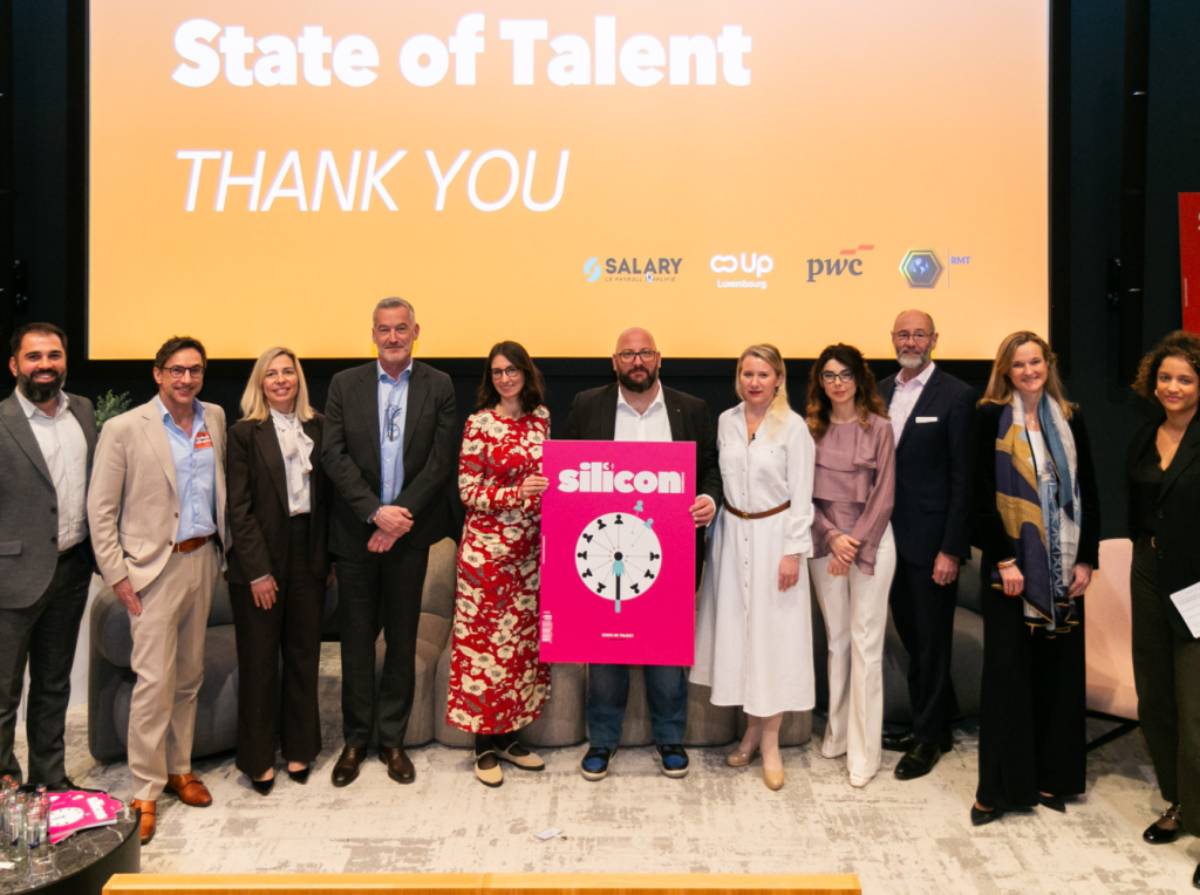
The State of Talent 2026 report examines the evolving workforce challenges facing Luxembourg’s innovation ecosystem, highlighting recruitment, employee development, leadership, and long-term retention as strategic priorities.

July 29, 2026
|
Image Source: Silicon Luxembourg

Luxembourg’s technology sector is sharpening its focus on attracting, developing, and retaining skilled professionals as competition for global talent intensifies. The findings from State of Talent 2026 underscore that workforce strategy has become a decisive factor for innovation, economic growth, and business competitiveness across Europe’s digital economy.

The State of Talent 2026 report examines the evolving workforce challenges facing Luxembourg’s innovation ecosystem, highlighting recruitment, employee development, leadership, and long-term retention as strategic priorities. Technology companies are competing for professionals with expertise in artificial intelligence, cybersecurity, software engineering, data science, fintech, and digital transformation.

The report emphasizes that businesses are increasingly investing in upskilling programs, flexible work arrangements, employer branding, and career development initiatives to remain competitive. Collaboration between employers, educational institutions, and government agencies is also identified as essential for building a sustainable talent pipeline capable of supporting future economic growth.

Global competition for highly skilled technology professionals has intensified as businesses accelerate digital transformation across every sector. Demand for expertise in artificial intelligence, cloud computing, cybersecurity, automation, and advanced software development continues to outpace available talent in many economies.

Luxembourg has positioned itself as an international business and innovation hub, attracting multinational companies, startups, and research institutions. However, maintaining that position increasingly depends on access to a highly qualified workforce capable of supporting innovation-driven industries.

Across Europe, governments and businesses are expanding investment in education, workforce reskilling, immigration policies, and lifelong learning to address persistent talent shortages. The State of Talent 2026 reflects this broader shift, highlighting that human capital is becoming one of the most important competitive advantages in the global digital economy.

Human capital experts argue that talent strategy has evolved from a human resources function into a core business priority. Analysts note that organizations able to attract and retain high-performing professionals are better positioned to innovate, adapt to technological change, and achieve sustainable growth.

Industry observers suggest that salary alone is no longer sufficient to secure skilled employees. Professionals increasingly value flexible work environments, continuous learning opportunities, strong organizational culture, leadership development, and meaningful career progression.

Experts also emphasize the importance of stronger partnerships between universities, governments, and businesses to ensure education systems remain aligned with future labour market needs. Long-term competitiveness, they argue, will depend on building resilient talent ecosystems rather than relying solely on international recruitment.

For employers, the report reinforces the need to invest in workforce development, employee engagement, leadership training, and modern workplace practices. Companies that prioritize talent management are likely to gain competitive advantages in innovation and productivity.

For policymakers, addressing skills shortages will require coordinated investments in education, vocational training, digital skills, and international talent attraction. Immigration policies, research collaboration, and workforce development initiatives will remain central to sustaining economic growth.

For investors and executives, talent availability is becoming an increasingly important indicator of long-term business performance and innovation potential across the technology sector.

As technological change accelerates, competition for skilled professionals is expected to intensify further. Businesses that successfully combine talent acquisition, continuous learning, and employee retention strategies will be better positioned to lead future innovation. Luxembourg’s ability to develop and attract world-class talent will remain a defining factor in strengthening its position as one of Europe’s leading technology and startup ecosystems.

Source: Silicon Luxembourg
Date: July 10, 2026

  • Featured tools
Upscayl AI
Free

Upscayl AI is a free, open-source AI-powered tool that enhances and upscales images to higher resolutions. It transforms blurry or low-quality visuals into sharp, detailed versions with ease.

#
Productivity
Learn more
Twistly AI
Paid

Twistly AI is a PowerPoint add-in that allows users to generate full slide decks, improve existing presentations, and convert various content types into polished slides directly within Microsoft PowerPoint.It streamlines presentation creation using AI-powered text analysis, image generation and content conversion.

#
Presentation
Learn more

Learn more about future of AI

Join 80,000+ Ai enthusiast getting weekly updates on exciting AI tools.
Thank you! Your submission has been received!
Oops! Something went wrong while submitting the form.

Talent Strategy Powers Luxembourg Growth

July 29, 2026

The State of Talent 2026 report examines the evolving workforce challenges facing Luxembourg’s innovation ecosystem, highlighting recruitment, employee development, leadership, and long-term retention as strategic priorities.

Image Source: Silicon Luxembourg

Luxembourg’s technology sector is sharpening its focus on attracting, developing, and retaining skilled professionals as competition for global talent intensifies. The findings from State of Talent 2026 underscore that workforce strategy has become a decisive factor for innovation, economic growth, and business competitiveness across Europe’s digital economy.

The State of Talent 2026 report examines the evolving workforce challenges facing Luxembourg’s innovation ecosystem, highlighting recruitment, employee development, leadership, and long-term retention as strategic priorities. Technology companies are competing for professionals with expertise in artificial intelligence, cybersecurity, software engineering, data science, fintech, and digital transformation.

The report emphasizes that businesses are increasingly investing in upskilling programs, flexible work arrangements, employer branding, and career development initiatives to remain competitive. Collaboration between employers, educational institutions, and government agencies is also identified as essential for building a sustainable talent pipeline capable of supporting future economic growth.

Global competition for highly skilled technology professionals has intensified as businesses accelerate digital transformation across every sector. Demand for expertise in artificial intelligence, cloud computing, cybersecurity, automation, and advanced software development continues to outpace available talent in many economies.

Luxembourg has positioned itself as an international business and innovation hub, attracting multinational companies, startups, and research institutions. However, maintaining that position increasingly depends on access to a highly qualified workforce capable of supporting innovation-driven industries.

Across Europe, governments and businesses are expanding investment in education, workforce reskilling, immigration policies, and lifelong learning to address persistent talent shortages. The State of Talent 2026 reflects this broader shift, highlighting that human capital is becoming one of the most important competitive advantages in the global digital economy.

Human capital experts argue that talent strategy has evolved from a human resources function into a core business priority. Analysts note that organizations able to attract and retain high-performing professionals are better positioned to innovate, adapt to technological change, and achieve sustainable growth.

Industry observers suggest that salary alone is no longer sufficient to secure skilled employees. Professionals increasingly value flexible work environments, continuous learning opportunities, strong organizational culture, leadership development, and meaningful career progression.

Experts also emphasize the importance of stronger partnerships between universities, governments, and businesses to ensure education systems remain aligned with future labour market needs. Long-term competitiveness, they argue, will depend on building resilient talent ecosystems rather than relying solely on international recruitment.

For employers, the report reinforces the need to invest in workforce development, employee engagement, leadership training, and modern workplace practices. Companies that prioritize talent management are likely to gain competitive advantages in innovation and productivity.

For policymakers, addressing skills shortages will require coordinated investments in education, vocational training, digital skills, and international talent attraction. Immigration policies, research collaboration, and workforce development initiatives will remain central to sustaining economic growth.

For investors and executives, talent availability is becoming an increasingly important indicator of long-term business performance and innovation potential across the technology sector.

As technological change accelerates, competition for skilled professionals is expected to intensify further. Businesses that successfully combine talent acquisition, continuous learning, and employee retention strategies will be better positioned to lead future innovation. Luxembourg’s ability to develop and attract world-class talent will remain a defining factor in strengthening its position as one of Europe’s leading technology and startup ecosystems.

Source: Silicon Luxembourg
Date: July 10, 2026

Promote Your Tool

Copy Embed Code

Similar Blogs

July 31, 2026
|

Dodo MIDI Enhances Music Production Workflows

Dodo MIDI is part of the music technology ecosystem, focusing on MIDI-based tools that help users create, control, and manage digital musical compositions.
Read more
July 31, 2026
|

Polar Cloud Advances Secure Data Management

Polar Cloud is positioned within the cloud computing ecosystem, offering users technology solutions focused on managing and accessing digital resources through cloud-based environments.
Read more
July 31, 2026
|

Metastream Enhances Shared Digital Entertainment

Metastream is a digital platform designed to enable synchronized media playback, allowing multiple users to watch online content together from different locations.
Read more
July 31, 2026
|

Deep Realms Advances Immersive Digital Experiences

Deep Realms is positioned within the category of immersive digital experiences, offering users a platform focused on exploration, creativity, and interactive engagement.
Read more
July 31, 2026
|

Starbackpage Evolves Digital Marketplace Platforms

Starbackpage is part of the online classified marketplace category, where users can create listings, discover services, and interact through digital platforms.
Read more
July 31, 2026
|

Calyx VPN Strengthens Digital Privacy Security

Calyx VPN is a privacy-focused virtual private network solution designed to provide users with secure internet connections and enhanced online privacy.
Read more