
WhatsApp ‘Plus’ Test Signals Paid Messaging Shift

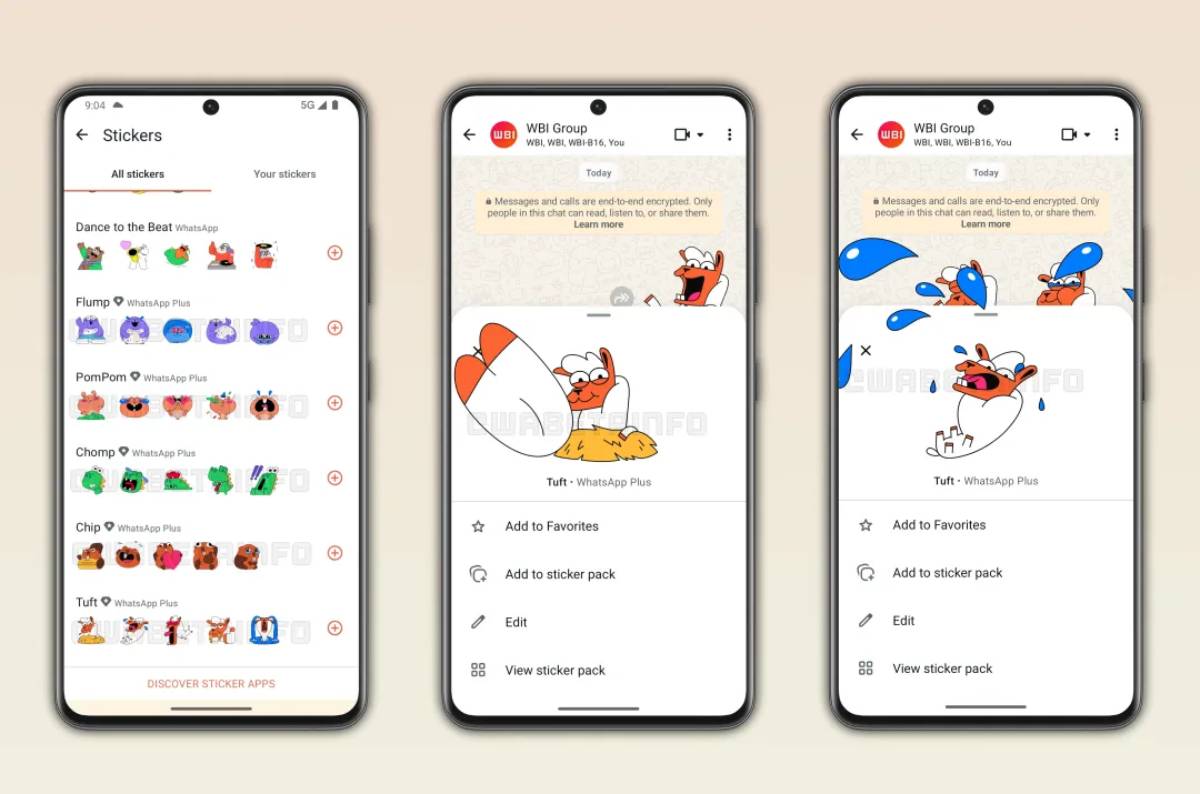
The test phase of WhatsApp’s “Plus” subscription introduces paid features including expanded sticker libraries, personalization options, and potential future productivity tools.

April 21, 2026
|
Image Source: The Verge

WhatsApp is testing a new “Plus” subscription model that adds premium features such as enhanced stickers and additional customization tools for a monthly fee. The experiment reflects a broader shift by parent company Meta toward monetizing its messaging ecosystem beyond advertising, with implications for global digital communication platforms and user monetization strategies.

The test phase of WhatsApp’s “Plus” subscription introduces paid features including expanded sticker libraries, personalization options, and potential future productivity tools. The service is being positioned as a low-cost monthly add-on for users seeking enhanced messaging experiences.

WhatsApp has historically remained free-to-use, relying on indirect monetization strategies under Meta. The introduction of a subscription layer marks a structural shift in its business model.

The rollout is currently limited, with no global pricing or launch timeline confirmed. The move aligns with ongoing experimentation in monetizing high-engagement communication platforms.

The development aligns with a broader trend across global digital markets where messaging and social platforms are increasingly diversifying revenue streams beyond traditional advertising. As user growth stabilizes in mature markets, companies are exploring subscription-based models to unlock new monetization opportunities.

WhatsApp remains one of the world’s most widely used communication tools, particularly in regions such as Asia, Europe, and Latin America. Its parent company, Meta, has been gradually expanding paid services across its ecosystem, including creator tools and business messaging solutions.

Historically, WhatsApp resisted monetization beyond enterprise services, but increasing pressure from investors and shifting digital advertising dynamics have encouraged experimentation with hybrid revenue models that combine subscriptions, services, and business integrations.

Industry analysts suggest that introducing a subscription layer to WhatsApp could represent a cautious but significant evolution in platform monetization strategy. Experts note that even low-cost premium tiers can generate substantial recurring revenue when applied across billions of users.

Market observers highlight that user acceptance will depend on whether premium features are perceived as optional enhancements rather than essential functionality. Analysts also point out that messaging platforms must carefully balance monetization with user trust to avoid engagement decline.

Digital economy specialists emphasize that subscription-based models are becoming increasingly common across social and communication platforms as companies seek more predictable revenue streams in a volatile advertising market.

For global executives, the shift signals a broader transformation in how messaging platforms monetize engagement, potentially influencing product strategy across the digital communications sector.

Investors may view subscription experiments as an effort by Meta to diversify revenue beyond advertising dependence, strengthening long-term financial stability. However, adoption risks remain tied to user sensitivity around paywalls in traditionally free services.

From a policy standpoint, regulators may increasingly scrutinize monetization practices in dominant messaging platforms, particularly regarding market power, user data usage, and fair access to communication tools.

Looking ahead, the success of WhatsApp’s “Plus” subscription will depend on user adoption rates and the perceived value of premium features. Stakeholders should watch for broader rollout plans and potential integration with business and creator ecosystems.

If successful, the model could pave the way for expanded monetization across messaging platforms globally, reshaping the economics of digital communication.

Source: The Verge
Date: April 2026

  • Featured tools
Writesonic AI
Free

Writesonic AI is a versatile AI writing platform designed for marketers, entrepreneurs, and content creators. It helps users create blog posts, ad copies, product descriptions, social media posts, and more with ease. With advanced AI models and user-friendly tools, Writesonic streamlines content production and saves time for busy professionals.

#
Copywriting
Learn more
Figstack AI
Free

Figstack AI is an intelligent assistant for developers that explains code, generates docstrings, converts code between languages, and analyzes time complexity helping you work smarter, not harder.

#
Coding
Learn more

Learn more about future of AI

Join 80,000+ Ai enthusiast getting weekly updates on exciting AI tools.
Thank you! Your submission has been received!
Oops! Something went wrong while submitting the form.

WhatsApp ‘Plus’ Test Signals Paid Messaging Shift

April 21, 2026

The test phase of WhatsApp’s “Plus” subscription introduces paid features including expanded sticker libraries, personalization options, and potential future productivity tools.

Image Source: The Verge

WhatsApp is testing a new “Plus” subscription model that adds premium features such as enhanced stickers and additional customization tools for a monthly fee. The experiment reflects a broader shift by parent company Meta toward monetizing its messaging ecosystem beyond advertising, with implications for global digital communication platforms and user monetization strategies.

The test phase of WhatsApp’s “Plus” subscription introduces paid features including expanded sticker libraries, personalization options, and potential future productivity tools. The service is being positioned as a low-cost monthly add-on for users seeking enhanced messaging experiences.

WhatsApp has historically remained free-to-use, relying on indirect monetization strategies under Meta. The introduction of a subscription layer marks a structural shift in its business model.

The rollout is currently limited, with no global pricing or launch timeline confirmed. The move aligns with ongoing experimentation in monetizing high-engagement communication platforms.

The development aligns with a broader trend across global digital markets where messaging and social platforms are increasingly diversifying revenue streams beyond traditional advertising. As user growth stabilizes in mature markets, companies are exploring subscription-based models to unlock new monetization opportunities.

WhatsApp remains one of the world’s most widely used communication tools, particularly in regions such as Asia, Europe, and Latin America. Its parent company, Meta, has been gradually expanding paid services across its ecosystem, including creator tools and business messaging solutions.

Historically, WhatsApp resisted monetization beyond enterprise services, but increasing pressure from investors and shifting digital advertising dynamics have encouraged experimentation with hybrid revenue models that combine subscriptions, services, and business integrations.

Industry analysts suggest that introducing a subscription layer to WhatsApp could represent a cautious but significant evolution in platform monetization strategy. Experts note that even low-cost premium tiers can generate substantial recurring revenue when applied across billions of users.

Market observers highlight that user acceptance will depend on whether premium features are perceived as optional enhancements rather than essential functionality. Analysts also point out that messaging platforms must carefully balance monetization with user trust to avoid engagement decline.

Digital economy specialists emphasize that subscription-based models are becoming increasingly common across social and communication platforms as companies seek more predictable revenue streams in a volatile advertising market.

For global executives, the shift signals a broader transformation in how messaging platforms monetize engagement, potentially influencing product strategy across the digital communications sector.

Investors may view subscription experiments as an effort by Meta to diversify revenue beyond advertising dependence, strengthening long-term financial stability. However, adoption risks remain tied to user sensitivity around paywalls in traditionally free services.

From a policy standpoint, regulators may increasingly scrutinize monetization practices in dominant messaging platforms, particularly regarding market power, user data usage, and fair access to communication tools.

Looking ahead, the success of WhatsApp’s “Plus” subscription will depend on user adoption rates and the perceived value of premium features. Stakeholders should watch for broader rollout plans and potential integration with business and creator ecosystems.

If successful, the model could pave the way for expanded monetization across messaging platforms globally, reshaping the economics of digital communication.

Source: The Verge
Date: April 2026

Promote Your Tool

Copy Embed Code

Similar Blogs

April 23, 2026
|

Volkswagen Targets China With AI-Enabled Vehicles

Volkswagen’s CEO confirmed that the company will introduce AI agents into China-built vehicles, enabling advanced in-car functionalities such as voice interaction, personalized assistance, and autonomous decision-making features.
Read more
April 23, 2026
|

Google Expands Workspace AI for Task Automation

Google’s latest Workspace update introduces enhanced AI agents designed to assist with tasks such as drafting emails, summarizing documents, organizing data, and managing workflows.
Read more
April 23, 2026
|

Google Unveils 8th-Gen TPUs for Agentic AI

Google revealed two new TPU chips as part of its eighth-generation architecture, optimized for both AI training and inference workloads. These chips are engineered to support increasingly sophisticated AI agents capable of reasoning, planning, and executing multi-step tasks.
Read more
April 23, 2026
|

Top AI Stock Picks Signal Strong Retail Investor Confidence

Investment analysts have identified a group of AI-focused companies as strong candidates for investors deploying modest capital, such as $1,000. Among the highlighted firms is Marvell Technology, recognized for its role in supplying data infrastructure critical to AI workloads.
Read more
April 23, 2026
|

Pentagon Seeks $54B for AI Warfare Push

The Pentagon’s proposed budget emphasizes AI integration across defense systems, including autonomous weapons, intelligence analysis, and battlefield decision-making tools.
Read more
April 23, 2026
|

Microsoft to Train 3M Australians in AI by 2028

Microsoft announced plans to deliver AI training to three million Australians within four years, positioning it as the country’s most expansive corporate-led digital skills initiative.
Read more