
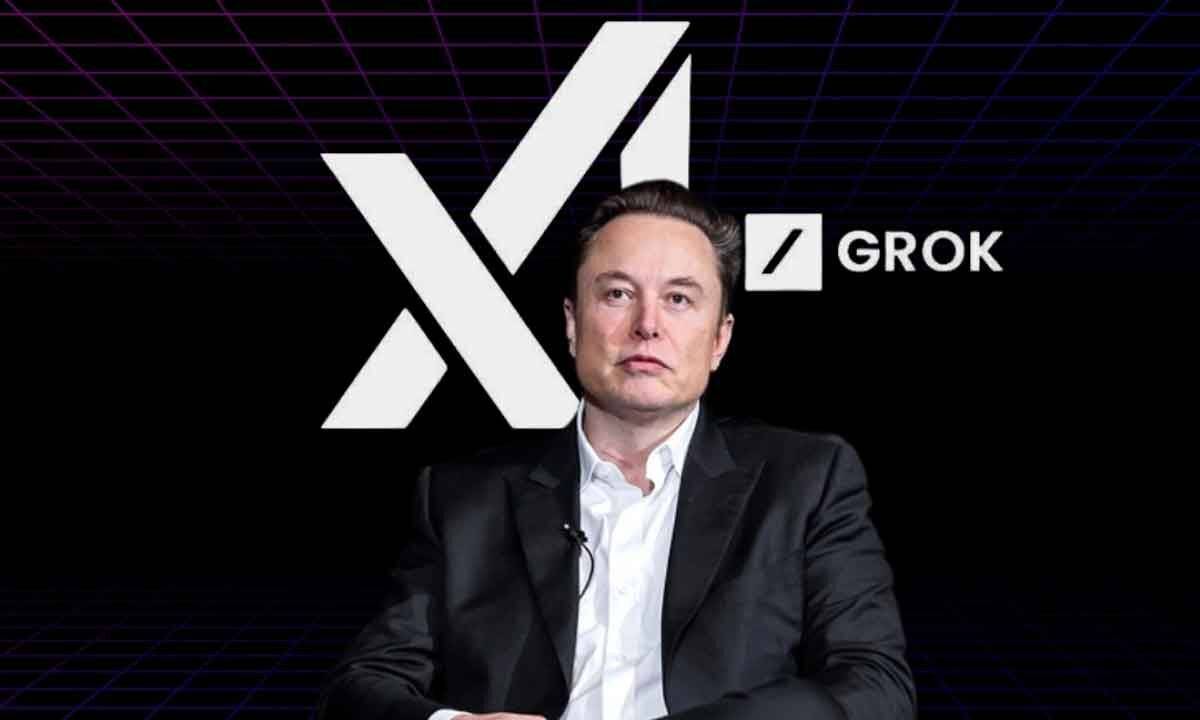
X Restricts Grok AI Following Deepfake Controversy in Platform Responsibility

A major intervention unfolded as X moved to restrict its Grok AI tool following public backlash over its ability to generate non-consensual explicit images of real people. The decision underscores growing regulatory.

January 15, 2026
|

A major intervention unfolded as X moved to restrict its Grok AI tool following public backlash over its ability to generate non-consensual explicit images of real people. The decision underscores growing regulatory, reputational, and ethical pressures on AI platforms as governments, users, and advertisers demand stronger safeguards.

X confirmed it has taken steps to prevent Grok AI from being used to digitally “undress” images of real individuals, after reports and viral examples sparked global criticism. The feature, enabled through prompt manipulation, raised alarms around consent, harassment, and misuse of generative AI.

The move follows mounting scrutiny of AI-powered image tools across social platforms, particularly those integrated directly into consumer-facing apps. While X did not disclose technical specifics, the company acknowledged enforcement gaps and committed to tightening content moderation. The incident has amplified calls for stricter controls on AI image generation and clearer accountability for platform operators.

The controversy sits within a broader surge of concern over AI-generated deepfakes and synthetic sexual content. Advances in generative models have dramatically lowered the technical barrier to creating realistic images, accelerating misuse at scale. Women, minors, and public figures have been disproportionately targeted, prompting urgent debates around digital safety and consent.

Globally, regulators are moving to respond. The EU’s AI Act, U.S. state-level deepfake laws, and new online safety rules in the UK and Asia increasingly hold platforms responsible for preventing harmful AI outputs. For X, which has positioned itself as a more permissive platform under its current leadership, the Grok backlash highlights the tension between open expression, rapid AI deployment, and legal exposure in a tightening regulatory environment.

Digital safety experts argue that the Grok episode illustrates a structural weakness in many generative AI systems: safeguards are often reactive rather than preventive. Analysts note that once tools are embedded into mass platforms, even small loopholes can scale into widespread harm within hours.

Policy specialists warn that platform assurances are no longer sufficient without transparent enforcement mechanisms and auditability. Industry observers suggest that companies deploying proprietary AI models must adopt “safety-by-design” frameworks, rather than relying on post-incident fixes.

From a governance perspective, the incident reinforces arguments that AI providers and distributors share liability. Legal experts say courts and regulators are increasingly likely to view failures in content controls as negligence, particularly when predictable misuse has been well documented.

For technology companies, the Grok backlash is a clear signal that AI-driven engagement features carry material reputational and legal risks. Advertisers and partners may reassess associations with platforms perceived as unsafe or insufficiently moderated.

Investors are also watching closely, as regulatory penalties, litigation, or forced product changes could impact growth trajectories. For policymakers, the case strengthens momentum toward stricter enforcement of AI governance, content standards, and platform liability.

Executives across sectors deploying generative AI media, gaming, marketing, and social platforms may now need to accelerate investments in moderation, compliance, and ethical oversight to avoid similar crises.

Looking ahead, scrutiny of AI image generation is expected to intensify, with regulators demanding demonstrable safeguards rather than voluntary commitments. Platforms like X will face pressure to balance innovation with responsibility as AI tools become more powerful and accessible.

Decision-makers should watch for new legal precedents, advertiser responses, and whether this episode triggers broader reforms in how consumer-facing AI systems are deployed and governed.

Source & Date

Source: BBC News
Date: January 2026

  • Featured tools
Copy Ai
Free

Copy AI is one of the most popular AI writing tools designed to help professionals create high-quality content quickly. Whether you are a product manager drafting feature descriptions or a marketer creating ad copy, Copy AI can save hours of work while maintaining creativity and tone.

#
Copywriting
Learn more
Hostinger Horizons
Freemium

Hostinger Horizons is an AI-powered platform that allows users to build and deploy custom web applications without writing code. It packs hosting, domain management and backend integration into a unified tool for rapid app creation.

#
Startup Tools
#
Coding
#
Project Management
Learn more

Learn more about future of AI

Join 80,000+ Ai enthusiast getting weekly updates on exciting AI tools.
Thank you! Your submission has been received!
Oops! Something went wrong while submitting the form.

X Restricts Grok AI Following Deepfake Controversy in Platform Responsibility

January 15, 2026

A major intervention unfolded as X moved to restrict its Grok AI tool following public backlash over its ability to generate non-consensual explicit images of real people. The decision underscores growing regulatory.

A major intervention unfolded as X moved to restrict its Grok AI tool following public backlash over its ability to generate non-consensual explicit images of real people. The decision underscores growing regulatory, reputational, and ethical pressures on AI platforms as governments, users, and advertisers demand stronger safeguards.

X confirmed it has taken steps to prevent Grok AI from being used to digitally “undress” images of real individuals, after reports and viral examples sparked global criticism. The feature, enabled through prompt manipulation, raised alarms around consent, harassment, and misuse of generative AI.

The move follows mounting scrutiny of AI-powered image tools across social platforms, particularly those integrated directly into consumer-facing apps. While X did not disclose technical specifics, the company acknowledged enforcement gaps and committed to tightening content moderation. The incident has amplified calls for stricter controls on AI image generation and clearer accountability for platform operators.

The controversy sits within a broader surge of concern over AI-generated deepfakes and synthetic sexual content. Advances in generative models have dramatically lowered the technical barrier to creating realistic images, accelerating misuse at scale. Women, minors, and public figures have been disproportionately targeted, prompting urgent debates around digital safety and consent.

Globally, regulators are moving to respond. The EU’s AI Act, U.S. state-level deepfake laws, and new online safety rules in the UK and Asia increasingly hold platforms responsible for preventing harmful AI outputs. For X, which has positioned itself as a more permissive platform under its current leadership, the Grok backlash highlights the tension between open expression, rapid AI deployment, and legal exposure in a tightening regulatory environment.

Digital safety experts argue that the Grok episode illustrates a structural weakness in many generative AI systems: safeguards are often reactive rather than preventive. Analysts note that once tools are embedded into mass platforms, even small loopholes can scale into widespread harm within hours.

Policy specialists warn that platform assurances are no longer sufficient without transparent enforcement mechanisms and auditability. Industry observers suggest that companies deploying proprietary AI models must adopt “safety-by-design” frameworks, rather than relying on post-incident fixes.

From a governance perspective, the incident reinforces arguments that AI providers and distributors share liability. Legal experts say courts and regulators are increasingly likely to view failures in content controls as negligence, particularly when predictable misuse has been well documented.

For technology companies, the Grok backlash is a clear signal that AI-driven engagement features carry material reputational and legal risks. Advertisers and partners may reassess associations with platforms perceived as unsafe or insufficiently moderated.

Investors are also watching closely, as regulatory penalties, litigation, or forced product changes could impact growth trajectories. For policymakers, the case strengthens momentum toward stricter enforcement of AI governance, content standards, and platform liability.

Executives across sectors deploying generative AI media, gaming, marketing, and social platforms may now need to accelerate investments in moderation, compliance, and ethical oversight to avoid similar crises.

Looking ahead, scrutiny of AI image generation is expected to intensify, with regulators demanding demonstrable safeguards rather than voluntary commitments. Platforms like X will face pressure to balance innovation with responsibility as AI tools become more powerful and accessible.

Decision-makers should watch for new legal precedents, advertiser responses, and whether this episode triggers broader reforms in how consumer-facing AI systems are deployed and governed.

Source & Date

Source: BBC News
Date: January 2026

Promote Your Tool

Copy Embed Code

Similar Blogs

January 15, 2026
|

SiMa.ai & Kaynes Semicon Partner to Boost High Performance Physical AI

Industry analysts view the partnership as a strategic milestone for both companies, emphasizing its potential to shape next-generation AI hardware standards. A spokesperson from SiMa.ai noted that the collaboration.
Read more
January 15, 2026
|

Fractal Analytics Announces ₹4,900 Crore IPO Amid Growing AI Market Momentum

Market analysts highlight that Fractal Analytics’ IPO is strategically timed to capture growing investor appetite for AI and data-driven enterprises. Industry observers point to the company’s strong client portfolio.
Read more
January 15, 2026
|

Anthropic Launches Claude for Healthcare, Escalating Competition in Medical AI Post-OpenAI

For healthcare organizations, Claude offers potential efficiency gains, improved diagnostic accuracy, and streamlined patient communication. Investors are closely evaluating Anthropic’s positioning relative to OpenAI.
Read more
January 15, 2026
|

X Restricts Grok AI Following Deepfake Controversy in Platform Responsibility

A major intervention unfolded as X moved to restrict its Grok AI tool following public backlash over its ability to generate non-consensual explicit images of real people. The decision underscores growing regulatory.
Read more
January 15, 2026
|

Can AI Truly Create? Rethinking Innovation and Human Advantage

A critical debate is unfolding across technology, academia, and boardrooms as artificial intelligence systems demonstrate the ability to generate ideas, concepts, and solutions once thought to be uniquely human.
Read more
January 15, 2026
|

TSMC Hits Record Profits as AI Chip Demand Soars

For global businesses, TSMC’s results confirm that access to advanced AI chips will remain a competitive differentiator. Technology firms dependent on AI acceleration face higher costs but more predictable supply.
Read more