
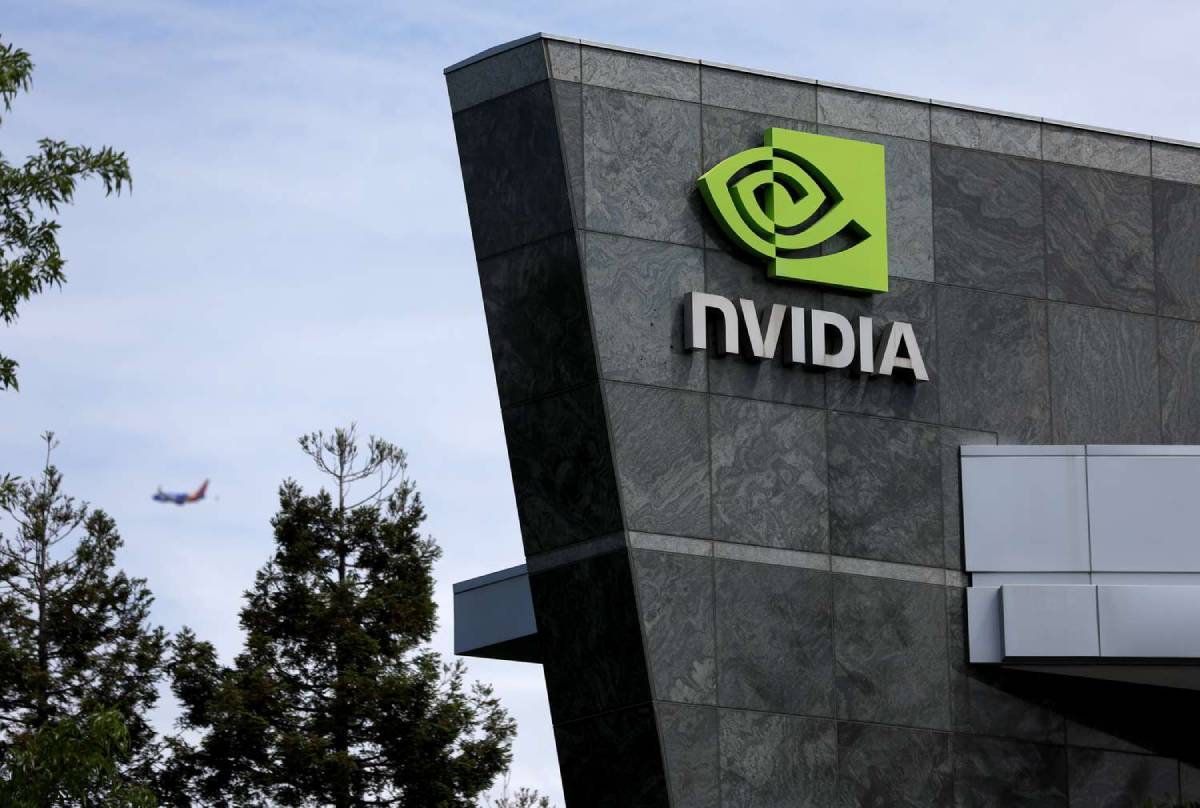
Nvidia’s Meteoric Rise Redefines the Balance of Power in the Global AI Economy

Looking ahead, decision-makers will watch whether Nvidia can sustain its lead as competitors and sovereign-backed chip programs scale up. Key uncertainties include regulatory intervention.

January 19, 2026
|

A major development unfolded as leading technology observers spotlighted Nvidia’s extraordinary rise from graphics specialist to the backbone of the global AI economy. The discussion underscores how Nvidia’s dominance in AI computing is reshaping markets, corporate strategies, and geopolitical competition around artificial intelligence infrastructure.

Nvidia’s transformation has been driven by its near-monopoly in advanced AI chips powering data centers, cloud platforms, and generative AI models. Demand for its GPUs has surged as enterprises, governments, and hyperscalers race to deploy large-scale AI systems. Industry analysts highlight Nvidia’s integrated ecosystem hardware, software, and developer tools as a critical competitive advantage. The company’s valuation surge reflects investor confidence in sustained AI-driven growth, while its supply chain influence has expanded across Asia, the U.S., and Europe. Meanwhile, competitors and policymakers are grappling with the strategic implications of Nvidia’s central role in AI infrastructure.

The development aligns with a broader trend across global markets where artificial intelligence has become a core driver of economic and strategic power. Over the past decade, Nvidia quietly positioned itself at the intersection of gaming, high-performance computing, and machine learning. As generative AI exploded into the mainstream, Nvidia’s GPUs emerged as the default engine for training and deploying advanced models. This shift has coincided with intensifying U.S.–China technology competition, export controls on advanced chips, and rising concerns about supply chain concentration. Historically, platform-defining companies such as Intel in CPUs or Microsoft in operating systems have shaped entire eras of technology. Nvidia’s rise suggests AI hardware may now represent the most consequential platform of the next economic cycle.

Technology analysts increasingly describe Nvidia as the “infrastructure layer” of the AI revolution. Commentators note that while software breakthroughs often capture headlines, it is Nvidia’s compute power that enables them at scale. Industry experts argue that Nvidia’s CUDA software ecosystem has locked in developers, making switching costs prohibitively high for rivals. Academic and market observers also caution that such dominance could attract regulatory scrutiny over time, particularly as governments assess AI’s societal impact. Corporate leaders emphasize that Nvidia’s roadmap spanning next-generation chips and AI-optimized systems positions it years ahead of competitors. The consensus among experts is that Nvidia’s influence now extends beyond technology into economics, national security, and global industrial policy.

For global executives, Nvidia’s dominance could redefine procurement strategies, capital allocation, and digital transformation timelines. Companies reliant on AI must navigate supply constraints and pricing power concentrated in a single vendor. Investors face both opportunity and risk as AI infrastructure becomes increasingly central to market valuations. Policymakers, meanwhile, must balance innovation with resilience, considering whether overreliance on one company poses strategic vulnerabilities. Governments may accelerate domestic chip initiatives, subsidies, and partnerships to counterbalance Nvidia’s influence. The shift underscores how AI hardware has become a policy issue, not just a commercial one.

Looking ahead, decision-makers will watch whether Nvidia can sustain its lead as competitors and sovereign-backed chip programs scale up. Key uncertainties include regulatory intervention, technological disruption, and geopolitical constraints on chip exports. What remains clear is that Nvidia has moved from industry player to structural pillar of the AI age one whose trajectory will shape markets, policies, and innovation strategies for years to come.

Source & Date

Source: Daily Northwestern
Date: January 15, 2026

  • Featured tools
Beautiful AI
Free

Beautiful AI is an AI-powered presentation platform that automates slide design and formatting, enabling users to create polished, on-brand presentations quickly.

#
Presentation
Learn more
Hostinger Horizons
Freemium

Hostinger Horizons is an AI-powered platform that allows users to build and deploy custom web applications without writing code. It packs hosting, domain management and backend integration into a unified tool for rapid app creation.

#
Startup Tools
#
Coding
#
Project Management
Learn more

Learn more about future of AI

Join 80,000+ Ai enthusiast getting weekly updates on exciting AI tools.
Thank you! Your submission has been received!
Oops! Something went wrong while submitting the form.

Nvidia’s Meteoric Rise Redefines the Balance of Power in the Global AI Economy

January 19, 2026

Looking ahead, decision-makers will watch whether Nvidia can sustain its lead as competitors and sovereign-backed chip programs scale up. Key uncertainties include regulatory intervention.

A major development unfolded as leading technology observers spotlighted Nvidia’s extraordinary rise from graphics specialist to the backbone of the global AI economy. The discussion underscores how Nvidia’s dominance in AI computing is reshaping markets, corporate strategies, and geopolitical competition around artificial intelligence infrastructure.

Nvidia’s transformation has been driven by its near-monopoly in advanced AI chips powering data centers, cloud platforms, and generative AI models. Demand for its GPUs has surged as enterprises, governments, and hyperscalers race to deploy large-scale AI systems. Industry analysts highlight Nvidia’s integrated ecosystem hardware, software, and developer tools as a critical competitive advantage. The company’s valuation surge reflects investor confidence in sustained AI-driven growth, while its supply chain influence has expanded across Asia, the U.S., and Europe. Meanwhile, competitors and policymakers are grappling with the strategic implications of Nvidia’s central role in AI infrastructure.

The development aligns with a broader trend across global markets where artificial intelligence has become a core driver of economic and strategic power. Over the past decade, Nvidia quietly positioned itself at the intersection of gaming, high-performance computing, and machine learning. As generative AI exploded into the mainstream, Nvidia’s GPUs emerged as the default engine for training and deploying advanced models. This shift has coincided with intensifying U.S.–China technology competition, export controls on advanced chips, and rising concerns about supply chain concentration. Historically, platform-defining companies such as Intel in CPUs or Microsoft in operating systems have shaped entire eras of technology. Nvidia’s rise suggests AI hardware may now represent the most consequential platform of the next economic cycle.

Technology analysts increasingly describe Nvidia as the “infrastructure layer” of the AI revolution. Commentators note that while software breakthroughs often capture headlines, it is Nvidia’s compute power that enables them at scale. Industry experts argue that Nvidia’s CUDA software ecosystem has locked in developers, making switching costs prohibitively high for rivals. Academic and market observers also caution that such dominance could attract regulatory scrutiny over time, particularly as governments assess AI’s societal impact. Corporate leaders emphasize that Nvidia’s roadmap spanning next-generation chips and AI-optimized systems positions it years ahead of competitors. The consensus among experts is that Nvidia’s influence now extends beyond technology into economics, national security, and global industrial policy.

For global executives, Nvidia’s dominance could redefine procurement strategies, capital allocation, and digital transformation timelines. Companies reliant on AI must navigate supply constraints and pricing power concentrated in a single vendor. Investors face both opportunity and risk as AI infrastructure becomes increasingly central to market valuations. Policymakers, meanwhile, must balance innovation with resilience, considering whether overreliance on one company poses strategic vulnerabilities. Governments may accelerate domestic chip initiatives, subsidies, and partnerships to counterbalance Nvidia’s influence. The shift underscores how AI hardware has become a policy issue, not just a commercial one.

Looking ahead, decision-makers will watch whether Nvidia can sustain its lead as competitors and sovereign-backed chip programs scale up. Key uncertainties include regulatory intervention, technological disruption, and geopolitical constraints on chip exports. What remains clear is that Nvidia has moved from industry player to structural pillar of the AI age one whose trajectory will shape markets, policies, and innovation strategies for years to come.

Source & Date

Source: Daily Northwestern
Date: January 15, 2026

Promote Your Tool

Copy Embed Code

Similar Blogs

May 13, 2026
|

Meta AI Strategy Sparks Threads Debate

The issue centers on Meta’s decision to make its AI assistant account on Threads non-blockable, effectively ensuring persistent visibility within user interactions.
Read more
May 13, 2026
|

Sony Upgrades Wearable Neck Cooling Device

Sony’s latest iteration of its wearable cooling device improves thermal efficiency, comfort fit, and sustained cooling performance around the neck and upper torso region.
Read more
May 13, 2026
|

ChatGPT Lawsuit Sparks AI Accountability Concerns

The lawsuit claims that interactions with ChatGPT included responses that were interpreted as guidance related to drug use, which allegedly played a role in a tragic outcome involving a teenager.
Read more
May 13, 2026
|

SwitchBot Enters AI Robotics Companion Devices

SwitchBot’s latest AI-enabled companion devices are designed to interact dynamically with users, adapting responses based on behavioral patterns, environmental context, and interaction history.
Read more
May 13, 2026
|

Rivian Adds Context Aware AI EV Dashboard

Rivian’s new AI assistant introduces a natural-language interface that moves beyond traditional voice-command systems, aiming to understand driver intent and contextual meaning rather than relying solely on predefined instructions.
Read more
May 13, 2026
|

Google Deepens AI First Gemini Ecosystem

Google is accelerating its AI-first strategy by positioning its Gemini model family as the central intelligence layer across its ecosystem, including Android, cloud services, productivity tools.
Read more