
Acodyne Raises €2.5M Funding

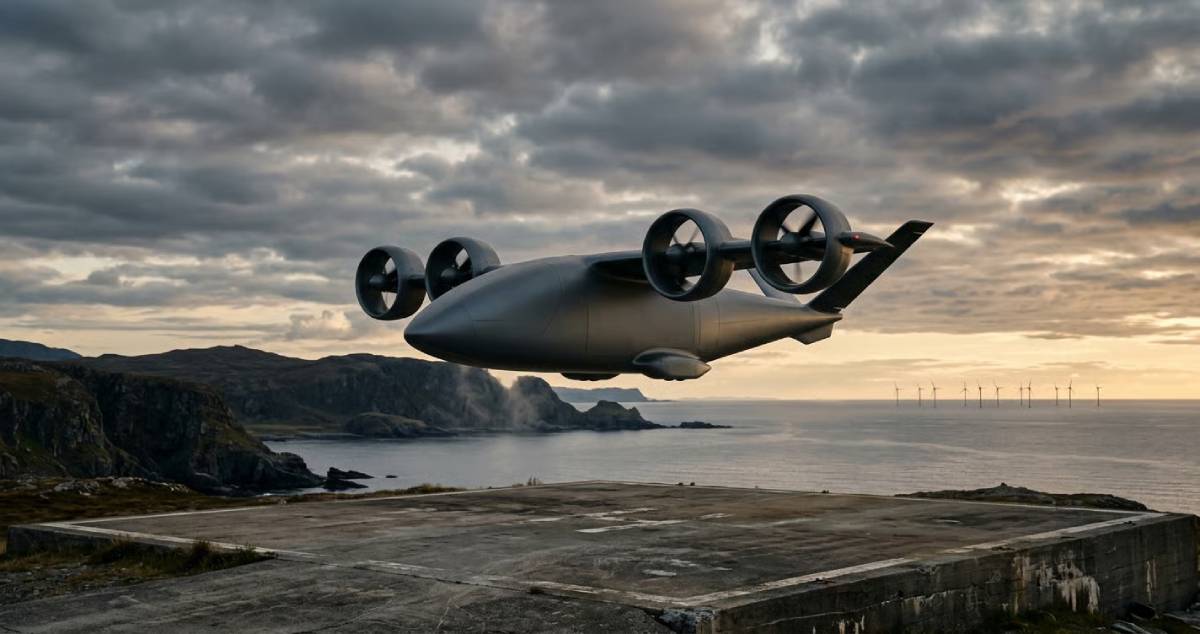
Acodyne’s €2.5 million pre-seed round will be used to accelerate development of its autonomous cargo eVTOL platform, designed for unmanned logistics operations.

June 29, 2026
|
Image Source: Nordic Tech News

A new wave of investment in autonomous aviation is gaining momentum as Acodyne secures €2.5 million in pre-seed funding to advance crewless cargo aircraft development. The raise underscores growing investor confidence in electric vertical take-off and landing (eVTOL) logistics, signaling potential disruption in global freight and last-mile delivery ecosystems.

Acodyne’s €2.5 million pre-seed round will be used to accelerate development of its autonomous cargo eVTOL platform, designed for unmanned logistics operations. The company aims to enhance payload efficiency, flight autonomy, and scalable drone-based freight solutions.

The investment round includes participation from early-stage deep-tech investors focused on aerospace innovation and next-generation mobility systems. The capital will support engineering expansion, prototype testing, and regulatory engagement in Europe.

The development aligns with increasing commercial interest in autonomous aerial logistics, particularly for high-value, time-sensitive cargo transport across urban and regional corridors. The autonomous aviation sector has emerged as one of the most dynamic frontiers in advanced mobility innovation. Driven by rapid progress in AI navigation systems, lightweight materials, and battery efficiency, eVTOL platforms are increasingly seen as viable alternatives to traditional short-haul logistics.

Europe has positioned itself as a key testing ground for unmanned aerial systems due to strong regulatory frameworks and active investment in green mobility technologies. Startups in Denmark, Germany, and the Nordics are particularly active in developing cargo-focused drone systems that can reduce emissions and optimize supply chain efficiency.

Historically, aviation innovation has been dominated by passenger transport use cases. However, the shift toward cargo-first autonomy reflects a more commercially viable entry point, allowing companies to scale operations while navigating evolving aviation safety regulations and airspace integration challenges.

Industry observers note that autonomous cargo aviation is transitioning from experimental pilots to early commercialization phases. Analysts argue that logistics-focused eVTOL platforms may achieve regulatory approval faster than passenger systems due to lower risk complexity and more controlled operating environments.

A mobility technology analyst commented that “cargo autonomy is becoming the proving ground for scalable urban air transport ecosystems.” Investors similarly highlight strong long-term demand potential driven by e-commerce growth and supply chain decentralization.

However, experts caution that regulatory harmonization across European airspace remains a key challenge. Certification timelines, infrastructure readiness, and public acceptance will significantly influence adoption speed and commercial viability over the next decade.

For logistics and supply chain companies, Acodyne’s development signals a future shift toward faster, automated, and potentially lower-cost air freight solutions. Businesses operating in time-critical sectors such as medical logistics, high-value manufacturing, and e-commerce fulfillment may see early benefits.

Investors gain exposure to a rapidly expanding autonomous mobility segment with high scalability potential, though capital intensity and regulatory uncertainty remain key risks. From a policy standpoint, governments will need to accelerate frameworks for unmanned air traffic management, safety certification, and cross-border aviation coordination. Infrastructure readiness will play a decisive role in enabling commercial deployment at scale.

Over the next 12–24 months, Acodyne is expected to focus on prototype validation, regulatory engagement, and pilot deployments within controlled air corridors. The broader autonomous cargo sector will likely see intensified competition as startups race to achieve certification milestones. Market observers will closely track regulatory progress and early commercial use cases to gauge scalability.

Source: Nordic Tech News
Date:
June 2026

  • Featured tools
Scalenut AI
Free

Scalenut AI is an all-in-one SEO content platform that combines AI-driven writing, keyword research, competitor insights, and optimization tools to help you plan, create, and rank content.

#
SEO
Learn more
Upscayl AI
Free

Upscayl AI is a free, open-source AI-powered tool that enhances and upscales images to higher resolutions. It transforms blurry or low-quality visuals into sharp, detailed versions with ease.

#
Productivity
Learn more

Learn more about future of AI

Join 80,000+ Ai enthusiast getting weekly updates on exciting AI tools.
Thank you! Your submission has been received!
Oops! Something went wrong while submitting the form.

Acodyne Raises €2.5M Funding

June 29, 2026

Acodyne’s €2.5 million pre-seed round will be used to accelerate development of its autonomous cargo eVTOL platform, designed for unmanned logistics operations.

Image Source: Nordic Tech News

A new wave of investment in autonomous aviation is gaining momentum as Acodyne secures €2.5 million in pre-seed funding to advance crewless cargo aircraft development. The raise underscores growing investor confidence in electric vertical take-off and landing (eVTOL) logistics, signaling potential disruption in global freight and last-mile delivery ecosystems.

Acodyne’s €2.5 million pre-seed round will be used to accelerate development of its autonomous cargo eVTOL platform, designed for unmanned logistics operations. The company aims to enhance payload efficiency, flight autonomy, and scalable drone-based freight solutions.

The investment round includes participation from early-stage deep-tech investors focused on aerospace innovation and next-generation mobility systems. The capital will support engineering expansion, prototype testing, and regulatory engagement in Europe.

The development aligns with increasing commercial interest in autonomous aerial logistics, particularly for high-value, time-sensitive cargo transport across urban and regional corridors. The autonomous aviation sector has emerged as one of the most dynamic frontiers in advanced mobility innovation. Driven by rapid progress in AI navigation systems, lightweight materials, and battery efficiency, eVTOL platforms are increasingly seen as viable alternatives to traditional short-haul logistics.

Europe has positioned itself as a key testing ground for unmanned aerial systems due to strong regulatory frameworks and active investment in green mobility technologies. Startups in Denmark, Germany, and the Nordics are particularly active in developing cargo-focused drone systems that can reduce emissions and optimize supply chain efficiency.

Historically, aviation innovation has been dominated by passenger transport use cases. However, the shift toward cargo-first autonomy reflects a more commercially viable entry point, allowing companies to scale operations while navigating evolving aviation safety regulations and airspace integration challenges.

Industry observers note that autonomous cargo aviation is transitioning from experimental pilots to early commercialization phases. Analysts argue that logistics-focused eVTOL platforms may achieve regulatory approval faster than passenger systems due to lower risk complexity and more controlled operating environments.

A mobility technology analyst commented that “cargo autonomy is becoming the proving ground for scalable urban air transport ecosystems.” Investors similarly highlight strong long-term demand potential driven by e-commerce growth and supply chain decentralization.

However, experts caution that regulatory harmonization across European airspace remains a key challenge. Certification timelines, infrastructure readiness, and public acceptance will significantly influence adoption speed and commercial viability over the next decade.

For logistics and supply chain companies, Acodyne’s development signals a future shift toward faster, automated, and potentially lower-cost air freight solutions. Businesses operating in time-critical sectors such as medical logistics, high-value manufacturing, and e-commerce fulfillment may see early benefits.

Investors gain exposure to a rapidly expanding autonomous mobility segment with high scalability potential, though capital intensity and regulatory uncertainty remain key risks. From a policy standpoint, governments will need to accelerate frameworks for unmanned air traffic management, safety certification, and cross-border aviation coordination. Infrastructure readiness will play a decisive role in enabling commercial deployment at scale.

Over the next 12–24 months, Acodyne is expected to focus on prototype validation, regulatory engagement, and pilot deployments within controlled air corridors. The broader autonomous cargo sector will likely see intensified competition as startups race to achieve certification milestones. Market observers will closely track regulatory progress and early commercial use cases to gauge scalability.

Source: Nordic Tech News
Date:
June 2026

Promote Your Tool

Copy Embed Code

Similar Blogs

June 29, 2026
|

Cryptomathic Expands Nordic Cryptography

The acquisition of TrustSkills by Cryptomathic adds specialized cryptographic expertise to its existing security software portfolio.
Read more
June 29, 2026
|

Sweden Angels Build Self-IPO Model

The initiative known as Snöboll is being built by members of the Nordic angel ecosystem, including networks such as Nordic Angels.
Read more
June 29, 2026
|

Grundium Expands Pathology with Visiopharm

The acquisition brings together Grundium’s portable digital microscopy and Visiopharm’s AI-powered pathology software into a vertically integrated diagnostic stack.
Read more
June 29, 2026
|

Climate Petition Targets Rhône Glacier Cave

The petition argues that the constructed ice cave accelerates environmental stress on the already retreating Rhône Glacier, one of Switzerland’s most closely monitored climate indicators.
Read more
June 29, 2026
|

Shape Shifting Robot Built in Switzerland

The newly developed robot can dynamically change its structure to navigate complex environments, transition between locomotion modes, and perform multiple task functions.
Read more
June 29, 2026
|

Switzerland Unveils Open AI Model

The newly launched AI model emphasizes transparency, explainability, and open access, allowing researchers, developers, and institutions to understand its underlying architecture and decision-making processes.
Read more