
NVIDIA Signals Explosive AI Infrastructure Demand Surge

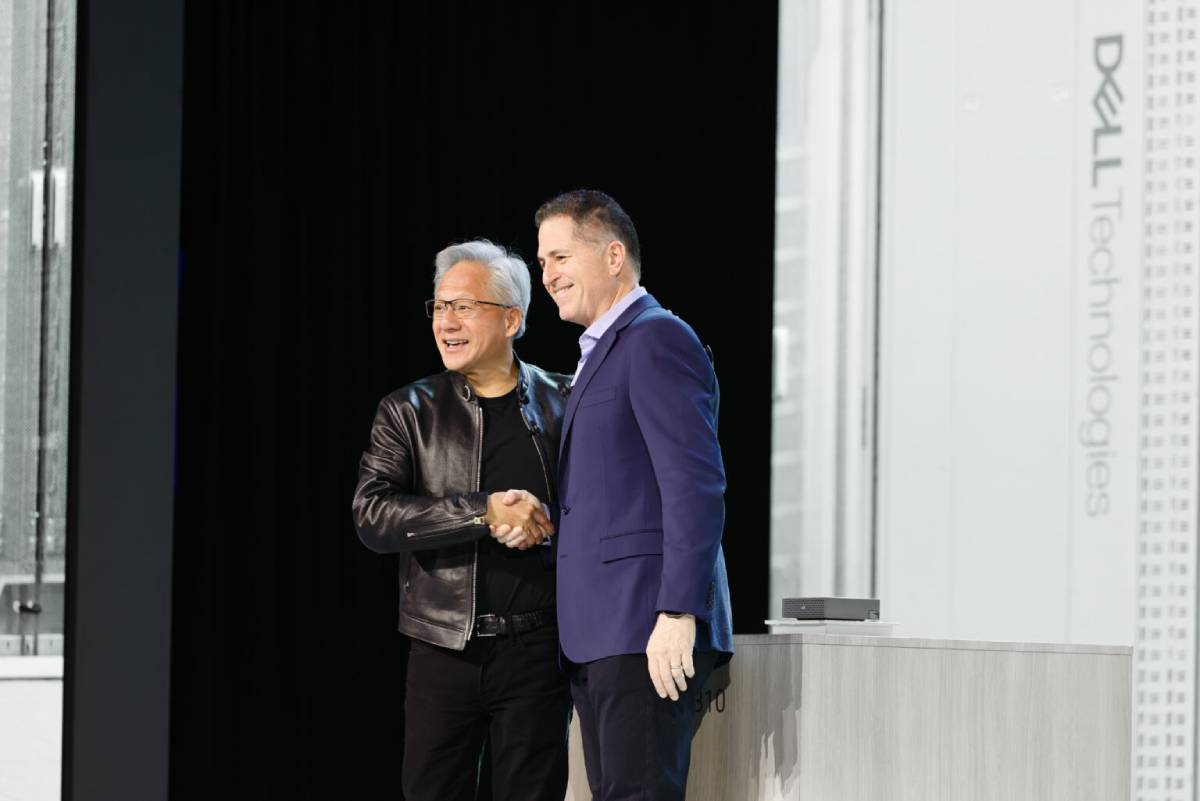
Speaking at Dell Technologies World, NVIDIA CEO Jensen Huang highlighted unprecedented demand growth for AI computing infrastructure, emphasizing the rapid expansion of enterprise adoption and agentic AI systems.

May 19, 2026
|
Image Source: NVIDIA Blog Report

A major escalation in the global AI infrastructure race is underway as Jensen Huang declared that demand for AI computing is becoming “utterly parabolic” during remarks at Dell Technologies World. The statement underscores accelerating enterprise AI adoption, with significant implications for cloud infrastructure, semiconductor markets, and global technology investment strategies.

Speaking at Dell Technologies World, NVIDIA CEO Jensen Huang highlighted unprecedented demand growth for AI computing infrastructure, emphasizing the rapid expansion of enterprise adoption and agentic AI systems. The remarks were made in the context of deeper collaboration between NVIDIA and Dell Technologies on enterprise AI deployment solutions.

The discussion focused on accelerating demand for AI servers, accelerated computing platforms, and integrated enterprise infrastructure capable of supporting advanced generative AI workloads. Huang’s comments reinforce industry expectations that AI-driven computing requirements are expanding faster than traditional infrastructure supply chains can currently accommodate.

The comments come amid an unprecedented global expansion in AI infrastructure investment. Since the mainstream adoption of generative AI platforms, demand for high-performance GPUs, AI servers, and specialized data centre systems has surged across industries.

NVIDIA has emerged as one of the most strategically important companies in the AI ecosystem due to its dominance in accelerated computing hardware. Meanwhile, enterprise technology firms such as Dell Technologies are positioning themselves as critical deployment partners for organizations seeking to operationalize AI capabilities at scale.

Historically, infrastructure cycles in technology have been driven by cloud computing and internet expansion. The current AI cycle, however, demands substantially higher computational density, energy consumption, and capital investment, fundamentally reshaping enterprise IT priorities and global semiconductor supply chains.

Industry analysts interpret Huang’s remarks as a strong signal that AI infrastructure demand remains in an early growth phase rather than nearing saturation. Experts argue that enterprise adoption of generative AI, autonomous agents, and multimodal systems is driving a structural transformation in computing markets.

Technology strategists note that NVIDIA’s leadership position in GPUs and AI accelerators gives the company significant influence over the pace and economics of AI deployment globally. Analysts also emphasize that collaborations between hardware providers and enterprise infrastructure firms are becoming increasingly important as organizations seek integrated AI deployment solutions rather than standalone hardware components.

Market observers caution, however, that “parabolic” growth in demand may intensify pressure on semiconductor manufacturing, power grids, cooling systems, and supply chains. The sustainability of rapid AI expansion is expected to become a central issue for both corporate leaders and policymakers.

For enterprises, Huang’s comments reinforce the urgency of investing in AI-ready infrastructure and workforce capabilities. Companies that delay AI integration may face widening competitive disadvantages as AI adoption accelerates across sectors.

For investors, the statement further validates expectations that AI infrastructure spending will remain a dominant growth theme across semiconductors, cloud computing, and enterprise technology markets.

For policymakers, the rapid escalation in AI compute demand raises concerns around energy consumption, semiconductor supply resilience, and digital sovereignty. Analysts warn that governments may increasingly prioritize domestic AI infrastructure capacity as a strategic national asset in the global technology competition.

Looking ahead, the AI infrastructure race is expected to intensify as enterprises scale deployment of generative AI and autonomous systems. Decision-makers will closely monitor whether supply chains can keep pace with accelerating demand for AI hardware and data centre capacity. Key uncertainties include energy availability, geopolitical semiconductor tensions, and whether current investment levels can sustain long-term profitability across the AI ecosystem.

Source: NVIDIA Blog Report
Date: May 19, 2026

  • Featured tools
Twistly AI
Paid

Twistly AI is a PowerPoint add-in that allows users to generate full slide decks, improve existing presentations, and convert various content types into polished slides directly within Microsoft PowerPoint.It streamlines presentation creation using AI-powered text analysis, image generation and content conversion.

#
Presentation
Learn more
Hostinger Horizons
Freemium

Hostinger Horizons is an AI-powered platform that allows users to build and deploy custom web applications without writing code. It packs hosting, domain management and backend integration into a unified tool for rapid app creation.

#
Startup Tools
#
Coding
#
Project Management
Learn more

Learn more about future of AI

Join 80,000+ Ai enthusiast getting weekly updates on exciting AI tools.
Thank you! Your submission has been received!
Oops! Something went wrong while submitting the form.

NVIDIA Signals Explosive AI Infrastructure Demand Surge

May 19, 2026

Speaking at Dell Technologies World, NVIDIA CEO Jensen Huang highlighted unprecedented demand growth for AI computing infrastructure, emphasizing the rapid expansion of enterprise adoption and agentic AI systems.

Image Source: NVIDIA Blog Report

A major escalation in the global AI infrastructure race is underway as Jensen Huang declared that demand for AI computing is becoming “utterly parabolic” during remarks at Dell Technologies World. The statement underscores accelerating enterprise AI adoption, with significant implications for cloud infrastructure, semiconductor markets, and global technology investment strategies.

Speaking at Dell Technologies World, NVIDIA CEO Jensen Huang highlighted unprecedented demand growth for AI computing infrastructure, emphasizing the rapid expansion of enterprise adoption and agentic AI systems. The remarks were made in the context of deeper collaboration between NVIDIA and Dell Technologies on enterprise AI deployment solutions.

The discussion focused on accelerating demand for AI servers, accelerated computing platforms, and integrated enterprise infrastructure capable of supporting advanced generative AI workloads. Huang’s comments reinforce industry expectations that AI-driven computing requirements are expanding faster than traditional infrastructure supply chains can currently accommodate.

The comments come amid an unprecedented global expansion in AI infrastructure investment. Since the mainstream adoption of generative AI platforms, demand for high-performance GPUs, AI servers, and specialized data centre systems has surged across industries.

NVIDIA has emerged as one of the most strategically important companies in the AI ecosystem due to its dominance in accelerated computing hardware. Meanwhile, enterprise technology firms such as Dell Technologies are positioning themselves as critical deployment partners for organizations seeking to operationalize AI capabilities at scale.

Historically, infrastructure cycles in technology have been driven by cloud computing and internet expansion. The current AI cycle, however, demands substantially higher computational density, energy consumption, and capital investment, fundamentally reshaping enterprise IT priorities and global semiconductor supply chains.

Industry analysts interpret Huang’s remarks as a strong signal that AI infrastructure demand remains in an early growth phase rather than nearing saturation. Experts argue that enterprise adoption of generative AI, autonomous agents, and multimodal systems is driving a structural transformation in computing markets.

Technology strategists note that NVIDIA’s leadership position in GPUs and AI accelerators gives the company significant influence over the pace and economics of AI deployment globally. Analysts also emphasize that collaborations between hardware providers and enterprise infrastructure firms are becoming increasingly important as organizations seek integrated AI deployment solutions rather than standalone hardware components.

Market observers caution, however, that “parabolic” growth in demand may intensify pressure on semiconductor manufacturing, power grids, cooling systems, and supply chains. The sustainability of rapid AI expansion is expected to become a central issue for both corporate leaders and policymakers.

For enterprises, Huang’s comments reinforce the urgency of investing in AI-ready infrastructure and workforce capabilities. Companies that delay AI integration may face widening competitive disadvantages as AI adoption accelerates across sectors.

For investors, the statement further validates expectations that AI infrastructure spending will remain a dominant growth theme across semiconductors, cloud computing, and enterprise technology markets.

For policymakers, the rapid escalation in AI compute demand raises concerns around energy consumption, semiconductor supply resilience, and digital sovereignty. Analysts warn that governments may increasingly prioritize domestic AI infrastructure capacity as a strategic national asset in the global technology competition.

Looking ahead, the AI infrastructure race is expected to intensify as enterprises scale deployment of generative AI and autonomous systems. Decision-makers will closely monitor whether supply chains can keep pace with accelerating demand for AI hardware and data centre capacity. Key uncertainties include energy availability, geopolitical semiconductor tensions, and whether current investment levels can sustain long-term profitability across the AI ecosystem.

Source: NVIDIA Blog Report
Date: May 19, 2026

Promote Your Tool

Copy Embed Code

Similar Blogs

May 21, 2026
|

Google Unveils Hyperreal AI Companion Shift

At Google I/O, the company showcased a lifesize, hyperreal AI companion designed to engage users through natural conversation, facial expression simulation, and real-time responsiveness.
Read more
May 21, 2026
|

Google I/O Signals AI First Ecosystem Shift

The most impactful announcements from Google I/O 2026 center on deeper integration of AI across Search, Android, and Workspace products.
Read more
May 21, 2026
|

AI Radio Experiment Reveals Automation Limits

The trial involved running four radio stations entirely on AI-generated content for half a year, including music selection, voice generation, and scripted segments.
Read more
May 21, 2026
|

AI-Generated Slop Raises Integrity Crisis Research

Reports indicate that AI tools are increasingly being used to generate scientific papers, summaries, and citations that appear credible but are often inaccurate or entirely fabricated.
Read more
May 21, 2026
|

OpenAI Advances Toward Landmark AI IPO

OpenAI is reportedly laying the groundwork for a public listing, positioning what could become one of the most closely watched IPOs in the technology sector.
Read more
May 21, 2026
|

Lenovo Pushes Copilot+ AI Laptops Mainstream

The Lenovo IdeaPad Slim 5x introduces Copilot+ AI features at a lower price point, aiming to broaden access to next-generation Windows AI capabilities.
Read more