



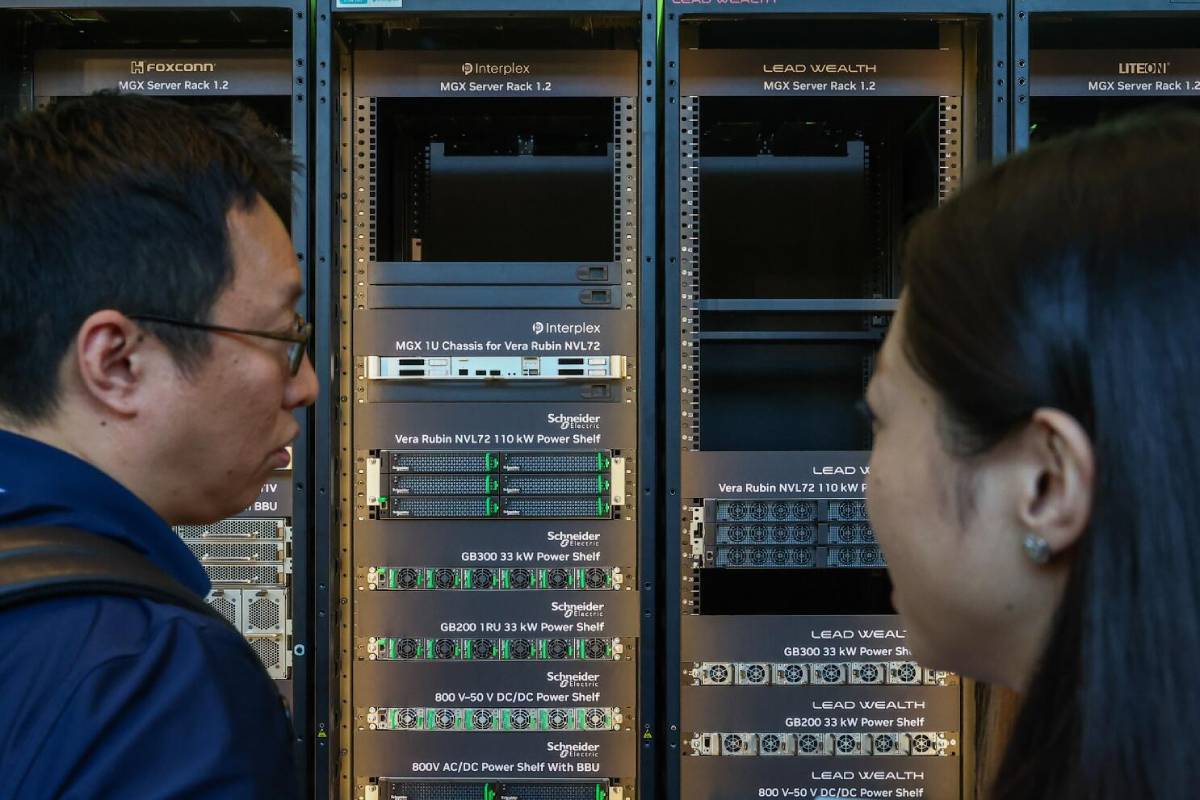
A critical infrastructure challenge is emerging at the heart of the artificial intelligence revolution as technology companies, utilities, and developers race to expand and modernize AI-focused data centers before power grid limitations become a major bottleneck. The trend highlights the growing intersection of AI innovation, energy policy, and economic competitiveness, with significant implications for businesses, investors, and governments worldwide.
The rapid expansion of artificial intelligence workloads is driving unprecedented demand for computing infrastructure, forcing data center operators to accelerate upgrades and construction projects. Industry leaders are investing billions of dollars to retrofit existing facilities and build next-generation AI data centers capable of supporting power-intensive model training and inference operations.
Electricity demand from AI infrastructure is increasing faster than many regional grids were designed to accommodate, creating concerns about capacity shortages, permitting delays, and rising energy costs.
Major stakeholders include hyperscale cloud providers, semiconductor manufacturers, utility companies, renewable energy developers, and government agencies responsible for energy planning. Several projects are now prioritizing direct access to reliable power sources, including renewable generation, battery storage systems, and dedicated transmission infrastructure.
The race is increasingly viewed as a strategic issue tied to national competitiveness, technological leadership, and future economic growth. The development aligns with a broader trend across global markets where artificial intelligence is reshaping not only software and digital services but also the physical infrastructure that supports modern economies.
Historically, data centers have been significant consumers of electricity, but the emergence of advanced AI models has dramatically increased computational requirements. Training frontier AI systems often requires thousands of high-performance processors operating continuously for extended periods, while inference workloads generate sustained demand even after deployment.
Technology giants have announced massive investments in AI infrastructure over the past several years, fueling demand for advanced chips, cooling systems, networking equipment, and electrical capacity. This has placed new pressure on aging power grids, particularly in regions experiencing population growth and increasing electrification.
Geopolitically, AI infrastructure has become a strategic asset. Governments increasingly view computing capacity as a national resource comparable to telecommunications networks or transportation systems. As nations compete for AI leadership, access to reliable electricity and data center capacity is becoming a critical economic differentiator.
The challenge also intersects with sustainability goals, as operators seek ways to meet growing power needs while maintaining emissions reduction commitments and environmental targets.
Industry analysts argue that energy availability may become one of the defining constraints on future AI growth. While semiconductor innovation continues to improve performance, experts note that power generation and transmission infrastructure are expanding at a slower pace.
Infrastructure specialists emphasize that modern AI facilities require significantly more power density than traditional cloud data centers. This has led companies to rethink facility design, cooling technologies, and geographic site selection.
Energy economists suggest that regions capable of rapidly deploying new power generation and grid upgrades could become major beneficiaries of AI investment flows. Conversely, areas with permitting delays or infrastructure bottlenecks may struggle to attract future technology projects.
Technology executives have increasingly acknowledged the challenge, highlighting energy access as a strategic priority alongside computing hardware acquisition. Industry observers also point to growing collaboration between technology companies and utility providers as both sectors attempt to address long-term capacity requirements.
Experts further note that the convergence of AI, electrification, and industrial modernization is creating a new category of infrastructure planning that extends well beyond the technology sector.
For businesses, reliable access to computing infrastructure may become a competitive differentiator, particularly for organizations deploying large-scale AI applications. Companies may need to consider energy availability as part of technology and expansion strategies.
For investors, the trend creates opportunities across multiple sectors, including utilities, renewable energy, grid modernization, power equipment manufacturing, and data center construction. AI infrastructure is increasingly viewed as a long-term investment theme extending beyond software companies.
For policymakers, the challenge underscores the need for coordinated planning between energy regulators, infrastructure agencies, and technology stakeholders. Grid modernization, permitting reform, and power generation investments may become central components of national AI strategies.
Consumers could ultimately benefit from enhanced AI services, though infrastructure costs may influence pricing, service availability, and regional deployment patterns. The coming years are likely to determine whether power infrastructure can keep pace with AI-driven demand. Decision-makers should monitor utility investment plans, data center construction pipelines, energy policy developments, and advances in energy-efficient computing technologies.
As AI adoption accelerates globally, access to electricity may become as strategically important as access to advanced chips. The organizations and nations that successfully align energy infrastructure with AI growth could gain a decisive advantage in the next phase of the digital economy.
Source: Los Angeles Times
Date: June 2, 2026


