



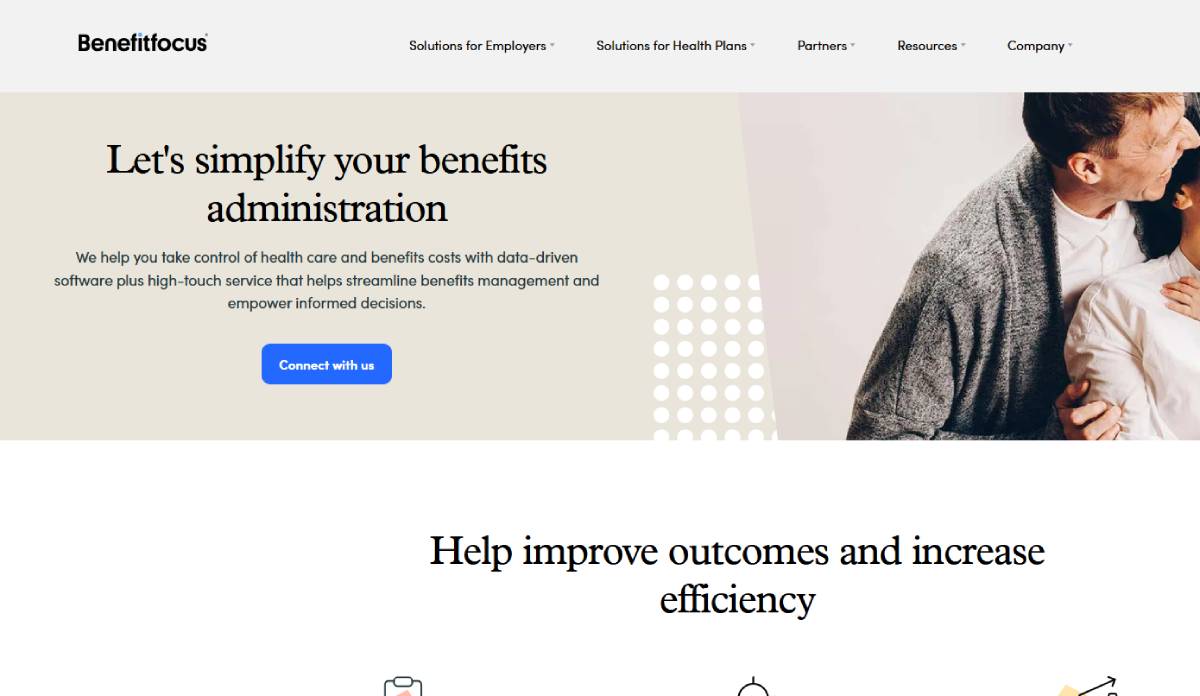
Benefitfocus is strengthening its position in digital benefits administration as employers and health plans navigate rising healthcare costs, complex enrollment requirements and growing demand for personalized benefits experiences. Its technology connects enrollment, benefits data, communications and administrative workflows, giving employers, brokers and insurers greater visibility while reducing the friction associated with managing modern employee benefits.
Benefitfocus provides cloud-based technology covering benefits enrollment, administration, communications, billing, payments and data exchange. Its platform is designed to connect employers, employees, brokers, carriers and other benefits stakeholders through centralized digital workflows.
The company has also expanded capabilities supporting newer insurance models, including individual coverage and Individual Coverage Health Reimbursement Arrangements (ICHRA).
These developments reflect a broader effort to make benefits administration more automated and connected. Instead of relying on fragmented systems and manual data transfers, organizations can use integrated platforms to manage enrollment information and employee communications more efficiently.
For health plans, improved data connectivity can support enrollment accuracy, distribution and administrative scalability. The benefits industry is undergoing a structural shift as employers face simultaneous pressure to control healthcare expenditure and maintain competitive benefits packages. Employees, meanwhile, increasingly expect the same digital convenience from benefits administration that they experience in banking, retail and other consumer services.
This has increased demand for platforms capable of connecting traditionally separate functions such as enrollment, eligibility, payroll integration, employee communications and benefits data.
The emergence of ICHRA and other flexible coverage arrangements is adding another layer of complexity. Employers and health plans need technology capable of supporting different coverage structures while maintaining accurate data and regulatory compliance.
Benefitfocus operates within this transition from traditional benefits administration toward connected digital ecosystems. The strategic significance extends beyond automation: better data integration can help organizations understand participation, communicate options and manage increasingly complex benefit programs.
For executives, the issue is becoming one of operational resilience as much as technology modernization. No recent independent analyst forecast specifically focused on Benefitfocus was identified in the supplied company listing. The company's technology positioning nevertheless reflects several important industry priorities: automation, interoperability, employee engagement and data-driven benefits management.
Benefitfocus's platform is designed to integrate with existing HR, payroll and benefits systems rather than requiring organizations to operate entirely outside their established technology environments. This integration-first approach is particularly important for large employers managing multiple benefits providers and complex eligibility structures.
From a strategic perspective, benefits leaders increasingly need technology that can accommodate both traditional employer-sponsored plans and emerging individual-market arrangements. ICHRA administration illustrates this requirement, as organizations need accurate enrollment and data exchange across multiple stakeholders.
Industry analysts generally assess benefits technology through practical measures such as administrative efficiency, data accuracy, employee adoption, integration quality and compliance. For Benefitfocus, sustained competitiveness will depend on how effectively its platform converts these capabilities into measurable outcomes for employers and health plans.
For employers, digital benefits administration can reduce repetitive administrative work, improve enrollment accuracy and provide employees with easier access to benefits information. Better integration may also reduce errors created by manual data transfers.
For health plans and brokers, connected technology can simplify enrollment and improve information exchange across distribution channels. This becomes increasingly important as coverage options diversify.
For employees, the potential benefit is a simpler and more transparent experience when selecting and managing coverage. However, the expansion of digital benefits platforms also increases the importance of cybersecurity, privacy, data governance and regulatory compliance. Organizations adopting these systems must ensure that sensitive benefits information is appropriately protected and that automated decision-support tools remain subject to appropriate oversight.
Benefitfocus is operating in a market likely to see continued investment as employers and insurers seek more connected benefits infrastructure. Decision-makers should monitor developments in ICHRA administration, AI-enabled employee support, benefits analytics, data exchange and interoperability. The long-term opportunity will depend on whether digital platforms can simultaneously reduce administrative costs, improve employee engagement and help organizations navigate an increasingly complex healthcare benefits environment.
Source: Serchen
Date: August 14, 2026


