



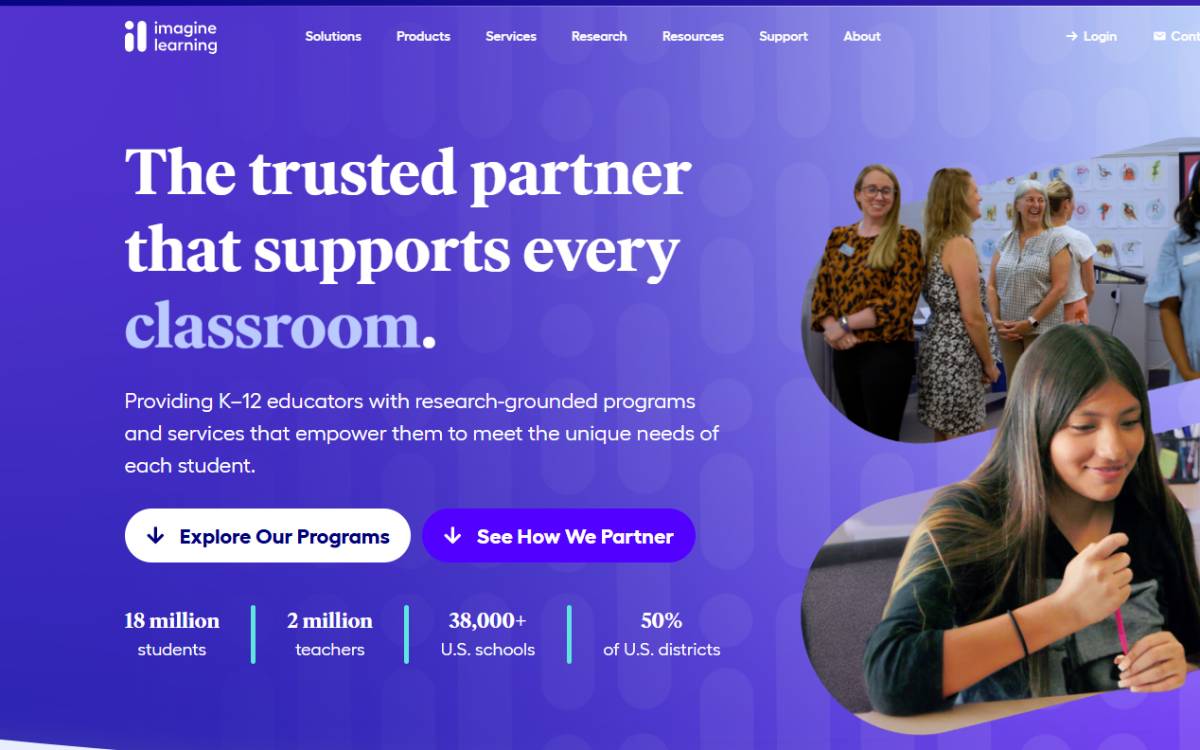
Edgenuity is advancing digital education through a technology platform designed to support online, blended and personalized learning across K–12 education. Its digital curriculum and instructional tools target schools seeking greater flexibility in course delivery, credit recovery and student engagement, reflecting the growing role of technology in modern education systems.
Edgenuity provides digital curriculum and learning solutions covering core academic subjects, electives, Advanced Placement and career-oriented education. Its platform is designed to support different learning environments, including fully online programs, blended instruction and supplemental coursework.
The company's solutions can help schools deliver courses beyond the limits of traditional classroom schedules. Digital content also enables students to progress through coursework at different speeds, supporting personalized learning approaches.
Edgenuity has developed tools for educators to monitor student activity and academic progress while providing digital course materials for learners. Its broader ecosystem is positioned around curriculum delivery, assessment and instructional support.
The platform is particularly relevant to school districts seeking technology-enabled options for credit recovery, alternative education, remote learning and expanded course access.
The rise of digital curriculum platforms reflects a fundamental shift in education technology. Schools are increasingly using online learning environments to supplement classroom teaching, expand course availability and provide alternative pathways for students who need flexible academic schedules.
This trend accelerated significantly during the global pandemic, when schools rapidly adopted remote-learning infrastructure. Although traditional classroom education has returned, many institutions have retained digital tools because they can provide flexibility and extend instructional resources.
Edgenuity operates within this broader market by combining digital curriculum with tools designed for personalized instruction and academic progress monitoring. For school districts, the strategic value lies in expanding educational capacity without requiring every course to be delivered through a conventional classroom model.
The approach is also relevant to student populations with different learning needs. Credit recovery programs, schedule conflicts, alternative education pathways and remote students can all create demand for flexible digital coursework.
No recent independent analyst forecast or major executive announcement specifically concerning Edgenuity was identified in the supplied source. The platform's published capabilities therefore provide the principal basis for assessing its role in the education technology market.
Edgenuity's positioning emphasizes digital curriculum, personalized learning and flexible course delivery. Its solutions are designed to allow educators to monitor student progress while giving learners access to structured digital coursework.
For education leaders, the important consideration is not simply whether curriculum can be delivered online, but whether digital instruction produces meaningful academic outcomes. District administrators must assess content quality, accessibility, teacher involvement, student engagement and assessment capabilities.
The wider industry debate is increasingly focused on how technology should complement not replace educators. Digital platforms can provide scalable content and data, but effective implementation still depends on instructional strategy, teacher support and appropriate student intervention.
For school districts, digital curriculum platforms can expand course availability and provide additional options for students who cannot participate in conventional classroom schedules. They may also support credit recovery and alternative education programs.
For educators, centralized digital tools can provide greater visibility into student progress and enable more targeted intervention. However, successful deployment requires training and appropriate integration with existing teaching practices.
For students and families, flexible digital learning can improve access to coursework, particularly where schools have limited staffing or course offerings. At the same time, districts must consider digital equity, accessibility and student engagement.
Policymakers will continue to face questions surrounding online education quality, student data privacy, accessibility standards and appropriate oversight of technology-enabled instruction.
Edgenuity's future trajectory will depend on how effectively digital curriculum evolves alongside changing expectations for personalized and technology-enabled education. Decision-makers should watch developments in AI-assisted learning, adaptive instruction, analytics, accessibility and integration with school systems. The broader direction suggests digital platforms will remain an important component of K–12 education, particularly where flexibility and expanded course access are strategic priorities.
Source: Serchen
Date: August 14, 2026


