
AI Deepfake Row Sparks Governance Concerns

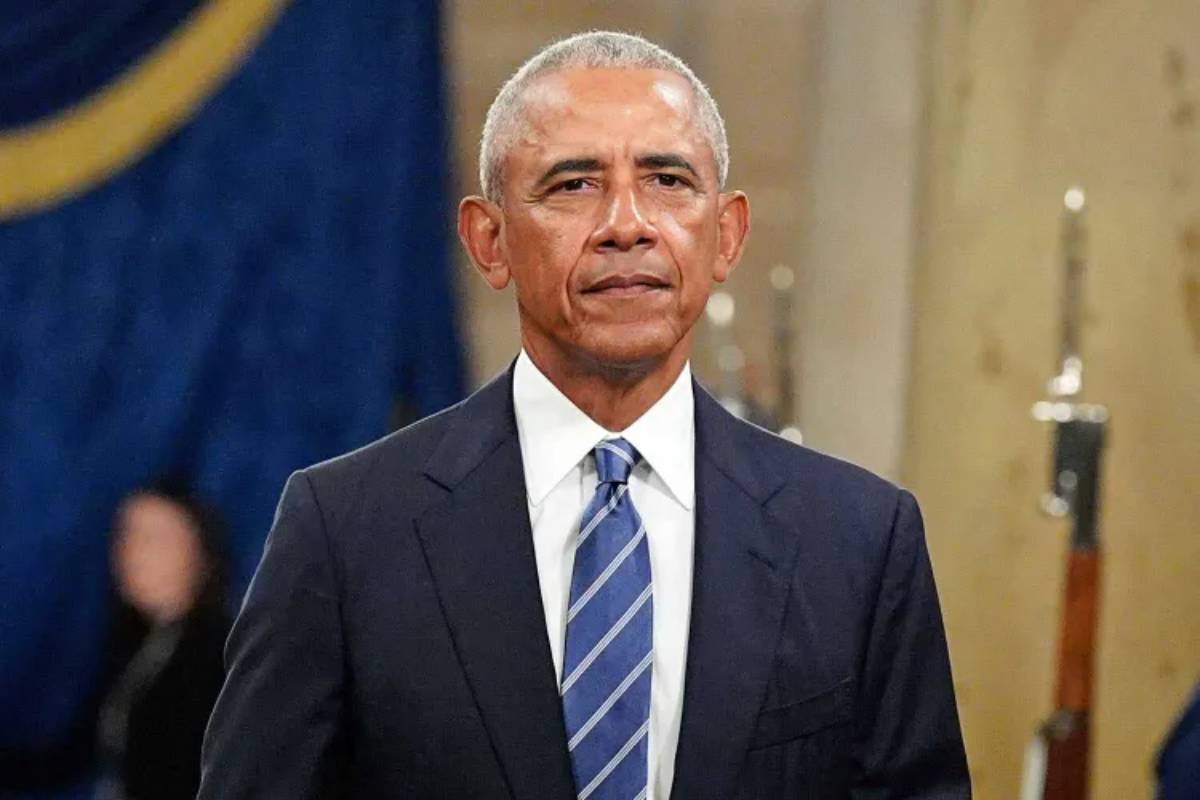
The controversy centers on an AI-generated video depicting Barack Obama and Michelle Obama in a dehumanizing and offensive manner, reportedly shared or amplified in connection with Donald Trump’s online activity.

May 5, 2026
|
Image Source: People

A political and technological controversy has intensified after Barack Obama publicly responded to an AI-generated video linked to Donald Trump. The incident underscores rising concerns over deepfake content, digital ethics, and regulatory gaps, with implications for political discourse, platform governance, and global AI policy frameworks.

The controversy centers on an AI-generated video depicting Barack Obama and Michelle Obama in a dehumanizing and offensive manner, reportedly shared or amplified in connection with Donald Trump’s online activity.

Obama has publicly condemned the content, framing it as harmful and reflective of broader risks associated with synthetic media. The incident has drawn widespread attention across political and media circles, highlighting the speed at which AI-generated content can circulate.

The episode comes amid heightened scrutiny of social media platforms and their role in moderating manipulated or misleading content during politically sensitive periods. The incident reflects a growing global challenge surrounding the misuse of generative AI technologies, particularly in the creation of deepfakes synthetic media designed to manipulate or misrepresent individuals. As AI tools become more accessible, the barriers to producing realistic but misleading content have significantly decreased.

Political figures have increasingly become targets of such content, raising concerns about election integrity, misinformation, and reputational harm. Governments worldwide are exploring regulatory responses, including content labeling requirements and stricter platform accountability measures.

The controversy also highlights ongoing tensions in US political discourse, where digital platforms play a central role in shaping narratives. The intersection of AI technology and political communication is rapidly becoming a critical area of focus for policymakers, particularly as elections approach in major democracies.

Policy analysts argue that this episode illustrates the urgent need for clearer governance frameworks around AI-generated content. Experts emphasize that while technological capabilities have advanced rapidly, regulatory and ethical safeguards have struggled to keep pace.

Digital media specialists note that deepfakes can have disproportionate impact due to their emotional and visual intensity, often spreading faster than traditional misinformation. Industry observers suggest that platforms must invest more heavily in detection systems and transparent moderation policies.

Political analysts also highlight the reputational and societal risks posed by such content, particularly when it intersects with already polarized environments. While responses from involved parties focus on condemning the content, broader commentary frames the incident as part of a systemic challenge facing modern information ecosystems.

For technology companies, the incident reinforces the urgency of strengthening content moderation frameworks and AI detection capabilities. Platforms may face increased regulatory pressure to identify and label synthetic media more effectively.

For policymakers, the controversy adds momentum to legislative efforts aimed at controlling deepfake proliferation, particularly in political contexts. Governments may accelerate the introduction of stricter compliance requirements for digital platforms.

From a business perspective, reputational risks associated with AI misuse could influence brand strategies and platform trust. For global executives, the key issue is balancing innovation in generative AI with safeguards that prevent misuse and protect public discourse integrity.

The controversy is likely to intensify calls for coordinated regulatory action on AI-generated content. Future developments may include stricter platform policies, enhanced detection technologies, and clearer legal frameworks governing synthetic media. Decision-makers will closely monitor how governments and tech firms respond, particularly as AI capabilities continue to evolve. The broader challenge remains establishing global standards for responsible AI use in politically sensitive environments.

Source: People
Date: May 4, 2026

  • Featured tools
Writesonic AI
Free

Writesonic AI is a versatile AI writing platform designed for marketers, entrepreneurs, and content creators. It helps users create blog posts, ad copies, product descriptions, social media posts, and more with ease. With advanced AI models and user-friendly tools, Writesonic streamlines content production and saves time for busy professionals.

#
Copywriting
Learn more
Scalenut AI
Free

Scalenut AI is an all-in-one SEO content platform that combines AI-driven writing, keyword research, competitor insights, and optimization tools to help you plan, create, and rank content.

#
SEO
Learn more

Learn more about future of AI

Join 80,000+ Ai enthusiast getting weekly updates on exciting AI tools.
Thank you! Your submission has been received!
Oops! Something went wrong while submitting the form.

AI Deepfake Row Sparks Governance Concerns

May 5, 2026

The controversy centers on an AI-generated video depicting Barack Obama and Michelle Obama in a dehumanizing and offensive manner, reportedly shared or amplified in connection with Donald Trump’s online activity.

Image Source: People

A political and technological controversy has intensified after Barack Obama publicly responded to an AI-generated video linked to Donald Trump. The incident underscores rising concerns over deepfake content, digital ethics, and regulatory gaps, with implications for political discourse, platform governance, and global AI policy frameworks.

The controversy centers on an AI-generated video depicting Barack Obama and Michelle Obama in a dehumanizing and offensive manner, reportedly shared or amplified in connection with Donald Trump’s online activity.

Obama has publicly condemned the content, framing it as harmful and reflective of broader risks associated with synthetic media. The incident has drawn widespread attention across political and media circles, highlighting the speed at which AI-generated content can circulate.

The episode comes amid heightened scrutiny of social media platforms and their role in moderating manipulated or misleading content during politically sensitive periods. The incident reflects a growing global challenge surrounding the misuse of generative AI technologies, particularly in the creation of deepfakes synthetic media designed to manipulate or misrepresent individuals. As AI tools become more accessible, the barriers to producing realistic but misleading content have significantly decreased.

Political figures have increasingly become targets of such content, raising concerns about election integrity, misinformation, and reputational harm. Governments worldwide are exploring regulatory responses, including content labeling requirements and stricter platform accountability measures.

The controversy also highlights ongoing tensions in US political discourse, where digital platforms play a central role in shaping narratives. The intersection of AI technology and political communication is rapidly becoming a critical area of focus for policymakers, particularly as elections approach in major democracies.

Policy analysts argue that this episode illustrates the urgent need for clearer governance frameworks around AI-generated content. Experts emphasize that while technological capabilities have advanced rapidly, regulatory and ethical safeguards have struggled to keep pace.

Digital media specialists note that deepfakes can have disproportionate impact due to their emotional and visual intensity, often spreading faster than traditional misinformation. Industry observers suggest that platforms must invest more heavily in detection systems and transparent moderation policies.

Political analysts also highlight the reputational and societal risks posed by such content, particularly when it intersects with already polarized environments. While responses from involved parties focus on condemning the content, broader commentary frames the incident as part of a systemic challenge facing modern information ecosystems.

For technology companies, the incident reinforces the urgency of strengthening content moderation frameworks and AI detection capabilities. Platforms may face increased regulatory pressure to identify and label synthetic media more effectively.

For policymakers, the controversy adds momentum to legislative efforts aimed at controlling deepfake proliferation, particularly in political contexts. Governments may accelerate the introduction of stricter compliance requirements for digital platforms.

From a business perspective, reputational risks associated with AI misuse could influence brand strategies and platform trust. For global executives, the key issue is balancing innovation in generative AI with safeguards that prevent misuse and protect public discourse integrity.

The controversy is likely to intensify calls for coordinated regulatory action on AI-generated content. Future developments may include stricter platform policies, enhanced detection technologies, and clearer legal frameworks governing synthetic media. Decision-makers will closely monitor how governments and tech firms respond, particularly as AI capabilities continue to evolve. The broader challenge remains establishing global standards for responsible AI use in politically sensitive environments.

Source: People
Date: May 4, 2026

Promote Your Tool

Copy Embed Code

Similar Blogs

June 24, 2026
|

Denmark Launches €7M AI Lab

The Danish government has committed €7 million to establish a national AI Lab focused on accelerating real-world AI adoption.
Read more
June 24, 2026
|

Avrea Emerges With CI/CD Bet

Avrea has raised $4.7 million in pre-seed funding to modernize continuous integration and continuous deployment (CI/CD) systems for environments dominated by AI-generated code.
Read more
June 24, 2026
|

Atech Backs Lovable Hardware Moment

Atech is advocating a new approach to hardware development where AI tools streamline design, prototyping, and iteration cycles.
Read more
June 24, 2026
|

A16z Backs Endra Engineering Automation

Endra’s $50 million Series A round, led by Andreessen Horowitz, marks one of the largest early-stage investments in AI-driven engineering design tools in Europe.
Read more
June 24, 2026
|

Netcompany Expands Smart Airport Play

Netcompany’s acquisition of full control over Smarter Airports marks a strategic expansion into intelligent aviation infrastructure systems. The platform, integrated with AIRHART technology, is already being deployed at major hubs.
Read more
June 24, 2026
|

Swiss VC Market Enters Maturity Phase

The Swiss venture landscape is showing increased exit momentum through acquisitions and secondary sales, indicating healthier liquidity cycles for early-stage investors.
Read more