



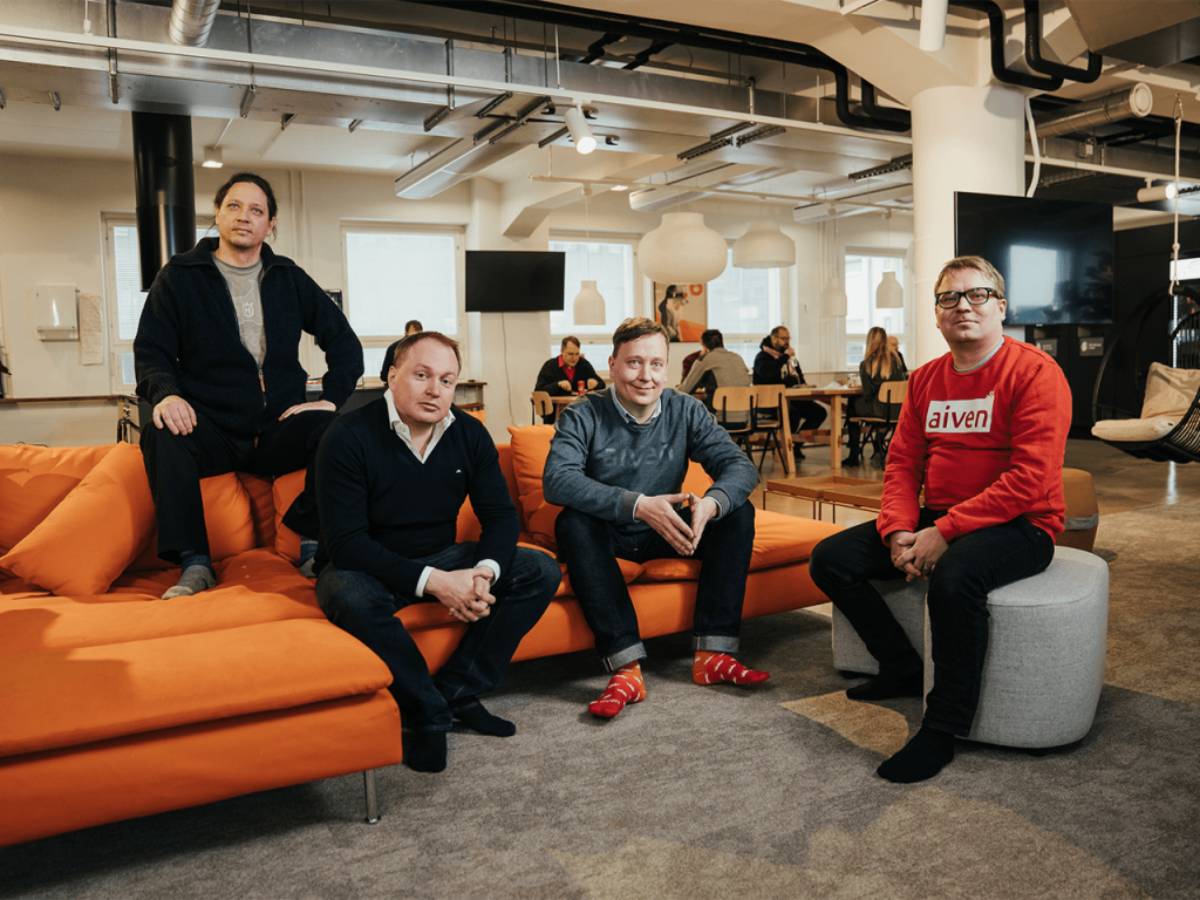
A new developer infrastructure startup led by an Aiven co-founder has emerged from stealth with $4.7 million in pre-seed funding, aiming to rebuild CI/CD systems for AI-generated code. The company, Avrea, is targeting a rapidly evolving software landscape where AI-written code is reshaping traditional development pipelines and deployment workflows.
Avrea has raised $4.7 million in pre-seed funding to modernize continuous integration and continuous deployment (CI/CD) systems for environments dominated by AI-generated code.
The startup focuses on adapting software delivery pipelines to handle code produced by large language models and autonomous coding agents. This includes validation layers, automated testing frameworks, and deployment safeguards tailored for AI-assisted development.
The funding will support early product development, engineering hiring, and pilot deployments with software teams building AI-native applications. The move reflects growing demand for infrastructure that can keep pace with rapid, non-human code generation.
The rise of AI coding assistants and autonomous development tools has significantly increased the volume and velocity of software production. Traditional CI/CD systems, designed for human-paced development cycles, are increasingly under pressure to adapt.
Avrea’s approach reflects a broader shift toward “AI-native software engineering,” where infrastructure must account for machine-generated code, unpredictable iteration speeds, and continuous deployment at scale.
Historically, CI/CD pipelines have been optimized for version-controlled, human-reviewed code changes. However, with AI systems generating large portions of production code, the need for automated verification, security scanning, and real-time validation has become more critical.
This transformation is part of a wider industry evolution in developer tooling, where infrastructure is being re-architected for speed, automation, and AI-first workflows across global engineering teams.
Industry analysts note that CI/CD modernization is becoming a critical bottleneck in the AI software stack. While AI tools dramatically increase code generation speed, deployment infrastructure has not evolved at the same pace, creating operational and security risks.
Experts in developer tooling suggest that startups like Avrea are addressing a foundational gap: ensuring that AI-generated code can be safely and reliably deployed in production environments without human-level review at every stage.
Investors view this category as part of the emerging “AI infrastructure layer,” where value is shifting from model development to systems that manage, validate, and operationalize AI outputs.
Although detailed technical benchmarks remain undisclosed, the founding team’s background in scalable cloud infrastructure is seen as a key credibility factor in addressing enterprise-grade CI/CD challenges.
For software companies, AI-native CI/CD systems could dramatically reduce deployment friction while enabling faster release cycles. However, they also introduce new governance requirements around code validation, security compliance, and automated oversight.
For investors, the deal highlights growing demand for infrastructure startups positioned at the intersection of AI and developer tooling. The focus is shifting from model creation to operational reliability layers.
From a policy and enterprise governance standpoint, organizations may need to redefine software accountability frameworks as machine-generated code becomes more prevalent in production systems. This raises questions around auditability, liability, and regulatory compliance in automated development environments.
Avrea’s success will depend on its ability to integrate seamlessly with existing developer ecosystems while proving reliability in high-scale production environments. As AI-generated code becomes mainstream, demand for advanced CI/CD systems is expected to accelerate. The next phase will likely focus on enterprise adoption, security validation frameworks, and integration with leading AI coding platforms across global software teams.
Source: nordictech.news
Date: June 24, 2026


