
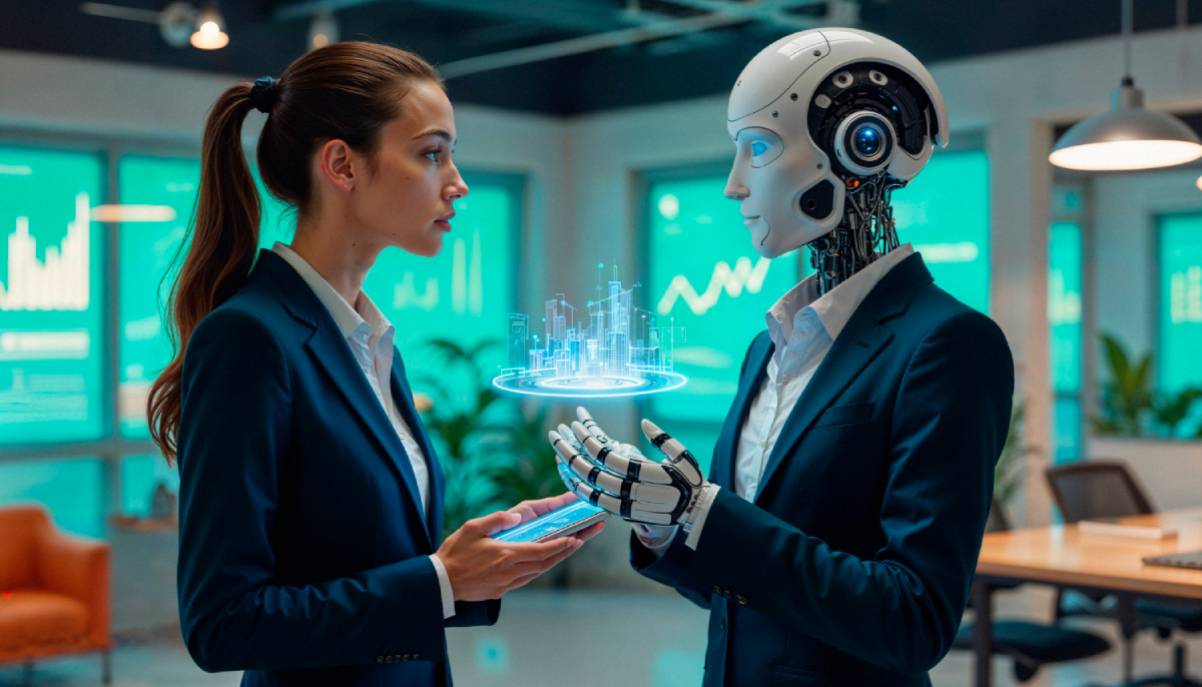
AI to Transform Human Work and Augment Skills, Signals Strategic Shift in Workforce Policy

The initiatives focus on upskilling employees in AI literacy, human-AI collaboration, and data-driven decision-making. Economic impacts include increased productivity, innovation in service delivery.

January 16, 2026
|

A major development unfolded today as the science minister highlighted AI’s transformative impact on the workforce, emphasizing its potential to augment human skills rather than replace jobs. The statement signals a strategic shift in workforce policy, with implications for businesses, talent development, and government initiatives aimed at reskilling employees in an AI-driven economy.

The minister outlined government-backed initiatives to integrate AI into workplaces while prioritizing skill enhancement programs. Timelines indicate a phased rollout of AI adoption across public and private sectors over the next three years. Key stakeholders include technology firms, educational institutions, labor unions, and policymakers.

The initiatives focus on upskilling employees in AI literacy, human-AI collaboration, and data-driven decision-making. Economic impacts include increased productivity, innovation in service delivery, and potential shifts in labor market dynamics. Companies are encouraged to adopt AI tools strategically to complement human expertise, signaling a broader commitment to responsible AI integration and workforce empowerment.

The announcement comes amid rapid AI adoption globally, where generative AI and automation technologies are reshaping industries from finance to healthcare. Concerns over job displacement have sparked debates on reskilling, ethical AI deployment, and workforce policy. The minister’s emphasis on skill augmentation aligns with international trends promoting AI-human collaboration rather than replacement.

Historically, technological revolutions from industrial automation to digital transformation have disrupted labor markets while creating new roles requiring specialized skills. Governments worldwide are investing in education, vocational training, and AI literacy programs to ensure economic resilience. By framing AI as an enabler of human work, the government signals a proactive approach to fostering innovation, maintaining competitiveness, and addressing societal concerns over unemployment, while positioning its workforce to thrive in the AI era.

Analysts note that framing AI as a workforce enhancer could accelerate adoption across industries while reducing resistance from employees. “Organizations that integrate AI thoughtfully, prioritizing human-AI collaboration, are likely to see higher productivity and innovation,” said a labor market expert.

Corporate leaders are reportedly reviewing internal reskilling initiatives to align with government guidance. Educational institutions and training providers are also expected to expand AI-focused curricula. Labor unions have expressed cautious optimism, emphasizing the need for regulatory oversight, ethical standards, and fair labor practices.

Geopolitical analysts highlight that countries investing in AI-skilling programs will gain a competitive edge in the global talent market. Experts underscore that workforce policies balancing AI integration with human development will be critical for sustaining innovation while addressing social and economic inequalities.

For global executives, the minister’s statement signals the need to re-evaluate workforce strategies, talent pipelines, and digital transformation plans. Companies may need to invest in AI-driven tools, employee training programs, and human-AI collaboration frameworks.

Investors can anticipate opportunities in AI education, enterprise AI solutions, and workforce analytics platforms. Governments are likely to develop policies that incentivize responsible AI adoption, protect workers, and ensure equitable access to training. Analysts warn that firms ignoring workforce augmentation may face skill gaps, reduced competitiveness, and regulatory scrutiny. Proactive alignment with these initiatives offers strategic advantage, innovation potential, and stronger workforce resilience.

Decision-makers should monitor the rollout of AI-skilling programs, adoption rates across sectors, and regulatory guidance on human-AI collaboration. Uncertainties include the pace of technology adoption, labor market response, and global competitive pressures. Companies that strategically integrate AI while investing in human skill development will be positioned to lead in productivity, innovation, and talent retention, shaping the future of work in an AI-augmented economy.

Source & Date

Source: The Guardian
Date: January 16, 2026

  • Featured tools
Beautiful AI
Free

Beautiful AI is an AI-powered presentation platform that automates slide design and formatting, enabling users to create polished, on-brand presentations quickly.

#
Presentation
Learn more
WellSaid Ai
Free

WellSaid AI is an advanced text-to-speech platform that transforms written text into lifelike, human-quality voiceovers.

#
Text to Speech
Learn more

Learn more about future of AI

Join 80,000+ Ai enthusiast getting weekly updates on exciting AI tools.
Thank you! Your submission has been received!
Oops! Something went wrong while submitting the form.

AI to Transform Human Work and Augment Skills, Signals Strategic Shift in Workforce Policy

January 16, 2026

The initiatives focus on upskilling employees in AI literacy, human-AI collaboration, and data-driven decision-making. Economic impacts include increased productivity, innovation in service delivery.

A major development unfolded today as the science minister highlighted AI’s transformative impact on the workforce, emphasizing its potential to augment human skills rather than replace jobs. The statement signals a strategic shift in workforce policy, with implications for businesses, talent development, and government initiatives aimed at reskilling employees in an AI-driven economy.

The minister outlined government-backed initiatives to integrate AI into workplaces while prioritizing skill enhancement programs. Timelines indicate a phased rollout of AI adoption across public and private sectors over the next three years. Key stakeholders include technology firms, educational institutions, labor unions, and policymakers.

The initiatives focus on upskilling employees in AI literacy, human-AI collaboration, and data-driven decision-making. Economic impacts include increased productivity, innovation in service delivery, and potential shifts in labor market dynamics. Companies are encouraged to adopt AI tools strategically to complement human expertise, signaling a broader commitment to responsible AI integration and workforce empowerment.

The announcement comes amid rapid AI adoption globally, where generative AI and automation technologies are reshaping industries from finance to healthcare. Concerns over job displacement have sparked debates on reskilling, ethical AI deployment, and workforce policy. The minister’s emphasis on skill augmentation aligns with international trends promoting AI-human collaboration rather than replacement.

Historically, technological revolutions from industrial automation to digital transformation have disrupted labor markets while creating new roles requiring specialized skills. Governments worldwide are investing in education, vocational training, and AI literacy programs to ensure economic resilience. By framing AI as an enabler of human work, the government signals a proactive approach to fostering innovation, maintaining competitiveness, and addressing societal concerns over unemployment, while positioning its workforce to thrive in the AI era.

Analysts note that framing AI as a workforce enhancer could accelerate adoption across industries while reducing resistance from employees. “Organizations that integrate AI thoughtfully, prioritizing human-AI collaboration, are likely to see higher productivity and innovation,” said a labor market expert.

Corporate leaders are reportedly reviewing internal reskilling initiatives to align with government guidance. Educational institutions and training providers are also expected to expand AI-focused curricula. Labor unions have expressed cautious optimism, emphasizing the need for regulatory oversight, ethical standards, and fair labor practices.

Geopolitical analysts highlight that countries investing in AI-skilling programs will gain a competitive edge in the global talent market. Experts underscore that workforce policies balancing AI integration with human development will be critical for sustaining innovation while addressing social and economic inequalities.

For global executives, the minister’s statement signals the need to re-evaluate workforce strategies, talent pipelines, and digital transformation plans. Companies may need to invest in AI-driven tools, employee training programs, and human-AI collaboration frameworks.

Investors can anticipate opportunities in AI education, enterprise AI solutions, and workforce analytics platforms. Governments are likely to develop policies that incentivize responsible AI adoption, protect workers, and ensure equitable access to training. Analysts warn that firms ignoring workforce augmentation may face skill gaps, reduced competitiveness, and regulatory scrutiny. Proactive alignment with these initiatives offers strategic advantage, innovation potential, and stronger workforce resilience.

Decision-makers should monitor the rollout of AI-skilling programs, adoption rates across sectors, and regulatory guidance on human-AI collaboration. Uncertainties include the pace of technology adoption, labor market response, and global competitive pressures. Companies that strategically integrate AI while investing in human skill development will be positioned to lead in productivity, innovation, and talent retention, shaping the future of work in an AI-augmented economy.

Source & Date

Source: The Guardian
Date: January 16, 2026

Promote Your Tool

Copy Embed Code

Similar Blogs

January 16, 2026
|

Wikipedia Partners with Microsoft, Meta, & Perplexity on AI Push

A major development unfolded today as Wikipedia, marking its 25th anniversary, announced strategic AI partnerships with Microsoft, Meta, and Perplexity. These alliances aim to integrate generative AI technologies into the platform.
Read more
January 16, 2026
|

X Under Fire Over Sexualized AI Content

Governments and regulators may leverage this case to draft or enforce stricter AI content policies. Analysts advise that companies integrating generative AI should reassess risk management frameworks.
Read more
January 16, 2026
|

AI to Transform Human Work and Augment Skills, Signals Strategic Shift in Workforce Policy

The initiatives focus on upskilling employees in AI literacy, human-AI collaboration, and data-driven decision-making. Economic impacts include increased productivity, innovation in service delivery.
Read more
January 16, 2026
|

Taiwan Emerges as Strategic AI Ally in U.S. Tariff Deal

U.S. officials reportedly welcome Taiwan’s commitment to AI development, signaling mutual interest in secure supply chains and technology standardization. Corporate leaders in AI and semiconductors.
Read more
January 16, 2026
|

AI in Healthcare Payers: Market Transformation Outlook

A major development has emerged in the healthcare sector as AI adoption among payers is projected to accelerate sharply from 2026 to 2033. The market outlook highlights transformative opportunities for insurers.
Read more
January 16, 2026
|

IIT Indore Unveils Human-Like AI Replica to Revolutionize Disease Detection and Diagnostics

Industry observers note that innovations like this could influence global standards for AI-powered diagnostics. Investors and healthcare providers may see opportunities in adopting AI-assisted systems.
Read more