
Altman Trump Meeting Raises AI Stakes

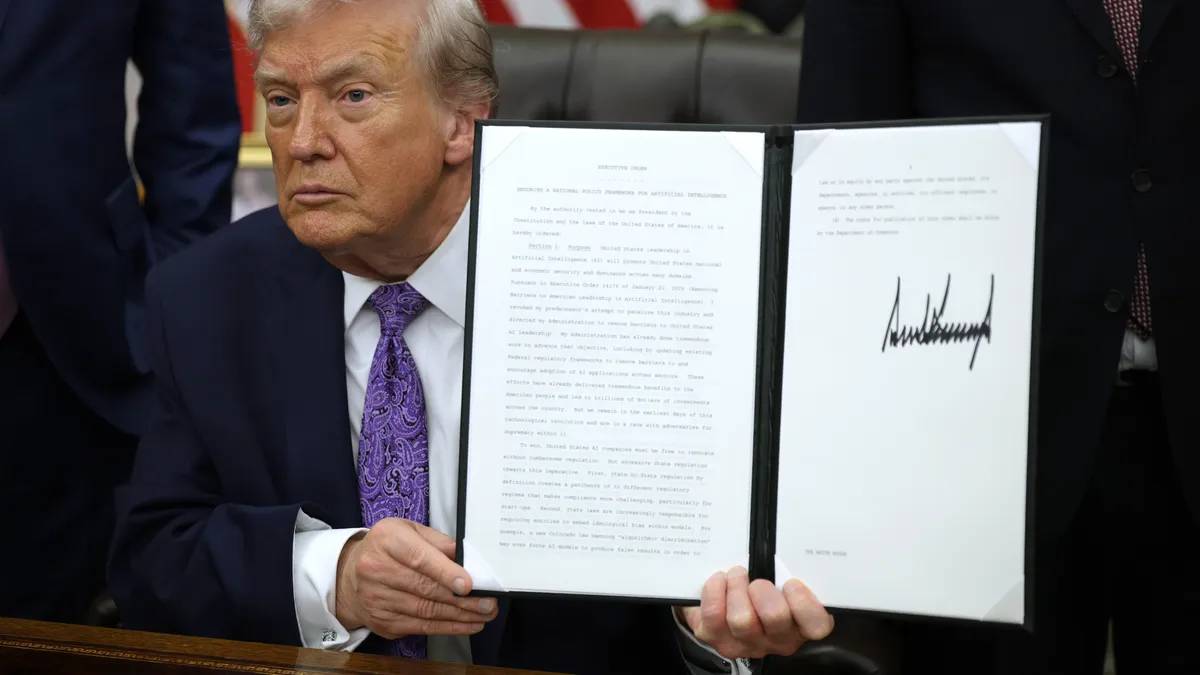
Sam Altman reportedly met with Donald Trump following discussion around a recent U.S. executive order on artificial intelligence that, according to reports, imposes limited direct requirements on industry players.

June 8, 2026
|
Image Source: CNET Report

A high-profile engagement between Sam Altman and former U.S. President Donald Trump underscores the growing intersection of artificial intelligence leadership and political power. The meeting comes amid heightened scrutiny of AI governance frameworks in the United States, signaling escalating policy uncertainty that could shape global AI regulation and industry direction.

Sam Altman reportedly met with Donald Trump following discussion around a recent U.S. executive order on artificial intelligence that, according to reports, imposes limited direct requirements on industry players. The engagement highlights increasing dialogue between major AI developers and political leadership as regulatory frameworks remain in flux.

The conversation centers on how AI systems should be governed without stifling innovation. Key stakeholders include leading AI companies, U.S. policymakers, and global technology regulators monitoring the rapid expansion of generative AI systems. The timing reflects intensifying geopolitical competition in AI leadership between the United States, Europe, and China.

The meeting reflects a broader global struggle to define governance standards for rapidly advancing artificial intelligence technologies. Sam Altman and OpenAI have been central figures in shaping public discourse around AI safety, regulation, and deployment.

In the United States, AI policy has been evolving through a mix of executive actions, voluntary industry commitments, and emerging legislative proposals. However, regulatory clarity remains fragmented compared to the European Union’s more structured AI Act approach.

Historically, major technological shifts such as the rise of the internet and cloud computing have involved early-stage regulatory ambiguity followed by eventual policy consolidation. The current AI wave appears to be following a similar trajectory, with governments attempting to balance innovation leadership against risks related to misinformation, labor disruption, and national security.

Policy analysts suggest that the meeting between Sam Altman and political leadership reflects the increasing influence of AI executives in shaping national policy frameworks. Experts argue that governments are now relying heavily on private-sector insights due to the technical complexity and rapid evolution of AI systems.

Some governance specialists warn that limited regulatory enforcement, as suggested in the executive order, may create uncertainty for businesses attempting to plan long-term compliance strategies. Others believe flexible frameworks are necessary to avoid stifling innovation in a highly competitive global AI race.

While no detailed official transcript of the meeting has been released, industry observers expect continued engagement between major AI firms like OpenAI and U.S. policymakers as regulatory models evolve. The discussions are likely to influence upcoming legislative proposals and international AI coordination efforts.

For global AI companies, the interaction between Sam Altman and political leadership signals a regulatory environment that remains fluid and politically influenced. Businesses may face uncertainty in compliance planning as policy direction shifts between administrations.

Investors are likely to closely monitor U.S. AI governance stability, as regulatory unpredictability could affect valuation models across the AI sector. For enterprises deploying generative AI, the lack of strict requirements may accelerate adoption but also increase exposure to reputational and legal risks.

For policymakers, the challenge remains balancing innovation leadership with safeguards around safety, transparency, and geopolitical competition. Future developments will depend on whether the U.S. moves toward stricter AI regulation or maintains a flexible, industry-led approach. Engagements involving Sam Altman and policymakers are expected to continue shaping the direction of governance frameworks. The key uncertainty remains how global regulatory alignment will evolve amid intensifying competition between major AI powers.

Source: CNET Report
Date: 8 June 2026

  • Featured tools
Scalenut AI
Free

Scalenut AI is an all-in-one SEO content platform that combines AI-driven writing, keyword research, competitor insights, and optimization tools to help you plan, create, and rank content.

#
SEO
Learn more
Hostinger Website Builder
Paid

Hostinger Website Builder is a drag-and-drop website creator bundled with hosting and AI-powered tools, designed for businesses, blogs and small shops with minimal technical effort.It makes launching a site fast and affordable, with templates, responsive design and built-in hosting all in one.

#
Productivity
#
Startup Tools
#
Ecommerce
Learn more

Learn more about future of AI

Join 80,000+ Ai enthusiast getting weekly updates on exciting AI tools.
Thank you! Your submission has been received!
Oops! Something went wrong while submitting the form.

Altman Trump Meeting Raises AI Stakes

June 8, 2026

Sam Altman reportedly met with Donald Trump following discussion around a recent U.S. executive order on artificial intelligence that, according to reports, imposes limited direct requirements on industry players.

Image Source: CNET Report

A high-profile engagement between Sam Altman and former U.S. President Donald Trump underscores the growing intersection of artificial intelligence leadership and political power. The meeting comes amid heightened scrutiny of AI governance frameworks in the United States, signaling escalating policy uncertainty that could shape global AI regulation and industry direction.

Sam Altman reportedly met with Donald Trump following discussion around a recent U.S. executive order on artificial intelligence that, according to reports, imposes limited direct requirements on industry players. The engagement highlights increasing dialogue between major AI developers and political leadership as regulatory frameworks remain in flux.

The conversation centers on how AI systems should be governed without stifling innovation. Key stakeholders include leading AI companies, U.S. policymakers, and global technology regulators monitoring the rapid expansion of generative AI systems. The timing reflects intensifying geopolitical competition in AI leadership between the United States, Europe, and China.

The meeting reflects a broader global struggle to define governance standards for rapidly advancing artificial intelligence technologies. Sam Altman and OpenAI have been central figures in shaping public discourse around AI safety, regulation, and deployment.

In the United States, AI policy has been evolving through a mix of executive actions, voluntary industry commitments, and emerging legislative proposals. However, regulatory clarity remains fragmented compared to the European Union’s more structured AI Act approach.

Historically, major technological shifts such as the rise of the internet and cloud computing have involved early-stage regulatory ambiguity followed by eventual policy consolidation. The current AI wave appears to be following a similar trajectory, with governments attempting to balance innovation leadership against risks related to misinformation, labor disruption, and national security.

Policy analysts suggest that the meeting between Sam Altman and political leadership reflects the increasing influence of AI executives in shaping national policy frameworks. Experts argue that governments are now relying heavily on private-sector insights due to the technical complexity and rapid evolution of AI systems.

Some governance specialists warn that limited regulatory enforcement, as suggested in the executive order, may create uncertainty for businesses attempting to plan long-term compliance strategies. Others believe flexible frameworks are necessary to avoid stifling innovation in a highly competitive global AI race.

While no detailed official transcript of the meeting has been released, industry observers expect continued engagement between major AI firms like OpenAI and U.S. policymakers as regulatory models evolve. The discussions are likely to influence upcoming legislative proposals and international AI coordination efforts.

For global AI companies, the interaction between Sam Altman and political leadership signals a regulatory environment that remains fluid and politically influenced. Businesses may face uncertainty in compliance planning as policy direction shifts between administrations.

Investors are likely to closely monitor U.S. AI governance stability, as regulatory unpredictability could affect valuation models across the AI sector. For enterprises deploying generative AI, the lack of strict requirements may accelerate adoption but also increase exposure to reputational and legal risks.

For policymakers, the challenge remains balancing innovation leadership with safeguards around safety, transparency, and geopolitical competition. Future developments will depend on whether the U.S. moves toward stricter AI regulation or maintains a flexible, industry-led approach. Engagements involving Sam Altman and policymakers are expected to continue shaping the direction of governance frameworks. The key uncertainty remains how global regulatory alignment will evolve amid intensifying competition between major AI powers.

Source: CNET Report
Date: 8 June 2026

Promote Your Tool

Copy Embed Code

Similar Blogs

July 22, 2026
|

VSCO Downloader Expands Media Access Solutions

VSCO Downloader is a tool designed around accessing and managing publicly available visual content from the VSCO platform.
Read more
July 22, 2026
|

BFLIX Expands Digital Viewing Platforms

BFLIX is associated with an online entertainment platform focused on providing users with access to digital video content.
Read more
July 22, 2026
|

Hoodmaps Improves Urban Navigation Tools

Hoodmaps is a collaborative mapping platform that allows users to add local perspectives and cultural observations to city maps.
Read more
July 22, 2026
|

Linkello Supports Digital Team Connectivity

Linkello is an online communication platform designed to enable secure voice, video, and messaging interactions through internet-based technology.
Read more
July 22, 2026
|

MovieHub Evolves Modern Streaming Experiences

MovieHub is a digital entertainment platform associated with online movie discovery and viewing experiences.
Read more
July 22, 2026
|

EasyChair Powers Global Academic Collaboration

EasyChair is an online conference management system designed to streamline academic event organization, including paper submissions, peer reviews, scheduling, and communication between researchers and conference organizers.
Read more