
AMD Powered Mini PC Drives Edge AI Shift

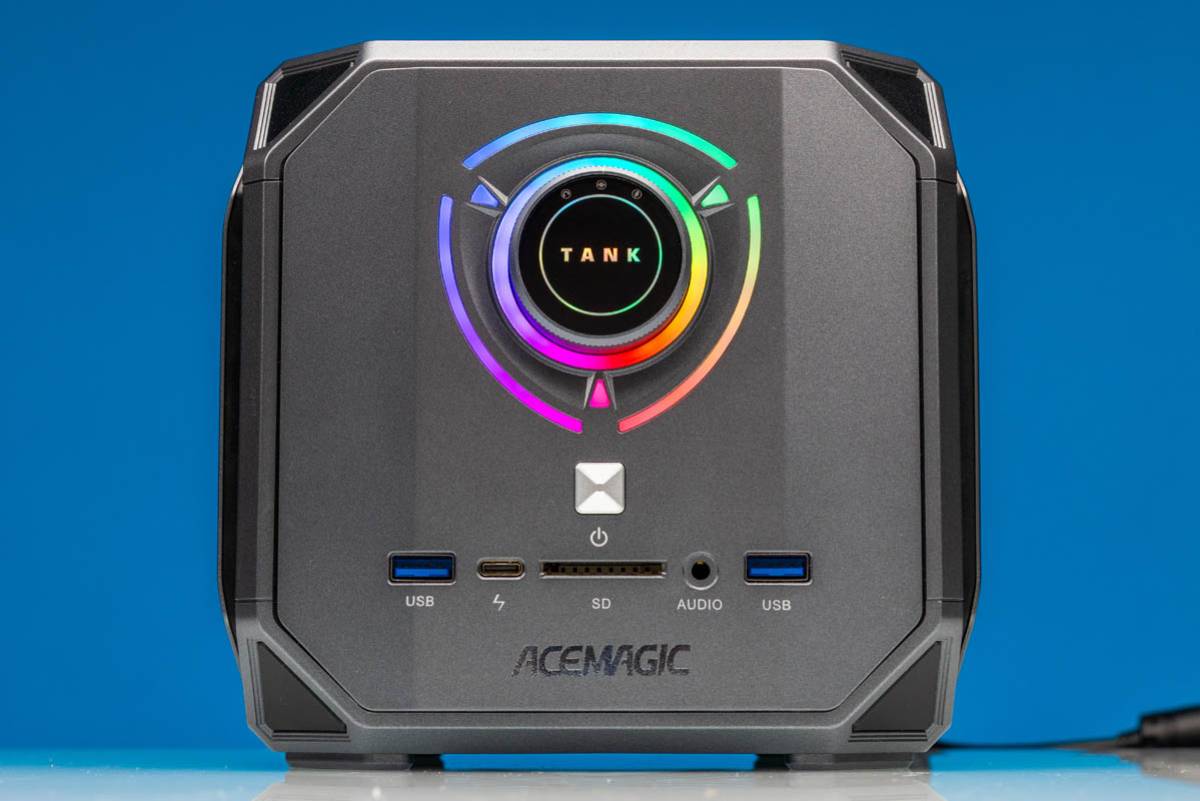
The Acemagic M1A PRO+ mini PC is positioned as a high-density AI computing system featuring up to 128GB of RAM and AMD-based processing designed for intensive workloads such as local AI model inference, virtualization, and data-heavy applications.

April 14, 2026
|
Image Source: ServeTheHome

A major development unfolded as the Acemagic M1A PRO+ AI mini PC, powered by AMD architecture, entered the spotlight with workstation-level memory capacity in a compact form factor. The system reflects a broader shift toward edge AI computing, where high-performance workloads are increasingly being executed outside traditional data centers, impacting developers, enterprises, and AI infrastructure strategies.

The Acemagic M1A PRO+ mini PC is positioned as a high-density AI computing system featuring up to 128GB of RAM and AMD-based processing designed for intensive workloads such as local AI model inference, virtualization, and data-heavy applications.

The device targets developers, AI engineers, and small enterprises seeking workstation-grade performance without full-scale server infrastructure. Key specifications highlighted include multi-core processing capability, expandable memory architecture, and support for GPU-accelerated tasks.

The product signals growing competition in compact high-performance computing, where manufacturers aim to deliver data-center-like capabilities in desktop-sized systems for enterprise and edge deployment use cases.

The development aligns with a broader trend across global markets where AI computing is shifting toward decentralization. As large language models and generative AI applications proliferate, demand is rising for local inference systems that reduce latency and cloud dependency.

Traditionally, high-performance AI workloads were restricted to hyperscale data centers operated by firms such as Microsoft and Google. However, advances in CPU/GPU integration and memory scalability are enabling powerful edge devices to perform similar tasks locally.

Mini PCs like the M1A PRO+ represent a new category of “personal AI servers,” bridging the gap between consumer desktops and enterprise infrastructure. This evolution is also driven by data sovereignty concerns, cost optimization, and the need for secure offline AI processing in industries like finance, healthcare, and software development.

Industry observers note that high-memory compact systems represent a significant shift in computing architecture. Analysts suggest that 128GB-class mini PCs could democratize access to AI development environments, allowing smaller teams to run large models without cloud dependency.

Hardware specialists emphasize that AMD’s continued focus on high-core-density processors and efficient thermal design is enabling this transition. Some experts, however, caution that performance bottlenecks may still arise in GPU-intensive training workloads, limiting these systems primarily to inference and lightweight model fine-tuning.

Technology reviewers highlight that such devices blur the line between workstation and server, creating new categories of hybrid computing infrastructure. While official commentary from manufacturers emphasizes performance-per-watt efficiency and compact design, industry sentiment points to growing competition in the edge AI hardware segment.

For global executives, this shift could redefine infrastructure planning for AI workloads. Businesses may increasingly adopt localized AI systems to reduce cloud costs and improve data control. Investors are likely to see growth opportunities in edge computing hardware, particularly as AI adoption expands beyond hyperscale environments into SMEs and independent developers.

For enterprises, the availability of workstation-grade mini PCs may accelerate prototyping cycles and reduce dependency on expensive cloud GPU rentals. Policymakers may also take interest in data governance implications, as localized AI processing could impact cross-border data flows and compliance frameworks.

Looking ahead, compact AI workstations like the M1A PRO+ are expected to evolve rapidly as demand for edge AI accelerates. Competition among hardware vendors will likely intensify, particularly around GPU integration and memory scalability.

Decision-makers should watch for improvements in power efficiency, AI optimization software, and enterprise adoption patterns. The broader trajectory suggests a future where AI computing becomes increasingly distributed, modular, and locally accessible.

Source: ServeTheHome
Date: April 2026

  • Featured tools
Tome AI
Free

Tome AI is an AI-powered storytelling and presentation tool designed to help users create compelling narratives and presentations quickly and efficiently. It leverages advanced AI technologies to generate content, images, and animations based on user input.

#
Presentation
#
Startup Tools
Learn more
Upscayl AI
Free

Upscayl AI is a free, open-source AI-powered tool that enhances and upscales images to higher resolutions. It transforms blurry or low-quality visuals into sharp, detailed versions with ease.

#
Productivity
Learn more

Learn more about future of AI

Join 80,000+ Ai enthusiast getting weekly updates on exciting AI tools.
Thank you! Your submission has been received!
Oops! Something went wrong while submitting the form.

AMD Powered Mini PC Drives Edge AI Shift

April 14, 2026

The Acemagic M1A PRO+ mini PC is positioned as a high-density AI computing system featuring up to 128GB of RAM and AMD-based processing designed for intensive workloads such as local AI model inference, virtualization, and data-heavy applications.

Image Source: ServeTheHome

A major development unfolded as the Acemagic M1A PRO+ AI mini PC, powered by AMD architecture, entered the spotlight with workstation-level memory capacity in a compact form factor. The system reflects a broader shift toward edge AI computing, where high-performance workloads are increasingly being executed outside traditional data centers, impacting developers, enterprises, and AI infrastructure strategies.

The Acemagic M1A PRO+ mini PC is positioned as a high-density AI computing system featuring up to 128GB of RAM and AMD-based processing designed for intensive workloads such as local AI model inference, virtualization, and data-heavy applications.

The device targets developers, AI engineers, and small enterprises seeking workstation-grade performance without full-scale server infrastructure. Key specifications highlighted include multi-core processing capability, expandable memory architecture, and support for GPU-accelerated tasks.

The product signals growing competition in compact high-performance computing, where manufacturers aim to deliver data-center-like capabilities in desktop-sized systems for enterprise and edge deployment use cases.

The development aligns with a broader trend across global markets where AI computing is shifting toward decentralization. As large language models and generative AI applications proliferate, demand is rising for local inference systems that reduce latency and cloud dependency.

Traditionally, high-performance AI workloads were restricted to hyperscale data centers operated by firms such as Microsoft and Google. However, advances in CPU/GPU integration and memory scalability are enabling powerful edge devices to perform similar tasks locally.

Mini PCs like the M1A PRO+ represent a new category of “personal AI servers,” bridging the gap between consumer desktops and enterprise infrastructure. This evolution is also driven by data sovereignty concerns, cost optimization, and the need for secure offline AI processing in industries like finance, healthcare, and software development.

Industry observers note that high-memory compact systems represent a significant shift in computing architecture. Analysts suggest that 128GB-class mini PCs could democratize access to AI development environments, allowing smaller teams to run large models without cloud dependency.

Hardware specialists emphasize that AMD’s continued focus on high-core-density processors and efficient thermal design is enabling this transition. Some experts, however, caution that performance bottlenecks may still arise in GPU-intensive training workloads, limiting these systems primarily to inference and lightweight model fine-tuning.

Technology reviewers highlight that such devices blur the line between workstation and server, creating new categories of hybrid computing infrastructure. While official commentary from manufacturers emphasizes performance-per-watt efficiency and compact design, industry sentiment points to growing competition in the edge AI hardware segment.

For global executives, this shift could redefine infrastructure planning for AI workloads. Businesses may increasingly adopt localized AI systems to reduce cloud costs and improve data control. Investors are likely to see growth opportunities in edge computing hardware, particularly as AI adoption expands beyond hyperscale environments into SMEs and independent developers.

For enterprises, the availability of workstation-grade mini PCs may accelerate prototyping cycles and reduce dependency on expensive cloud GPU rentals. Policymakers may also take interest in data governance implications, as localized AI processing could impact cross-border data flows and compliance frameworks.

Looking ahead, compact AI workstations like the M1A PRO+ are expected to evolve rapidly as demand for edge AI accelerates. Competition among hardware vendors will likely intensify, particularly around GPU integration and memory scalability.

Decision-makers should watch for improvements in power efficiency, AI optimization software, and enterprise adoption patterns. The broader trajectory suggests a future where AI computing becomes increasingly distributed, modular, and locally accessible.

Source: ServeTheHome
Date: April 2026

Promote Your Tool

Copy Embed Code

Similar Blogs

June 25, 2026
|

OQ Tech Boosts Satellite Position

The European financing package will support OQ Technology’s expansion of its low Earth orbit (LEO) satellite constellation aimed at providing direct-to-device connectivity.
Read more
June 25, 2026
|

Women Led Startups Show Funding Gap

The startup ecosystem has seen a steady increase in women-founded and women-led companies, particularly in sectors such as digital services, healthtech, fintech, and sustainability-driven innovation.
Read more
June 25, 2026
|

AI Healthcare Unlocks Transformation Potential

AI applications in healthcare are expanding across multiple domains, including clinical decision support, medical imaging, drug discovery, and patient management systems.
Read more
June 25, 2026
|

Helical Raises $10M for AI Drug Lab

The funding round will enable Helical to scale its virtual AI lab infrastructure, which simulates complex biological processes for drug discovery.
Read more
June 25, 2026
|

Digital Healthtech Faces Investor Pressure

The guidance highlights that digital health startups must now demonstrate stronger clinical validation, data security standards, and measurable patient outcomes to secure investor confidence.
Read more
June 25, 2026
|

Luxembourg Space Strategy Turns Decade

Over the past ten years, Luxembourg has systematically developed its space sector through targeted investments, policy frameworks, and partnerships with private space companies.
Read more