
OQ Tech Boosts Satellite Position

The European financing package will support OQ Technology’s expansion of its low Earth orbit (LEO) satellite constellation aimed at providing direct-to-device connectivity.

June 25, 2026
|
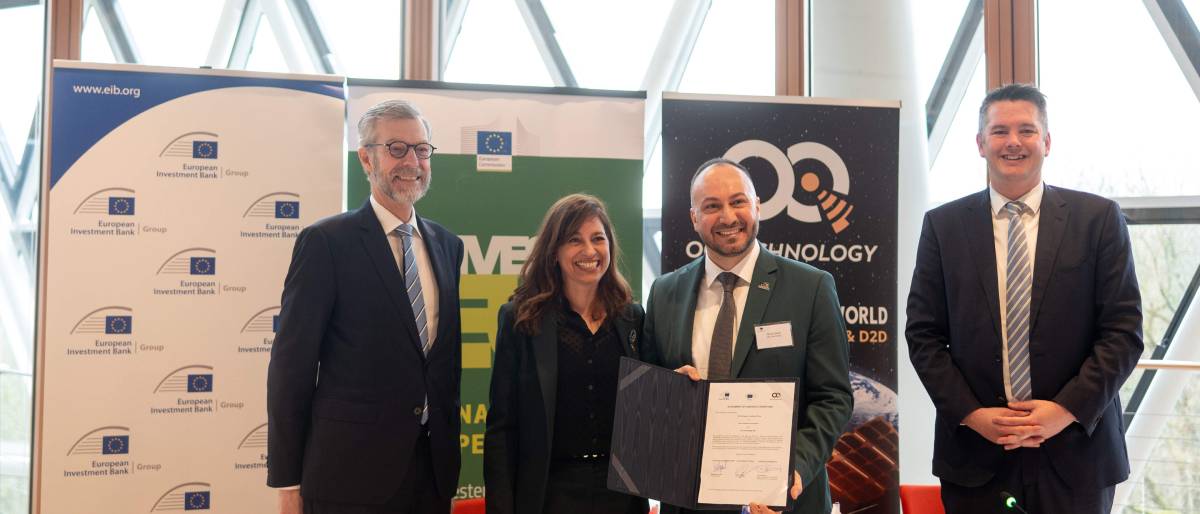
Image Source:  Startup Luxembourg

OQ Technology has secured European financing to accelerate the development of its satellite-based connectivity solutions, reinforcing its position in the growing non-terrestrial network (NTN) sector. The funding underscores Europe’s strategic push into space-enabled communications, with implications for global telecom infrastructure and IoT connectivity expansion.

The European financing package will support OQ Technology’s expansion of its low Earth orbit (LEO) satellite constellation aimed at providing direct-to-device connectivity. The company focuses on enabling mobile network coverage in remote and underserved regions through space-based infrastructure.

The funding is expected to accelerate deployment timelines, enhance satellite capabilities, and expand commercial partnerships with telecom operators and IoT service providers. OQ Technology has been actively collaborating with European institutions and private investors to scale its NTN platform.

This investment reflects broader regional support for sovereign satellite communications infrastructure, positioning Europe as a key competitor in the global satellite connectivity market dominated by US and emerging Asian players.

The development aligns with a broader trend across global markets where satellite-based connectivity is becoming a critical component of next-generation telecommunications infrastructure. Demand for global IoT coverage, remote connectivity, and resilient communication networks is driving rapid investment in LEO satellite constellations.

Historically, satellite communications were limited to government and defense applications, but commercial space innovation has opened the sector to private operators. Companies are now competing to deliver low-latency, high-coverage connectivity solutions for industrial, maritime, and remote applications.

Europe has increasingly prioritized strategic autonomy in space and telecommunications, seeking to reduce reliance on non-European infrastructure providers. Initiatives such as funding support for space-tech startups are part of a broader industrial policy to strengthen competitiveness in deeptech sectors.

OQ Technology’s positioning in the NTN space places it within a highly competitive global ecosystem alongside established satellite operators and emerging NewSpace companies.

Industry analysts highlight that satellite-based IoT connectivity represents one of the fastest-growing segments in the space economy, driven by demand from logistics, energy, agriculture, and defense sectors.

Telecom sector experts note that hybrid connectivity models combining terrestrial and satellite networks are becoming increasingly important for ensuring global coverage and resilience.

Space industry observers emphasize that European financing plays a crucial role in enabling startups to compete with well-capitalized US counterparts, particularly in capital-intensive satellite deployment programs.

Policy analysts point out that investments in companies like OQ Technology reflect a broader European strategy focused on technological sovereignty and infrastructure independence in critical communication systems.

Investment specialists also stress that NTN infrastructure will likely become a foundational layer of global digital transformation over the next decade. For telecom operators, the development opens new opportunities for expanding coverage into previously unreachable regions through satellite integration.

For enterprises, particularly in logistics and industrial IoT, enhanced connectivity enables improved tracking, monitoring, and operational efficiency. For investors, the sector presents high-growth potential within the broader space-tech and telecom convergence space, though capital intensity and regulatory complexity remain key considerations.

For policymakers, the funding reinforces the importance of strategic investment in sovereign satellite infrastructure to ensure long-term technological independence.

OQ Technology is expected to accelerate satellite deployment and deepen partnerships with telecom operators across Europe and beyond. The company’s progress will depend on successful scaling of its constellation and integration with global telecom standards.

Decision-makers should monitor regulatory alignment for non-terrestrial networks and competitive dynamics in the LEO satellite sector as global demand for ubiquitous connectivity continues to rise.

Source: Startup Luxembourg
Date: June 25, 2026

  • Featured tools
Kreateable AI
Free

Kreateable AI is a white-label, AI-driven design platform that enables logo generation, social media posts, ads, and more for businesses, agencies, and service providers.

#
Logo Generator
Learn more
Alli AI
Free

Alli AI is an all-in-one, AI-powered SEO automation platform that streamlines on-page optimization, site auditing, speed improvements, schema generation, internal linking, and ranking insights.

#
SEO
Learn more

Learn more about future of AI

Join 80,000+ Ai enthusiast getting weekly updates on exciting AI tools.
Thank you! Your submission has been received!
Oops! Something went wrong while submitting the form.

OQ Tech Boosts Satellite Position

June 25, 2026

The European financing package will support OQ Technology’s expansion of its low Earth orbit (LEO) satellite constellation aimed at providing direct-to-device connectivity.

Image Source:  Startup Luxembourg

OQ Technology has secured European financing to accelerate the development of its satellite-based connectivity solutions, reinforcing its position in the growing non-terrestrial network (NTN) sector. The funding underscores Europe’s strategic push into space-enabled communications, with implications for global telecom infrastructure and IoT connectivity expansion.

The European financing package will support OQ Technology’s expansion of its low Earth orbit (LEO) satellite constellation aimed at providing direct-to-device connectivity. The company focuses on enabling mobile network coverage in remote and underserved regions through space-based infrastructure.

The funding is expected to accelerate deployment timelines, enhance satellite capabilities, and expand commercial partnerships with telecom operators and IoT service providers. OQ Technology has been actively collaborating with European institutions and private investors to scale its NTN platform.

This investment reflects broader regional support for sovereign satellite communications infrastructure, positioning Europe as a key competitor in the global satellite connectivity market dominated by US and emerging Asian players.

The development aligns with a broader trend across global markets where satellite-based connectivity is becoming a critical component of next-generation telecommunications infrastructure. Demand for global IoT coverage, remote connectivity, and resilient communication networks is driving rapid investment in LEO satellite constellations.

Historically, satellite communications were limited to government and defense applications, but commercial space innovation has opened the sector to private operators. Companies are now competing to deliver low-latency, high-coverage connectivity solutions for industrial, maritime, and remote applications.

Europe has increasingly prioritized strategic autonomy in space and telecommunications, seeking to reduce reliance on non-European infrastructure providers. Initiatives such as funding support for space-tech startups are part of a broader industrial policy to strengthen competitiveness in deeptech sectors.

OQ Technology’s positioning in the NTN space places it within a highly competitive global ecosystem alongside established satellite operators and emerging NewSpace companies.

Industry analysts highlight that satellite-based IoT connectivity represents one of the fastest-growing segments in the space economy, driven by demand from logistics, energy, agriculture, and defense sectors.

Telecom sector experts note that hybrid connectivity models combining terrestrial and satellite networks are becoming increasingly important for ensuring global coverage and resilience.

Space industry observers emphasize that European financing plays a crucial role in enabling startups to compete with well-capitalized US counterparts, particularly in capital-intensive satellite deployment programs.

Policy analysts point out that investments in companies like OQ Technology reflect a broader European strategy focused on technological sovereignty and infrastructure independence in critical communication systems.

Investment specialists also stress that NTN infrastructure will likely become a foundational layer of global digital transformation over the next decade. For telecom operators, the development opens new opportunities for expanding coverage into previously unreachable regions through satellite integration.

For enterprises, particularly in logistics and industrial IoT, enhanced connectivity enables improved tracking, monitoring, and operational efficiency. For investors, the sector presents high-growth potential within the broader space-tech and telecom convergence space, though capital intensity and regulatory complexity remain key considerations.

For policymakers, the funding reinforces the importance of strategic investment in sovereign satellite infrastructure to ensure long-term technological independence.

OQ Technology is expected to accelerate satellite deployment and deepen partnerships with telecom operators across Europe and beyond. The company’s progress will depend on successful scaling of its constellation and integration with global telecom standards.

Decision-makers should monitor regulatory alignment for non-terrestrial networks and competitive dynamics in the LEO satellite sector as global demand for ubiquitous connectivity continues to rise.

Source: Startup Luxembourg
Date: June 25, 2026

Promote Your Tool

Copy Embed Code

Similar Blogs

June 25, 2026
|

OQ Tech Boosts Satellite Position

The European financing package will support OQ Technology’s expansion of its low Earth orbit (LEO) satellite constellation aimed at providing direct-to-device connectivity.
Read more
June 25, 2026
|

Women Led Startups Show Funding Gap

The startup ecosystem has seen a steady increase in women-founded and women-led companies, particularly in sectors such as digital services, healthtech, fintech, and sustainability-driven innovation.
Read more
June 25, 2026
|

AI Healthcare Unlocks Transformation Potential

AI applications in healthcare are expanding across multiple domains, including clinical decision support, medical imaging, drug discovery, and patient management systems.
Read more
June 25, 2026
|

Helical Raises $10M for AI Drug Lab

The funding round will enable Helical to scale its virtual AI lab infrastructure, which simulates complex biological processes for drug discovery.
Read more
June 25, 2026
|

Digital Healthtech Faces Investor Pressure

The guidance highlights that digital health startups must now demonstrate stronger clinical validation, data security standards, and measurable patient outcomes to secure investor confidence.
Read more
June 25, 2026
|

Luxembourg Space Strategy Turns Decade

Over the past ten years, Luxembourg has systematically developed its space sector through targeted investments, policy frameworks, and partnerships with private space companies.
Read more