



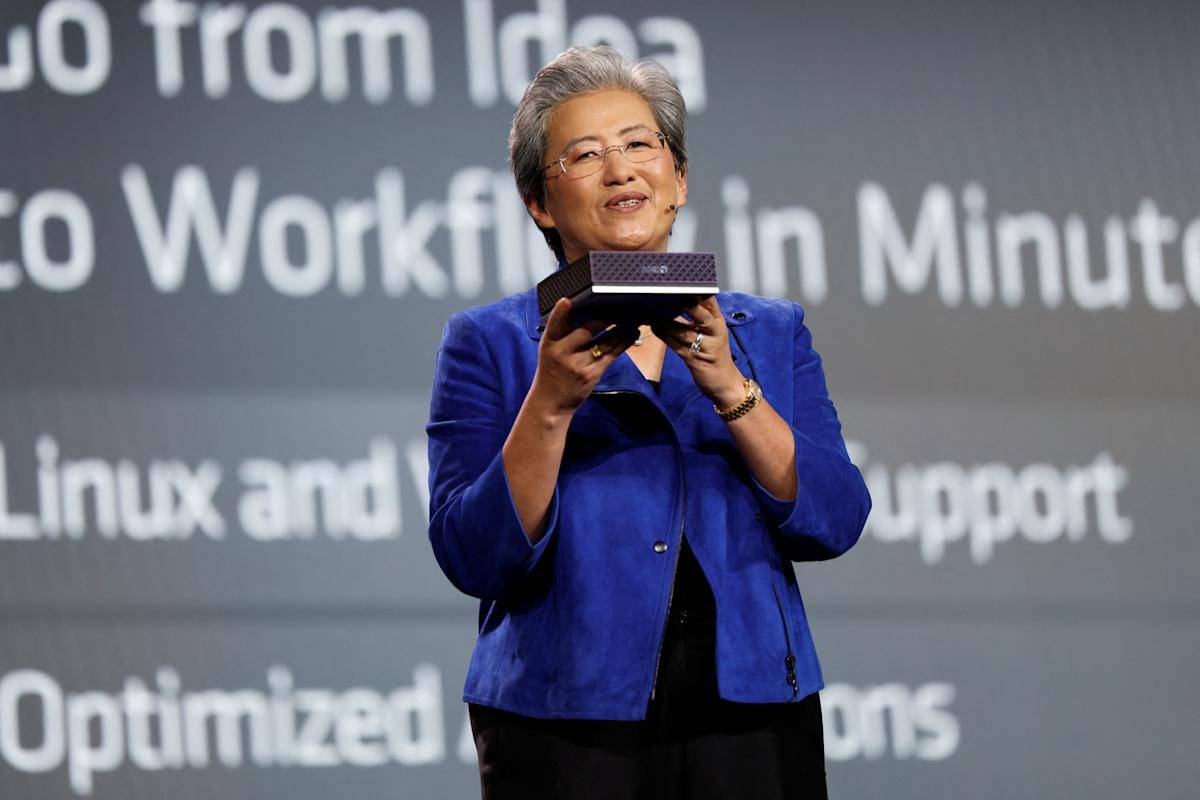
Fresh momentum emerged in global semiconductor markets as AMD reported stronger-than-expected first-quarter earnings and issued an upbeat forecast fueled by rising AI chip demand. The results reinforced investor confidence in the AI infrastructure boom, with implications for cloud providers, enterprise technology spending, and global chip competition.
AMD exceeded Wall Street expectations in its first-quarter earnings report, driven largely by robust growth in AI accelerators and data center products. The company also issued stronger-than-anticipated revenue guidance for upcoming quarters, prompting a sharp rise in its stock price.
Executives highlighted sustained demand from hyperscale cloud providers and enterprise customers deploying generative AI infrastructure. AI training and inference workloads continue to increase demand for high-performance chips across global markets.
The results added momentum to a broader semiconductor rally, as investors increasingly view AI-related computing demand as a long-term structural driver rather than a short-lived technology cycle.
The earnings surge reflects a wider transformation underway in the global semiconductor sector as AI adoption accelerates across industries. Companies building large language models, autonomous systems, and enterprise AI platforms require increasingly advanced processors capable of handling intensive computing workloads.
AMD has expanded aggressively into AI computing through its Instinct accelerator lineup, positioning itself as a key challenger to NVIDIA Corporation in the data center market. Competition is intensifying as hyperscalers, governments, and multinational enterprises invest billions into AI infrastructure expansion.
The development also comes amid broader geopolitical concerns around semiconductor supply chains, export restrictions, and manufacturing sovereignty. Advanced chips are now considered strategic assets tied to economic competitiveness and national security.
Historically cyclical semiconductor markets are increasingly being redefined by persistent AI demand, reshaping investor expectations and long-term capital allocation strategies.
Industry analysts described AMD’s performance as another indicator that AI infrastructure spending remains resilient despite macroeconomic uncertainty and tighter capital environments. Strong demand for AI accelerators has continued to support premium valuations across the semiconductor sector.
Market observers noted that AMD’s improving data center execution and expanding partnerships with cloud providers are strengthening its competitive positioning. Analysts also emphasized that enterprises are moving from experimental AI deployments toward scaled operational adoption, increasing demand for compute-intensive hardware.
Executives across the technology industry have repeatedly pointed to AI as a once-in-a-generation infrastructure shift comparable to the rise of cloud computing or mobile internet adoption. Some experts, however, caution that sustaining growth will require continued manufacturing scale, supply chain resilience, and energy-efficient chip architectures capable of supporting increasingly complex AI workloads.
For businesses, AMD’s earnings reinforce expectations that AI-related infrastructure investments will remain a central corporate priority. Enterprises across finance, healthcare, manufacturing, and software are likely to accelerate modernization strategies to remain competitive in an AI-driven economy.
For investors, the results strengthen confidence in semiconductor and AI infrastructure equities, particularly firms tied to data centers, networking, and advanced computing systems. Rival chipmakers may also face pressure to accelerate innovation and expand production capacity.
From a policy standpoint, governments are expected to deepen efforts to secure domestic semiconductor manufacturing and reduce reliance on vulnerable global supply chains. AI chips are increasingly viewed as strategic economic infrastructure with long-term geopolitical significance.
Attention will now shift to AMD’s ability to sustain growth in AI accelerators and expand its presence among hyperscale cloud customers. Markets will also monitor competitive responses from NVIDIA and Intel, alongside broader enterprise AI spending trends. As demand for advanced computing intensifies, the next phase of the AI race is likely to center on scalable infrastructure, manufacturing capacity, and energy-efficient chip innovation.
Source: Yahoo Finance
Date: 06 May 2026


