
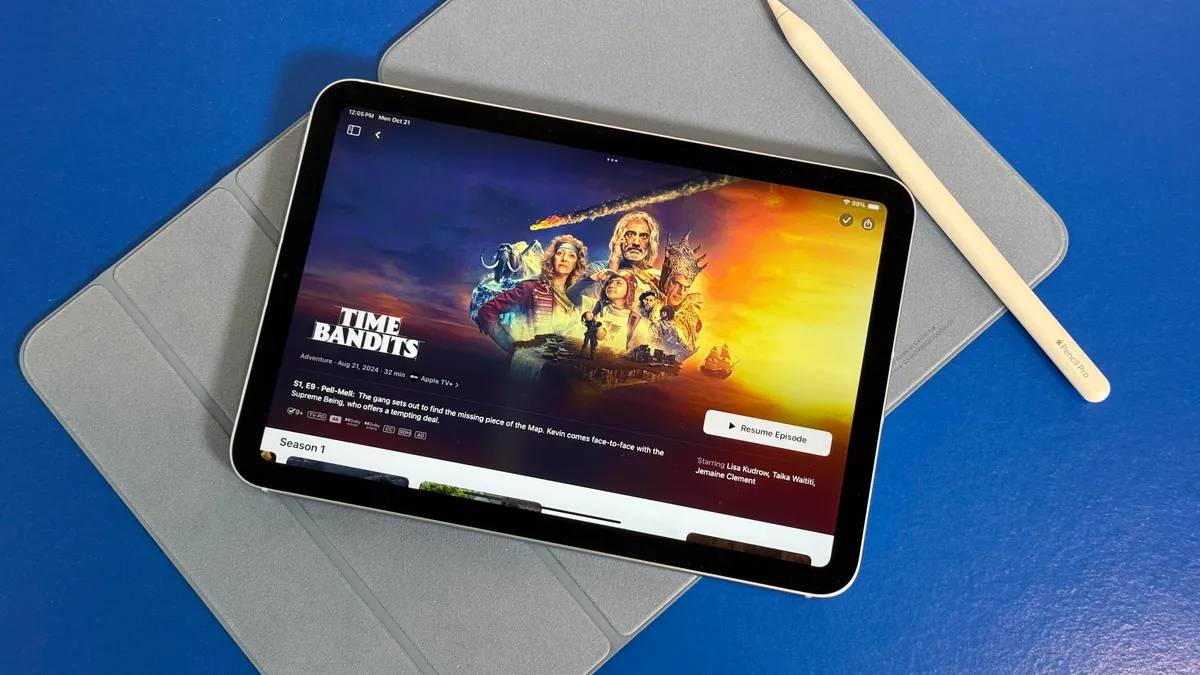
Apple Samsung Lead Tablet Competition

The latest tablet rankings and market analysis show continued dominance by Apple in the premium segment, driven by its iPad lineup, while Samsung maintains strong competition across multiple price tiers with its Galaxy Tab series.

June 3, 2026
|

A comprehensive industry assessment highlights shifting dynamics in the global tablet market as Apple, Samsung, and Amazon compete across premium, mid-range, and budget segments. The evolving landscape reflects changing consumer demand patterns, hybrid work adoption, and increased emphasis on productivity-focused mobile computing devices.

The latest tablet rankings and market analysis show continued dominance by Apple in the premium segment, driven by its iPad lineup, while Samsung maintains strong competition across multiple price tiers with its Galaxy Tab series.

Amazon continues to dominate the budget category through its Fire tablet ecosystem, focusing on affordability and content integration. The 2026 tablet landscape is increasingly segmented, with manufacturers tailoring devices to specific use cases such as remote work, education, media consumption, and light productivity. The report highlights growing demand for stylus support, AI-enhanced productivity tools, and hybrid laptop-tablet functionality across brands.

The global tablet market has transitioned from rapid expansion to a maturity phase characterized by segmentation and ecosystem competition. Companies like Apple have reinforced premium positioning through tightly integrated hardware-software ecosystems, while Samsung has pursued a diversified strategy across price tiers to maintain global market share.

The rise of hybrid work, digital education, and cloud-based productivity tools has reshaped demand for tablets, shifting their role from entertainment-focused devices to productivity enablers. At the same time, longer device replacement cycles have slowed overall market growth, pushing manufacturers toward value differentiation and ecosystem lock-in strategies.

Historically, tablets experienced a boom in the early 2010s, followed by stagnation as smartphones grew in capability. The current cycle reflects a stabilization phase where innovation is driven more by software, AI integration, and cross-device functionality than hardware disruption alone.

Industry analysts suggest that Apple continues to set the benchmark for premium tablet performance, particularly in creative and professional workflows. Experts note that its ecosystem integration across Mac, iPhone, and iPad remains a key competitive advantage.

Technology reviewers highlight that Samsung is effectively capturing the mid-tier segment by offering stylus support and multitasking capabilities at more accessible price points, while Amazon focuses on affordability and content-driven consumption.

Market analysts emphasize that AI features are becoming a key differentiator across all tablet tiers, influencing purchasing decisions in both consumer and enterprise segments. While official statements vary across manufacturers, the industry consensus points toward increasing convergence between tablets, laptops, and cloud-connected productivity ecosystems.

For businesses, the tablet market signals a shift toward device ecosystems rather than standalone hardware competition. Enterprises may increasingly adopt tablets as primary tools for field operations, remote collaboration, and education deployment.

For investors, Apple and Samsung remain central players in a stabilizing but strategically important hardware category, while Amazon continues to leverage ecosystem-driven volume growth.

For consumers, increased segmentation offers wider choice across price points and use cases, particularly in productivity-focused devices. From a policy perspective, device ecosystems may raise questions around interoperability, data portability, and digital competition fairness in global consumer electronics markets.

The tablet market’s next phase will depend on AI integration, ecosystem expansion, and enterprise adoption trends. Key developments to watch include hybrid device innovation, software-driven productivity features, and cross-platform compatibility improvements. While hardware innovation is stabilizing, competition among Apple, Samsung, and Amazon will increasingly center on software ecosystems and AI-enhanced user experiences.

Source: CNET
Date: June 3, 2026

  • Featured tools
Neuron AI
Free

Neuron AI is an AI-driven content optimization platform that helps creators produce SEO-friendly content by combining semantic SEO, competitor analysis, and AI-assisted writing workflows.

#
SEO
Learn more
Figstack AI
Free

Figstack AI is an intelligent assistant for developers that explains code, generates docstrings, converts code between languages, and analyzes time complexity helping you work smarter, not harder.

#
Coding
Learn more

Learn more about future of AI

Join 80,000+ Ai enthusiast getting weekly updates on exciting AI tools.
Thank you! Your submission has been received!
Oops! Something went wrong while submitting the form.

Apple Samsung Lead Tablet Competition

June 3, 2026

The latest tablet rankings and market analysis show continued dominance by Apple in the premium segment, driven by its iPad lineup, while Samsung maintains strong competition across multiple price tiers with its Galaxy Tab series.

A comprehensive industry assessment highlights shifting dynamics in the global tablet market as Apple, Samsung, and Amazon compete across premium, mid-range, and budget segments. The evolving landscape reflects changing consumer demand patterns, hybrid work adoption, and increased emphasis on productivity-focused mobile computing devices.

The latest tablet rankings and market analysis show continued dominance by Apple in the premium segment, driven by its iPad lineup, while Samsung maintains strong competition across multiple price tiers with its Galaxy Tab series.

Amazon continues to dominate the budget category through its Fire tablet ecosystem, focusing on affordability and content integration. The 2026 tablet landscape is increasingly segmented, with manufacturers tailoring devices to specific use cases such as remote work, education, media consumption, and light productivity. The report highlights growing demand for stylus support, AI-enhanced productivity tools, and hybrid laptop-tablet functionality across brands.

The global tablet market has transitioned from rapid expansion to a maturity phase characterized by segmentation and ecosystem competition. Companies like Apple have reinforced premium positioning through tightly integrated hardware-software ecosystems, while Samsung has pursued a diversified strategy across price tiers to maintain global market share.

The rise of hybrid work, digital education, and cloud-based productivity tools has reshaped demand for tablets, shifting their role from entertainment-focused devices to productivity enablers. At the same time, longer device replacement cycles have slowed overall market growth, pushing manufacturers toward value differentiation and ecosystem lock-in strategies.

Historically, tablets experienced a boom in the early 2010s, followed by stagnation as smartphones grew in capability. The current cycle reflects a stabilization phase where innovation is driven more by software, AI integration, and cross-device functionality than hardware disruption alone.

Industry analysts suggest that Apple continues to set the benchmark for premium tablet performance, particularly in creative and professional workflows. Experts note that its ecosystem integration across Mac, iPhone, and iPad remains a key competitive advantage.

Technology reviewers highlight that Samsung is effectively capturing the mid-tier segment by offering stylus support and multitasking capabilities at more accessible price points, while Amazon focuses on affordability and content-driven consumption.

Market analysts emphasize that AI features are becoming a key differentiator across all tablet tiers, influencing purchasing decisions in both consumer and enterprise segments. While official statements vary across manufacturers, the industry consensus points toward increasing convergence between tablets, laptops, and cloud-connected productivity ecosystems.

For businesses, the tablet market signals a shift toward device ecosystems rather than standalone hardware competition. Enterprises may increasingly adopt tablets as primary tools for field operations, remote collaboration, and education deployment.

For investors, Apple and Samsung remain central players in a stabilizing but strategically important hardware category, while Amazon continues to leverage ecosystem-driven volume growth.

For consumers, increased segmentation offers wider choice across price points and use cases, particularly in productivity-focused devices. From a policy perspective, device ecosystems may raise questions around interoperability, data portability, and digital competition fairness in global consumer electronics markets.

The tablet market’s next phase will depend on AI integration, ecosystem expansion, and enterprise adoption trends. Key developments to watch include hybrid device innovation, software-driven productivity features, and cross-platform compatibility improvements. While hardware innovation is stabilizing, competition among Apple, Samsung, and Amazon will increasingly center on software ecosystems and AI-enhanced user experiences.

Source: CNET
Date: June 3, 2026

Promote Your Tool

Copy Embed Code

Similar Blogs

June 3, 2026
|

UK Flags Risk in Palantir Contracts

UK lawmakers have reportedly described government reliance on contracts with Palantir Technologies as a “point of weakness,” urging greater oversight of procurement practices involving sensitive data systems.
Read more
June 3, 2026
|

Zak Brown Balances Racing Leadership Passion

Zak Brown, CEO of McLaren, expressed that he still experiences “fear of missing out” when it comes to being behind the wheel of racing cars, despite his executive responsibilities.
Read more
June 3, 2026
|

Apple Samsung Lead Tablet Competition

The latest tablet rankings and market analysis show continued dominance by Apple in the premium segment, driven by its iPad lineup, while Samsung maintains strong competition across multiple price tiers with its Galaxy Tab series.
Read more
June 3, 2026
|

Grassroots Track AI Data Risks

Erin Brockovich is supporting the creation of a community-driven database aimed at documenting concerns related to data center development across the United States.
Read more
June 3, 2026
|

Anthropic IPO Signals AI Capital Shift

Anthropic is reportedly evaluating early steps toward an IPO as it seeks to secure long-term funding for large-scale AI model development and infrastructure expansion.
Read more
June 3, 2026
|

Apple Vision Pro Gets visionOS Boost

Apple is reportedly focusing on expanding visionOS capabilities to reinvigorate its spatial computing platform centered around Vision Pro.
Read more