
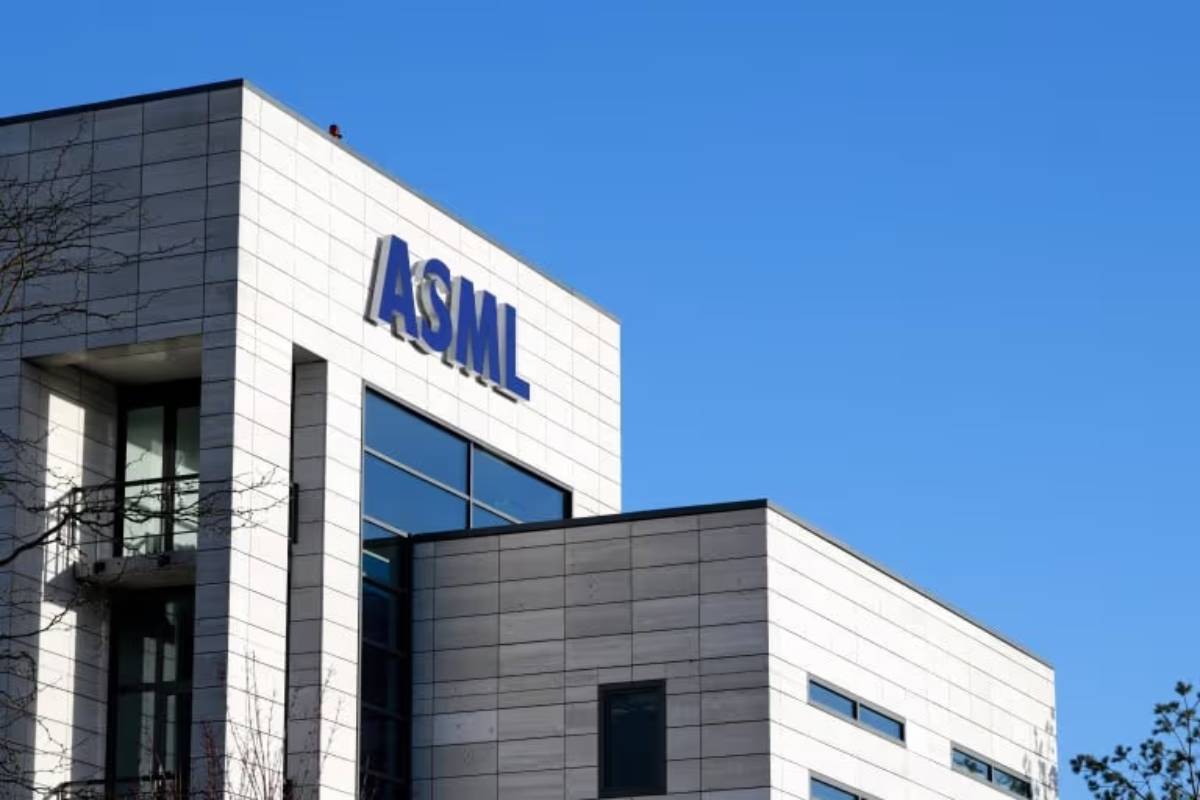
ASML Profits Surge as AI Boom Drives 1,700 Job Cuts

ASML confirmed plans to cut approximately 1,700 jobs globally, even as demand for its advanced lithography machines remains robust due to the AI boom.

January 30, 2026
|

A major development unfolded as ASML, the world’s most critical semiconductor equipment maker, announced significant job cuts despite surging profits driven by AI chip demand. The move underscores a structural shift in the global chip industry, raising tough questions about productivity, automation, and workforce strategy in the age of AI-led growth.

ASML confirmed plans to cut approximately 1,700 jobs globally, even as demand for its advanced lithography machines remains robust due to the AI boom. The company has benefited from soaring orders tied to AI chip production, particularly from leading foundries and chipmakers. Management framed the layoffs as part of operational streamlining and long-term efficiency measures rather than a response to weakening demand. The cuts are expected to impact multiple regions and functions, reflecting a recalibration of cost structures. Financially, ASML continues to post strong results, supported by backlog visibility and sustained AI-driven capital expenditure across the semiconductor supply chain.

The development aligns with a broader trend across global markets where AI-led profitability is not translating into proportional job creation. Semiconductor manufacturing is becoming increasingly capital-intensive, automated, and software-driven. ASML sits at the heart of this transformation, supplying extreme ultraviolet (EUV) lithography tools essential for advanced chips used in AI data centres. Historically, technology booms created parallel employment surges; today’s AI cycle is different. Productivity gains are concentrated in high-value equipment, algorithms, and automation rather than labour expansion. Geopolitically, ASML also operates under pressure from export controls, US-China tech decoupling, and regulatory scrutiny, all of which encourage firms to optimise operations and reduce exposure to long-term cost risks.

Industry analysts argue that ASML’s decision reflects a new efficiency-first mindset spreading across the tech sector. Experts note that AI-driven manufacturing allows firms to scale output without scaling headcount. Some market watchers highlight that layoffs during profit upcycles signal confidence in automation and predictability in demand. Labour economists, however, warn that such moves could intensify social and political backlash against AI-led industrial strategies. Semiconductor analysts add that ASML’s unique market position near monopoly in EUV tools gives it unusual pricing power, allowing management to prioritise margin stability over workforce expansion. While the company has emphasized long-term resilience, experts stress that perception risks remain significant.

For global businesses, ASML’s move sends a clear signal: AI-era competitiveness will be driven by efficiency, not employment scale. Suppliers and partners may face pressure to follow similar cost discipline. Investors are likely to view the layoffs as margin-protective, reinforcing ASML’s premium valuation. For governments, particularly in Europe, the development complicates narratives around AI-driven growth and job creation. Policymakers may face increasing pressure to invest in reskilling, social safety nets, and workforce transition programmes as AI reshapes even high-end manufacturing sectors.

Decision-makers should watch how other semiconductor leaders respond as AI demand accelerates. Further automation, selective hiring, and targeted layoffs may follow across the supply chain. Regulatory scrutiny on employment practices could intensify, especially in Europe. While ASML’s order book remains strong, the long-term challenge will be balancing AI-led productivity with sustainable workforce strategies in an increasingly automated industrial economy.

Source & Date

Source: India Today
Date: January 29, 2026

  • Featured tools
Symphony Ayasdi AI
Free

SymphonyAI Sensa is an AI-powered surveillance and financial crime detection platform that surfaces hidden risk behavior through explainable, AI-driven analytics.

#
Finance
Learn more
Writesonic AI
Free

Writesonic AI is a versatile AI writing platform designed for marketers, entrepreneurs, and content creators. It helps users create blog posts, ad copies, product descriptions, social media posts, and more with ease. With advanced AI models and user-friendly tools, Writesonic streamlines content production and saves time for busy professionals.

#
Copywriting
Learn more

Learn more about future of AI

Join 80,000+ Ai enthusiast getting weekly updates on exciting AI tools.
Thank you! Your submission has been received!
Oops! Something went wrong while submitting the form.

ASML Profits Surge as AI Boom Drives 1,700 Job Cuts

January 30, 2026

ASML confirmed plans to cut approximately 1,700 jobs globally, even as demand for its advanced lithography machines remains robust due to the AI boom.

A major development unfolded as ASML, the world’s most critical semiconductor equipment maker, announced significant job cuts despite surging profits driven by AI chip demand. The move underscores a structural shift in the global chip industry, raising tough questions about productivity, automation, and workforce strategy in the age of AI-led growth.

ASML confirmed plans to cut approximately 1,700 jobs globally, even as demand for its advanced lithography machines remains robust due to the AI boom. The company has benefited from soaring orders tied to AI chip production, particularly from leading foundries and chipmakers. Management framed the layoffs as part of operational streamlining and long-term efficiency measures rather than a response to weakening demand. The cuts are expected to impact multiple regions and functions, reflecting a recalibration of cost structures. Financially, ASML continues to post strong results, supported by backlog visibility and sustained AI-driven capital expenditure across the semiconductor supply chain.

The development aligns with a broader trend across global markets where AI-led profitability is not translating into proportional job creation. Semiconductor manufacturing is becoming increasingly capital-intensive, automated, and software-driven. ASML sits at the heart of this transformation, supplying extreme ultraviolet (EUV) lithography tools essential for advanced chips used in AI data centres. Historically, technology booms created parallel employment surges; today’s AI cycle is different. Productivity gains are concentrated in high-value equipment, algorithms, and automation rather than labour expansion. Geopolitically, ASML also operates under pressure from export controls, US-China tech decoupling, and regulatory scrutiny, all of which encourage firms to optimise operations and reduce exposure to long-term cost risks.

Industry analysts argue that ASML’s decision reflects a new efficiency-first mindset spreading across the tech sector. Experts note that AI-driven manufacturing allows firms to scale output without scaling headcount. Some market watchers highlight that layoffs during profit upcycles signal confidence in automation and predictability in demand. Labour economists, however, warn that such moves could intensify social and political backlash against AI-led industrial strategies. Semiconductor analysts add that ASML’s unique market position near monopoly in EUV tools gives it unusual pricing power, allowing management to prioritise margin stability over workforce expansion. While the company has emphasized long-term resilience, experts stress that perception risks remain significant.

For global businesses, ASML’s move sends a clear signal: AI-era competitiveness will be driven by efficiency, not employment scale. Suppliers and partners may face pressure to follow similar cost discipline. Investors are likely to view the layoffs as margin-protective, reinforcing ASML’s premium valuation. For governments, particularly in Europe, the development complicates narratives around AI-driven growth and job creation. Policymakers may face increasing pressure to invest in reskilling, social safety nets, and workforce transition programmes as AI reshapes even high-end manufacturing sectors.

Decision-makers should watch how other semiconductor leaders respond as AI demand accelerates. Further automation, selective hiring, and targeted layoffs may follow across the supply chain. Regulatory scrutiny on employment practices could intensify, especially in Europe. While ASML’s order book remains strong, the long-term challenge will be balancing AI-led productivity with sustainable workforce strategies in an increasingly automated industrial economy.

Source & Date

Source: India Today
Date: January 29, 2026

Promote Your Tool

Copy Embed Code

Similar Blogs

January 30, 2026
|

Deloitte Warns AI Deployments Outpace Safety, Governance Framework

Deloitte’s latest report emphasizes that enterprises are deploying AI agents faster than frameworks can ensure ethical and safe operation. The study notes increased use of autonomous AI in finance.
Read more
January 30, 2026
|

Microsoft Shares Dip Amid Surging AI Investment Push

Microsoft disclosed that its AI-related expenditure is expected to rise significantly in FY2026, focusing on large-scale deployments of generative AI tools in Azure and Office suites.
Read more
January 30, 2026
|

Tesla Streamlines Models, Accelerates AI & Robotics Integration

Tesla confirmed plans to discontinue select car models over the next year to streamline operations and focus on automated manufacturing. The company is channeling investment into AI-driven robotics at its Gigafactories.
Read more
January 30, 2026
|

AI Chatbot Wars Drive Soaring Valuations, Redefining Tech Power

The analysis highlights an escalating “chatbot war” led by major players such as OpenAI, Google, Microsoft, and emerging challengers, each racing to dominate consumer and enterprise AI interfaces.
Read more
January 30, 2026
|

Google Embeds Gemini into Chrome, Signaling Shift Agentic Browsing

Google has rolled out Gemini-powered AI features inside Chrome, accessible via a dedicated side panel that allows users to summarise pages, ask contextual questions, and perform multi-step tasks.
Read more
January 30, 2026
|

AI Hallucinations Trigger Trust Reckoning for Travel Platforms Worldwide

A major development unfolded as an AI-generated travel blog directed tourists to hot springs that do not exist, triggering confusion, wasted travel, and reputational fallout. The incident highlights growing risks.
Read more