
Tesla Streamlines Models, Accelerates AI & Robotics Integration

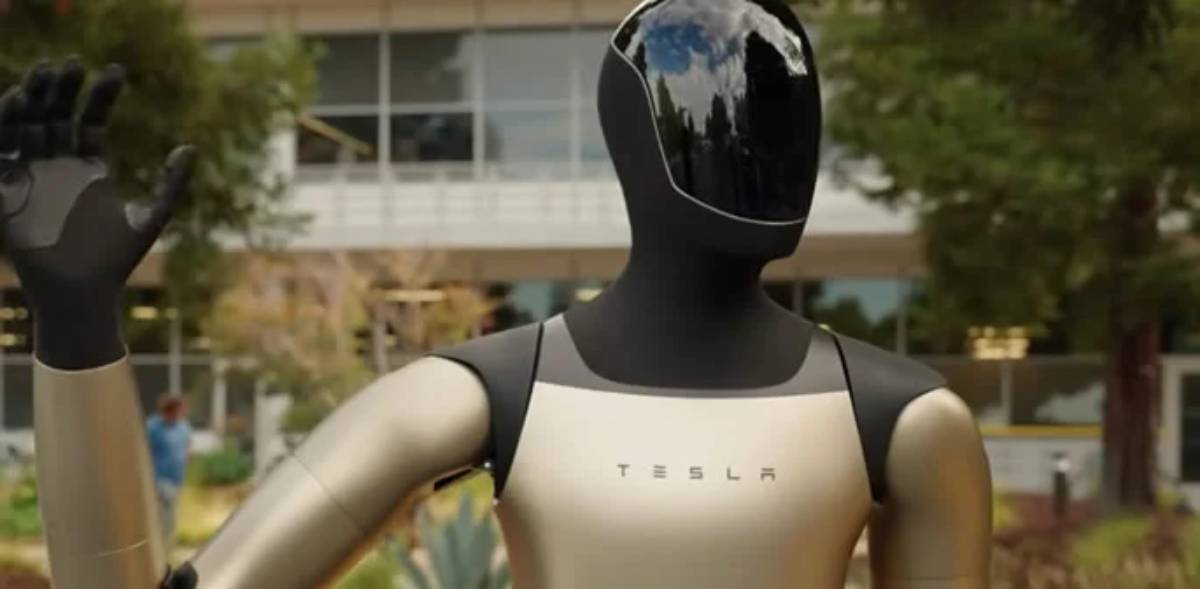
Tesla confirmed plans to discontinue select car models over the next year to streamline operations and focus on automated manufacturing. The company is channeling investment into AI-driven robotics at its Gigafactories.

January 30, 2026
|

A major development unfolded as Tesla announced a reduction in its vehicle model lineup, pivoting resources toward advanced robotics and AI-driven production. The strategic move signals a shift in automotive manufacturing priorities, with implications for global supply chains, investor confidence, and the future of autonomous and AI-integrated mobility.

Tesla confirmed plans to discontinue select car models over the next year to streamline operations and focus on automated manufacturing. The company is channeling investment into AI-driven robotics at its Gigafactories, enhancing efficiency, production speed, and cost control. CEO Elon Musk emphasized that the move will accelerate the rollout of next-generation vehicles featuring advanced self-driving capabilities. Analysts note that the decision coincides with Tesla’s broader strategy to reduce human-intensive processes and scale high-margin production. The announcement affected Tesla’s stock moderately, while suppliers and manufacturing partners are adjusting capacity forecasts to align with the new automation-focused roadmap.

The development aligns with a broader trend in global automotive markets where manufacturers increasingly integrate AI robotics, and automation to enhance operational efficiency and scalability. Tesla, historically at the forefront of EV innovation, is now betting on robotic assembly lines to reduce production bottlenecks and labor dependence. Previous initiatives, including semi-autonomous factories and AI-driven supply chain optimization, set the stage for this transition. Industry-wide, automakers face rising competition from both legacy firms and tech-driven EV startups, making automation a critical differentiator. Geopolitically, Tesla’s strategy also addresses challenges such as labor shortages, rising wages, and supply chain volatility. Economically, reducing human-intensive models allows Tesla to focus on high-demand, high-margin vehicles while accelerating autonomous technology adoption, reinforcing its leadership in next-gen mobility.

Analysts view Tesla’s move as a strategic recalibration toward long-term operational efficiency rather than short-term cost-cutting. “Focusing on AI-driven production could redefine the economics of EV manufacturing,” said one industry strategist. Tesla spokespeople emphasized that robotics integration will enhance safety, quality control, and production speed, while enabling faster innovation cycles for self-driving features. Industry observers note that the shift mirrors trends at competitors such as Volkswagen and Toyota, which are investing heavily in automation. Musk’s approach reflects a tech-first vision, prioritizing AI and robotics over model proliferation. However, some caution that reducing model variety could risk market share in niche segments, requiring careful management of consumer expectations. Overall, the initiative reinforces Tesla’s positioning as a technology leader, blending mobility, AI, and robotics at scale.

For global executives, Tesla’s strategy could redefine operational benchmarks across automotive manufacturing, prompting competitors to accelerate AI adoption and robotics integration. Investors may see enhanced margins and productivity, but must weigh risks related to consumer response to reduced model variety. Suppliers and labor markets may experience shifts in demand for traditional assembly labor, while policymakers could face regulatory considerations around workforce displacement and autonomous technology oversight. Analysts warn companies may need to reassess production planning, AI deployment, and capital allocation in line with Tesla’s innovation-driven approach, highlighting a broader industrial transformation toward automated, AI-led operations.

Decision-makers should monitor Tesla’s rollout of robotic assembly lines, production efficiency metrics, and consumer adoption of remaining models. Attention will also focus on autonomous feature integration and regulatory approvals in key markets. Competitors’ responses in AI-driven manufacturing and EV design will shape the next phase of the automotive landscape. Uncertainties remain regarding labor displacement, technology scaling, and market acceptance, but Tesla’s roadmap positions the company at the forefront of AI-led automotive transformation.

Source & Date

Source: BBC
Date: January 29, 2026

  • Featured tools
Beautiful AI
Free

Beautiful AI is an AI-powered presentation platform that automates slide design and formatting, enabling users to create polished, on-brand presentations quickly.

#
Presentation
Learn more
Hostinger Horizons
Freemium

Hostinger Horizons is an AI-powered platform that allows users to build and deploy custom web applications without writing code. It packs hosting, domain management and backend integration into a unified tool for rapid app creation.

#
Startup Tools
#
Coding
#
Project Management
Learn more

Learn more about future of AI

Join 80,000+ Ai enthusiast getting weekly updates on exciting AI tools.
Thank you! Your submission has been received!
Oops! Something went wrong while submitting the form.

Tesla Streamlines Models, Accelerates AI & Robotics Integration

January 30, 2026

Tesla confirmed plans to discontinue select car models over the next year to streamline operations and focus on automated manufacturing. The company is channeling investment into AI-driven robotics at its Gigafactories.

A major development unfolded as Tesla announced a reduction in its vehicle model lineup, pivoting resources toward advanced robotics and AI-driven production. The strategic move signals a shift in automotive manufacturing priorities, with implications for global supply chains, investor confidence, and the future of autonomous and AI-integrated mobility.

Tesla confirmed plans to discontinue select car models over the next year to streamline operations and focus on automated manufacturing. The company is channeling investment into AI-driven robotics at its Gigafactories, enhancing efficiency, production speed, and cost control. CEO Elon Musk emphasized that the move will accelerate the rollout of next-generation vehicles featuring advanced self-driving capabilities. Analysts note that the decision coincides with Tesla’s broader strategy to reduce human-intensive processes and scale high-margin production. The announcement affected Tesla’s stock moderately, while suppliers and manufacturing partners are adjusting capacity forecasts to align with the new automation-focused roadmap.

The development aligns with a broader trend in global automotive markets where manufacturers increasingly integrate AI robotics, and automation to enhance operational efficiency and scalability. Tesla, historically at the forefront of EV innovation, is now betting on robotic assembly lines to reduce production bottlenecks and labor dependence. Previous initiatives, including semi-autonomous factories and AI-driven supply chain optimization, set the stage for this transition. Industry-wide, automakers face rising competition from both legacy firms and tech-driven EV startups, making automation a critical differentiator. Geopolitically, Tesla’s strategy also addresses challenges such as labor shortages, rising wages, and supply chain volatility. Economically, reducing human-intensive models allows Tesla to focus on high-demand, high-margin vehicles while accelerating autonomous technology adoption, reinforcing its leadership in next-gen mobility.

Analysts view Tesla’s move as a strategic recalibration toward long-term operational efficiency rather than short-term cost-cutting. “Focusing on AI-driven production could redefine the economics of EV manufacturing,” said one industry strategist. Tesla spokespeople emphasized that robotics integration will enhance safety, quality control, and production speed, while enabling faster innovation cycles for self-driving features. Industry observers note that the shift mirrors trends at competitors such as Volkswagen and Toyota, which are investing heavily in automation. Musk’s approach reflects a tech-first vision, prioritizing AI and robotics over model proliferation. However, some caution that reducing model variety could risk market share in niche segments, requiring careful management of consumer expectations. Overall, the initiative reinforces Tesla’s positioning as a technology leader, blending mobility, AI, and robotics at scale.

For global executives, Tesla’s strategy could redefine operational benchmarks across automotive manufacturing, prompting competitors to accelerate AI adoption and robotics integration. Investors may see enhanced margins and productivity, but must weigh risks related to consumer response to reduced model variety. Suppliers and labor markets may experience shifts in demand for traditional assembly labor, while policymakers could face regulatory considerations around workforce displacement and autonomous technology oversight. Analysts warn companies may need to reassess production planning, AI deployment, and capital allocation in line with Tesla’s innovation-driven approach, highlighting a broader industrial transformation toward automated, AI-led operations.

Decision-makers should monitor Tesla’s rollout of robotic assembly lines, production efficiency metrics, and consumer adoption of remaining models. Attention will also focus on autonomous feature integration and regulatory approvals in key markets. Competitors’ responses in AI-driven manufacturing and EV design will shape the next phase of the automotive landscape. Uncertainties remain regarding labor displacement, technology scaling, and market acceptance, but Tesla’s roadmap positions the company at the forefront of AI-led automotive transformation.

Source & Date

Source: BBC
Date: January 29, 2026

Promote Your Tool

Copy Embed Code

Similar Blogs

January 30, 2026
|

Apple Expands AI Footprint with $1.6B Q.ai Acquisition

Apple finalized the acquisition of Q.ai, a startup specializing in AI-driven audio analysis, speech recognition, and immersive sound generation. The deal, reportedly valued at $1.6 billion.
Read more
January 30, 2026
|

Salesforce Accelerates Enterprise AI Scaling, Leading Digital Transformation

Salesforce is embedding AI tools across Sales Cloud, Marketing Cloud, and Service Cloud, enabling predictive analytics, automated workflows, and intelligent customer engagement.
Read more
January 30, 2026
|

Meta Shows AI Advertising Edge, Outshines Microsoft Returns

Meta reported enhanced ad targeting and personalization through AI, leading to measurable improvements in engagement and monetization. AI tools are now embedded across ad placement.
Read more
January 30, 2026
|

Deloitte Warns AI Deployments Outpace Safety, Governance Framework

Deloitte’s latest report emphasizes that enterprises are deploying AI agents faster than frameworks can ensure ethical and safe operation. The study notes increased use of autonomous AI in finance.
Read more
January 30, 2026
|

Microsoft Shares Dip Amid Surging AI Investment Push

Microsoft disclosed that its AI-related expenditure is expected to rise significantly in FY2026, focusing on large-scale deployments of generative AI tools in Azure and Office suites.
Read more
January 30, 2026
|

Tesla Streamlines Models, Accelerates AI & Robotics Integration

Tesla confirmed plans to discontinue select car models over the next year to streamline operations and focus on automated manufacturing. The company is channeling investment into AI-driven robotics at its Gigafactories.
Read more